
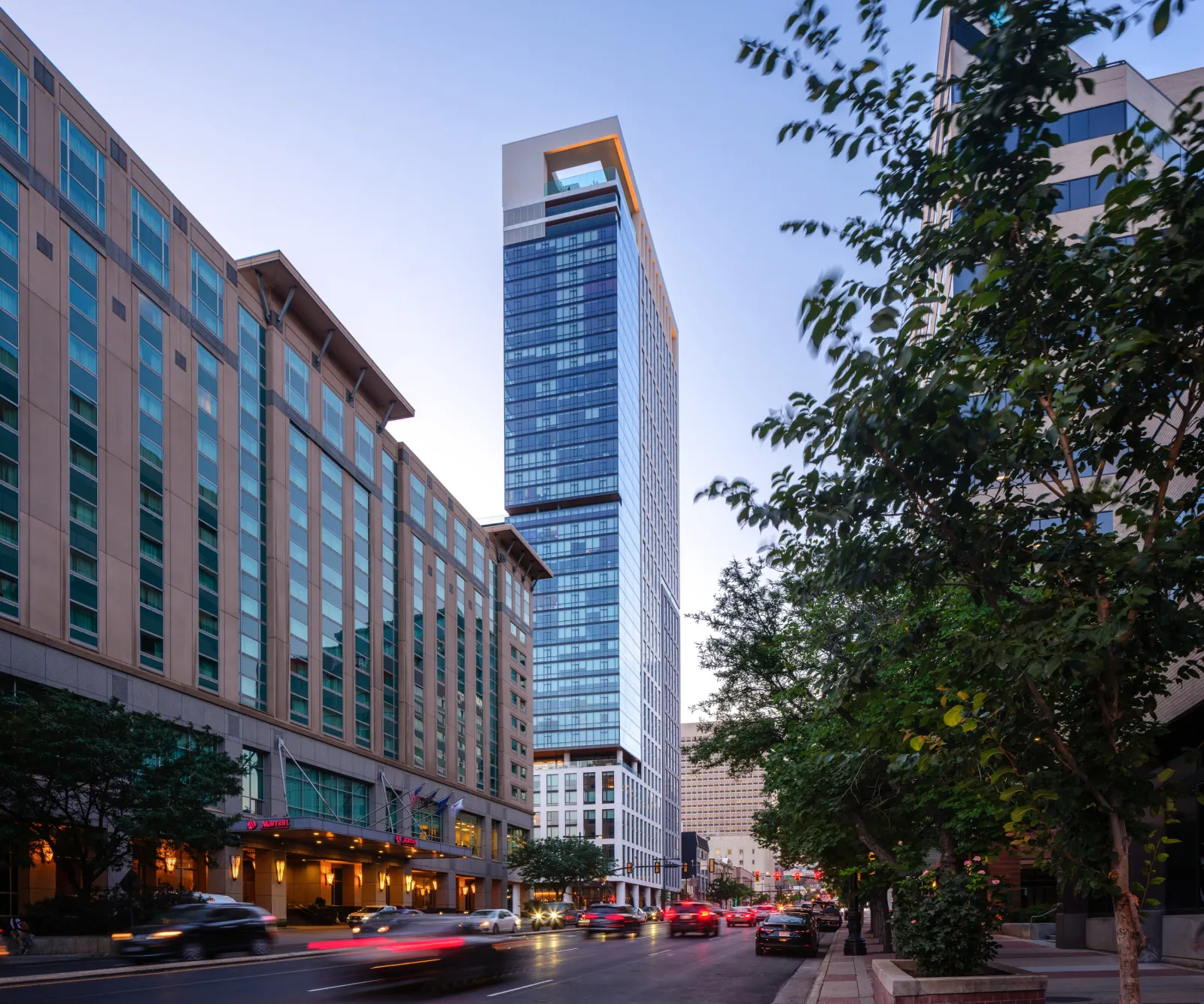
The façade lighting at the top of the imposing tower in Salt Lake City changes color depending on the air quality.
Salt Lake City’s skyline has a striking new focal point—the Astra Tower, a 451‑foot residential skyscraper, the illuminated crown of which serves not just as an architectural flourish but as a real‑time air quality monitor for the entire city.
Designed by global architecture firm HKS, the tower overtakes the 422‑foot Wells Fargo Center—also by HKS—as the tallest building in Utah.
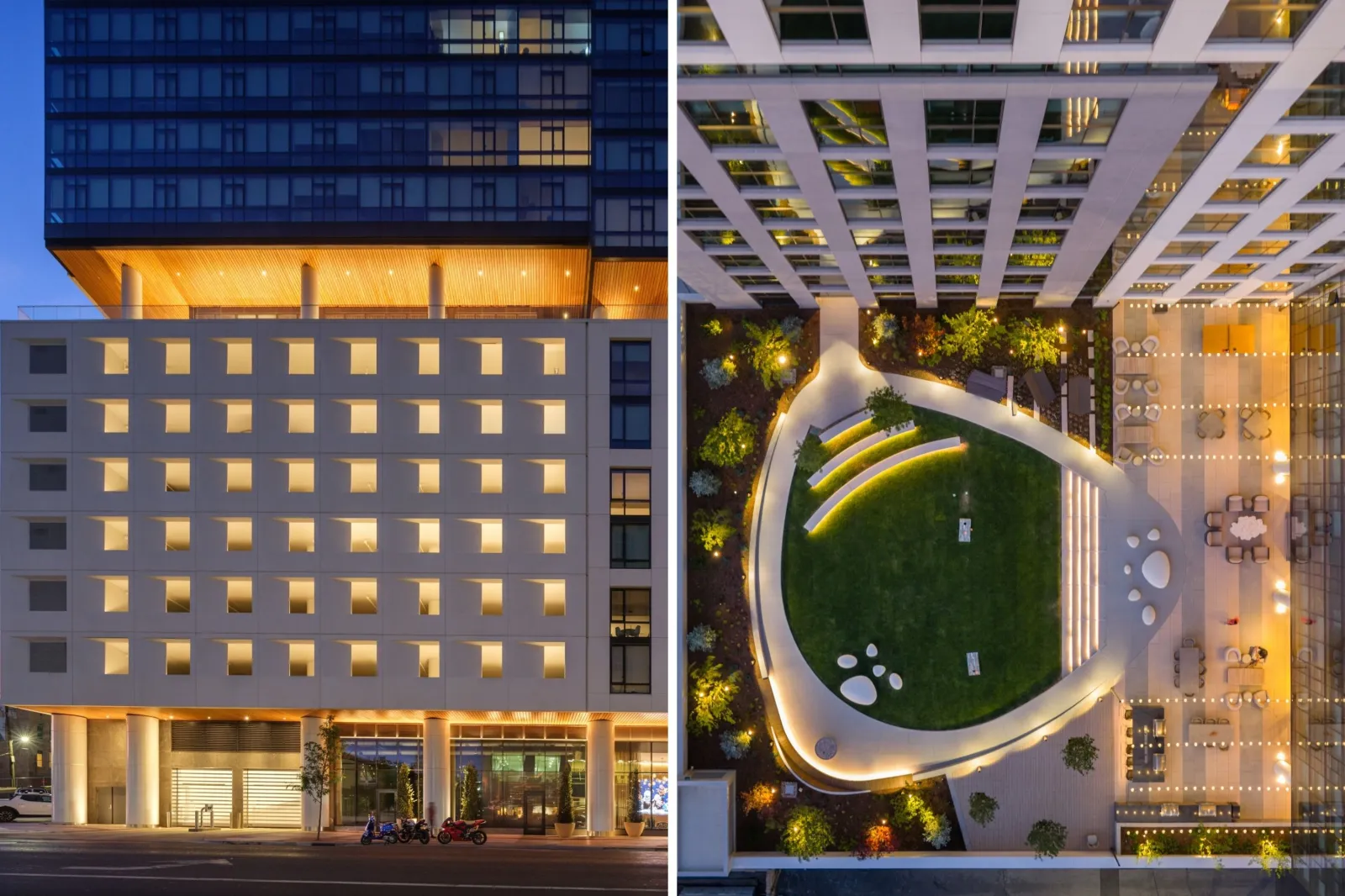
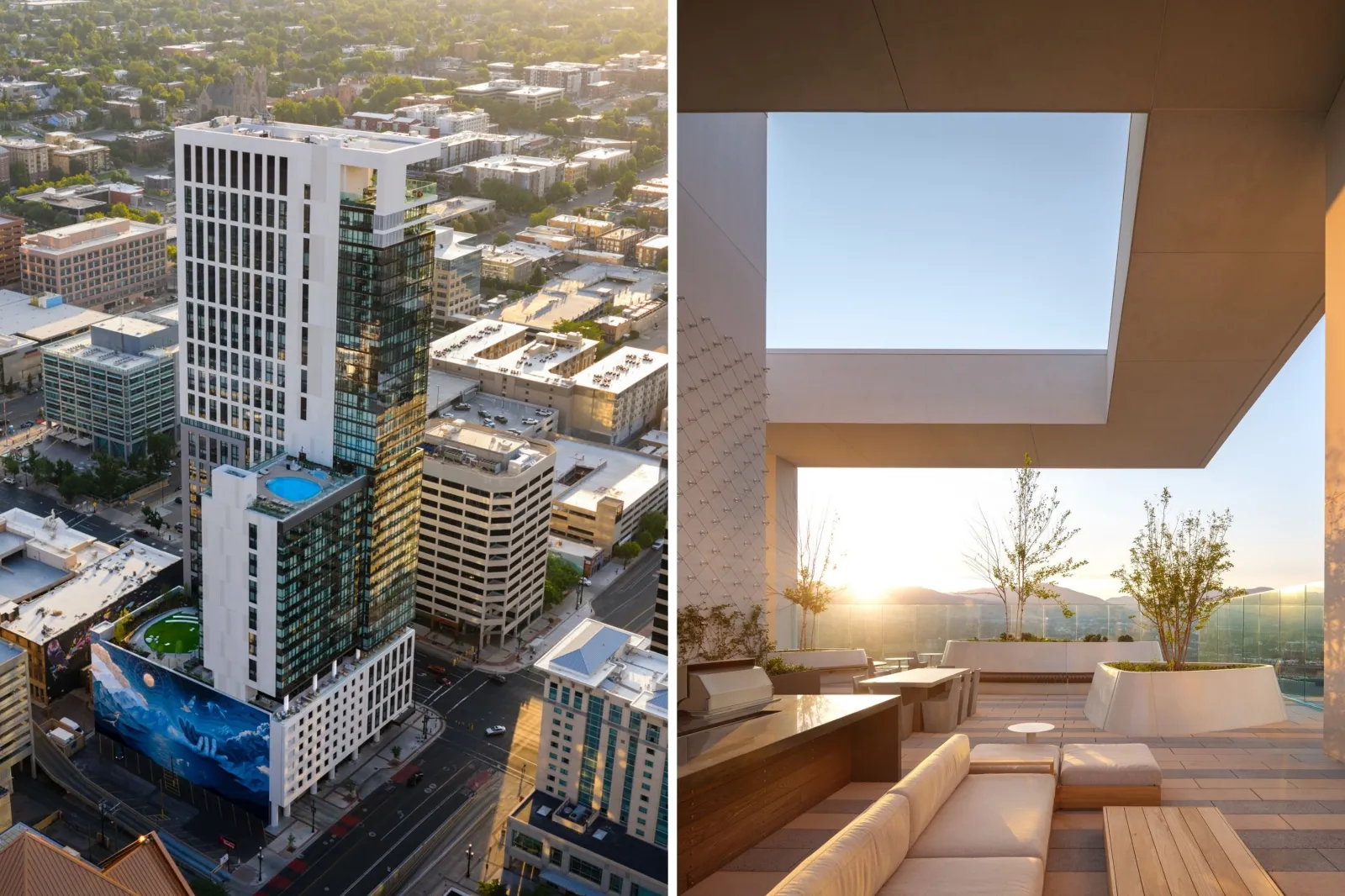
Offering 372 residential units and over 40,000 square feet of amenities, including a rooftop pool, the building also boasts a color‑changing LED lighting display at its crown, which is rooted in the valley’s unique environmental conditions.
Architect Emir Tursic, a partner and office director for HKS Salt Lake City, told Newsweek: “Ironically, the same mountain range that makes the Salt Lake Valley so striking also contributes to one of its greatest environmental challenges. Winter inversions trap pollution and off-gassing in the valley, making air quality the region’s most significant environmental threat.”
A LED Crown That Communicates With the City
According to Tursic, the air quality‑responsive crown was born from a challenge issued by developer KIC (Kensington Investment Company). “KIC challenged HKS to address this issue not only within the building itself, but beyond the project boundary—using design as a platform for awareness and engagement,” the architect said.
He explained that Astra’s illuminated façade draws on the long tradition of Salt Lake City buildings that broadcast weather conditions through exterior lighting. Now, instead of weather, Astra signals air quality. Leveraging its prominence on the skyline as a civic signal, “Astra’s façade lighting changes color in accordance with the air quality index, making environmental conditions visible and fostering broader public awareness,” Tursic said.
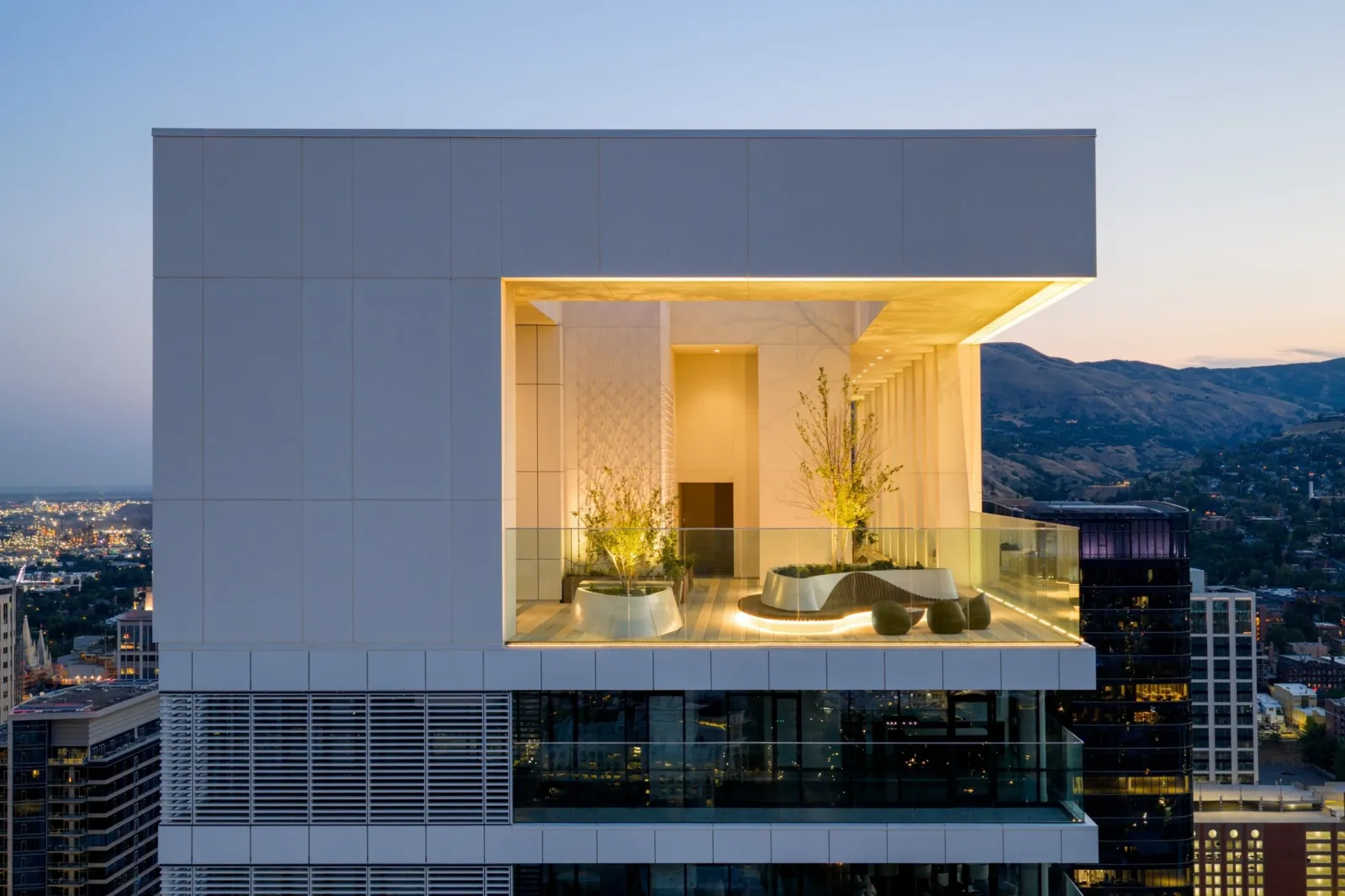
Sensors at the top of the tower, where there is an open terrace illuminated by LED lights, measure the air and shift the lighting tone from white to purple, based on data from the Environmental Protection Agency and National Oceanic and Atmospheric Administration, to show the level of outdoor pollution.
Sustainability Systems Embedded Throughout the Tower
Beyond its LED crown, Astra incorporates a wide suite of engineering and sustainability strategies.
Tursic notes that the building “pairs its headline LED air-quality crown with a broader set of sustainability and resilience moves that support wellness-oriented, high-density living.”
The tower’s underlying structure reflects this philosophy. Made with an “efficient vertical organization and performance-based design,” Tursic said the building’s layout and major systems were approached with carbon, energy, and resource reduction in mind from the very beginning.
That structural framework was also engineered for long‑term resilience. According to Tursic, “the structural system was engineered to industry-leading performance standards, beyond prescriptive code, and designed to withstand significant seismic events, supporting long-term durability and climate resilience.”
A Building That Cleans the Air
One of Astra’s most notable innovations is its city‑scale air filtration concept. “A central air intake with filtration supplies ducted, filtered air to all units, and the building is designed to filter polluted outdoor air and improve it before releasing it back into the atmosphere—effectively acting as an air purifier for the city,” Tursic said.
Inside, residents also benefit from “smart air-quality awareness beyond the crown,” he explained. “Air-quality sensors are connected to elevator and lobby screens, so residents get real-time information inside the building, in addition to the exterior lighting signals.”
Engineering for Energy Efficiency
The skyscraper’s environmental strategy extends into its mechanical systems. It features a “high-performance ventilation and heat recovery” approach, including “demand control ventilation, an air-side heat recovery system, and a water-side heat recovery system to reduce energy use while maintaining indoor comfort and air quality,” Tursic said.
He notes that the Astra Tower was envisioned as more than a vertical neighborhood. “As a vertical community centered on wellness and healthy living, Astra strives to be a responsible steward of the environment at multiple scales,” the architect said.
Do you have a travel-related video or story to share? Let us know via life@newsweek.com, and your story could be featured on Newsweek.
Source: Utah News