Utah Hockey Club Has Been Officially Eliminated From Playoffs

Well Utah fans, there have been a lot of firsts for Utah this inaugural season: the first goal ever by Dylan Guenther, its first win, a 5-2 home win against the Chicago Blackhawks, and even its first …

Well Utah fans, there have been a lot of firsts for Utah this inaugural season: the first goal ever by Dylan Guenther, its first win, a 5-2 home win against the Chicago Blackhawks, and even its first ever fight between Utah’s Sean Durzi and Chicago’s Connor Murphy.

But at the end of the 2024-25 season, Utah will not go to its first-ever postseason appearance after the Minnesota Wild’s  8-7 win against the San Jose Sharks officially eliminated Utah Hockey Club from the playoffs.

Source: Utah News

RFK Jr. praises measles response in Texas, US by making comparison to Europe

Robert F. Kennedy Jr. praised the measles response in Texas and the U.S., saying it’s a “model for the rest of the world.” But the comparison to Europe is an unfair one.

On Tuesday at a press conference, Health and Human Services Secretary Robert F. Kennedy Jr. said his department’s handling of measles cases, including the outbreak in Texas should be a “model for the rest of the world.”

Kennedy said this is because cases have exploded more drastically in Europe — though he didn’t offer specifics on what he thinks has worked in the U.S. response.

“I would compare it to what’s happening in Europe,” he said. “They’ve had 127,000 cases and 37 deaths. And so what we’re doing here in the United States is a model for the rest of the world.”

While the numbers Kennedy cited are nearly accurate when looking at the vast European region in 2024, and much higher than the 285 cases in the U.S. last year, many factors make it difficult to compare that entire region to the U.S.

The U.S. currently has more than 600 cases so far this year, most of those linked to an ongoing outbreak in Texas, where two children have died from the virus.

“It’s misleading to compare the U.S. to the entire WHO European region, which spans 53 countries with wide disparities in health care access, vaccination coverage and surveillance systems,” said Dr. John Brownstein, an epidemiologist and chief innovation officer at Boston Children’s Hospital, and an ABC News contributor.

“The outbreaks in places like Romania and Kazakhstan are driving the regional numbers, but when you narrow the view to countries more comparable to the U.S., like those in the EU, the picture is much closer — and in some cases, better — than what we’re seeing in Texas right now,” Brownstein said.

Health Secretary Robert F. Kennedy Jr. speaks during a press conference while visiting the Osher Center for Integrative Health at the University of Utah in Salt Lake City, Utah, April 7, 2025.

Jim Urquhart/Reuters, FILE

How does Europe really compare?

The World Health Organization reports the European region, which includes 53 countries in Europe and central Asia, had 127,350 measles cases and 38 deaths in 2024, based on preliminary data received as of March 6 this year. This is twice the number reported cases in 2023. Romania reported the highest number of cases in the region for 2024, with 30,692 cases, followed by Kazakhstan with 28,147 cases.

This was the highest case count seen in the region since 1997. Romania reported the highest number of cases in the region for 2024, with 30,692 cases, followed by Kazakhstan with 28,147 cases.

From the 30 countries in the European Union and European Economic Area (EU/EAA) that are more comparable to the U.S., there were 3,973 measles cases in 2023 but that number grew steeply to 28,791 cases of measles from March 1, 2024 to Feb. 28, 2025, according to the European Centre for Disease and Control.

During this timeframe, Romania had 24,215 measles cases, followed by 1,064 in Italy, 591 in Germany, 572 in France and 556 in Belgium.

About 86% of measles cases in EU/EAA countries in Europe were among unvaccinated people, 45% of cases were in children under five years old and about 30% of cases were in people aged 15 and older.

“When you compare the U.S. to countries with similar health systems — like Germany or France — the scale of the current outbreak in Texas is not meaningfully better,” Brownstein said.

Experts have also been concerned about the number of measles deaths in the United States and ABC News has reported several have said they believe case counts are significantly higher than what’s being reported, despite RFK Jr. claiming “the growth rates for new cases and hospitalizations have flattened,” in a post on X.

“We think these cases are undercounted,” Dr. Amesh Adalja, an infectious disease doctor and senior scholar at Johns Hopkins Center for Health Security said at a Texas Department of State Health Services press conference on Tuesday. “When you’re hearing people on the ground say this is going to take a year to contain, that tells you that it’s doing the opposite of flattening.”

“We know that there’s really, on average, about one death for every around 1,000 cases,” Dr. Craig Spencer, an associate professor of the practice of health services, policy and practice at the Brown University School of Public Health, told ABC News. “We’ve already seen three deaths, which would make you suspect it’s probably more like 3,000 cases.”

“It feels very, very likely that the count is higher than 500,” he said, adding, “It’s not impossible for there to be three deaths among 500 cases, but statistically, one would expect more cases for that number of deaths.”

Now, more than 600 people in the U.S. have confirmed cases of measles this year and three people have died, which if accurate is about 0.5% of cases, according to data from the Centers for Disease Control and Prevention.

This would be much higher than what was seen in Romania last year, where 18 people died from measles out of more than 30,000 cases, or about 0.06%. When looking at the entire European region, only about 0.03% of people with measles died.

Boxes and vials of the Measles, Mumps, Rubella Virus Vaccine at a vaccine clinic put on by Lubbock Public Health Department, March 1, 2025, in Lubbock, Texas.

Jan Sonnenmair/Getty Images

Brownstein said this shows “that even smaller outbreaks can be deadlier when vaccination rates are low.”

Drivers of low vaccination rates are going to be variable across different regions and populations. Researchers have studied specific factors in Romania’s high case counts where WHO estimates vaccine coverage with two MMR doses to only be 62% in 2023.

They identified migratory patterns, growing vaccine hesitancy among parents and loss of health care providers as significant drivers of vaccination rates plummeting after 2010 due to lack of interest, access, supply and staff.

WHO data shows in Europe, measles vaccine rates and policies are variable by country and only four countries have a 95% vaccination rate or higher with two doses of the measles, mumps and rubella (MMR) vaccine: Hungary, Malta, Portugal and Slovakia.

On average across many European countries, rates for one dose of the MMR vaccine range from about 85% to 95% and 75% to 90% for two doses, but vary. In the U.S., about 91% of children have had one dose of the MMR vaccine by the time they turn two years old and 92% of teens have had the recommended two doses, according to the CDC.

Some countries in Europe including Germany, France and Italy have mandatory requirements for measles vaccination or immunity for school enrollment, but parents may be able to decline the vaccine in other countries where it is only recommended but not mandated such as Belgium, Romania and the Netherlands.

Jade A. Cobern, MD, MPH, is board-certified in pediatrics and general preventive medicine, and is a medical fellow of the ABC News Medical Unit. Cheyenne Haslett and Mary Kekatos also contributed to this report.

Source: Utah News

Utah agreed to pay a Nevada company up to $1.7M to screen prison mail. Loved ones say letters are being delayed and rejected.

Utah agreed to pay a company up to $1.7 million to digitize and reproduce letters sent to inmates to help cut down on contraband. About a month later, the Corrections Department was aware of “issues …

Utah agreed to pay a company up to $1.7 million to digitize and reproduce letters sent to inmates to help cut down on contraband. About a month later, the Corrections Department was aware of “issues …

Source: Utah News

Utah joins 8 states in $335 million settlement with Mylan Inc.

The state attorney general’s office announced Monday that Utah will receive millions in settlement funds from Mylan Inc., a pharmaceutical company. Utah and eight other states investigated the …

The Utah Attorney General’s office announced Monday that Utah will receive millions in settlement funds from Mylan Inc., a pharmaceutical company.

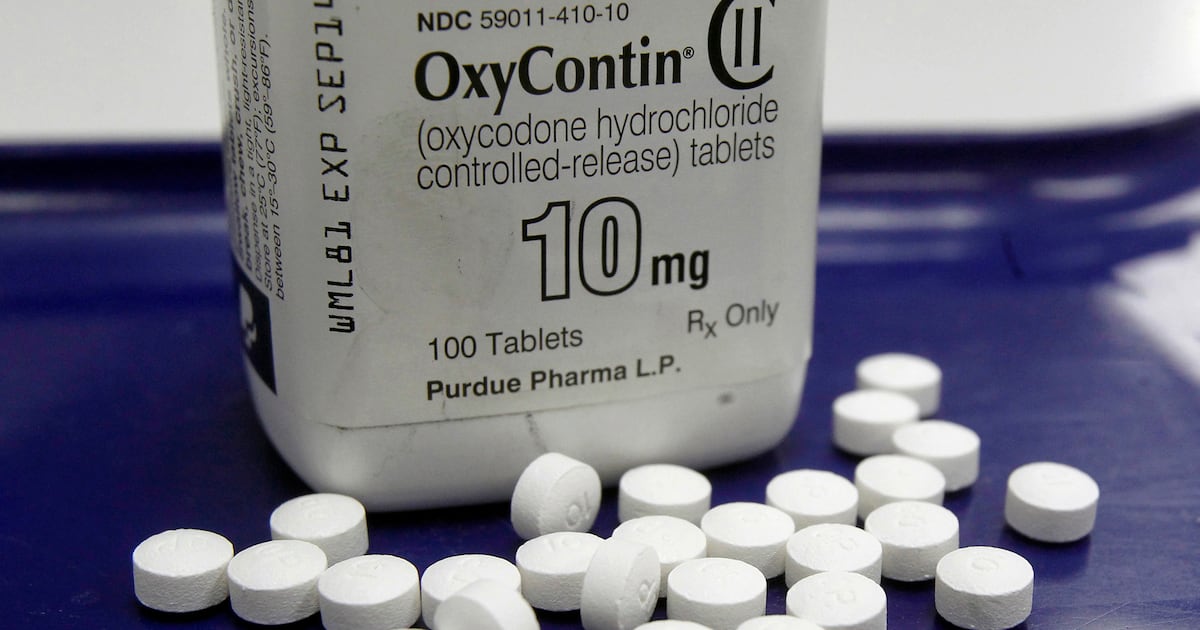
Utah and eight other states investigated the pharmaceutical company with the support of six other states for dishonestly marketing its opioid-related products as being not prone to abuse by users.

Some of the products distributed by Mylan Inc. included generic fentanyl patches, oxycodone, hydrocodone, and buprenorphine products. The states argued that the company sold these medications to doctors, aware of their addictive effects, which then led to overprescribing, and ultimately contributing to the opioid epidemic.

“I am pleased to announce a settlement of $335 million with Mylan Inc. for their role in the deadly opioid crisis. Mylan was aware that its opioid products, including fentanyl patches, were especially prone to abuse, and did not inform consumers of that issue,” Utah Attorney General Derek Brown said in a press release.

“I am grateful for the relentless work of the attorneys in the Office of the Utah Attorney General in holding Mylan accountable, and remain committed to saving Utah lives from the opioid crisis.”

Mylan Inc. will pay the involved states for the next nine years.

This settlement was negotiated by the attorneys general of Utah, California, Illinois, Massachusetts, New York, North Carolina, Oregon, Tennessee and Virginia, with coordinating efforts by state attorneys in Colorado, Delaware, Georgia, Idaho, Iowa and Vermont.

For Utah, the settlement will add to the funds already accumulated from opioid-related litigation. According to Brown’s press release, the state has received $81 million and is expected nearly a half-billion dollars more in the next 15 years.

Source: Utah News

Utah routs Kraken 7-1, snapping Seattle’s 3-game winning streak

Mikhail Sergachev scored a goal and had two assists to help power the Utah Hockey Club to a 7-1 victory over the Seattle Kraken on Tuesday night. Dylan Guenther led Utah with three assists and Karel …

Mikhail Sergachev scored a goal and had two assists to help power the Utah Hockey Club to a 7-1 victory over the Seattle Kraken on Tuesday night. Dylan Guenther led Utah with three assists and Karel …

Source: Utah News

Opinion: How is Utah responding to Trump tariffs?

A Democrat and a Republican discuss Utah’s response to Trump’s tariffs, special elections and more. How will tariffs affect Utah’s political landscape?

The cherry blossom bloom at the nation’s capital ended last weekend, and a wonderful version of it will soon retire at Utah’s Capitol. But the politics in both locales continue to thrive.

Special election outcomes in Florida and Wisconsin still reverberate. Sen. Cory Booker, D-N.J., broke a record for the longest speech on the U.S. Senate floor with his verbal attack on President Donald Trump. Do these reveal significant trends?

Cowley: Despite being significantly outspent, Susan Crawford (D) won Wisconsin’s circuit judge seat, and Sen. Randy Fine (R) won Florida’s congressional race. Despite Elon Musk spending $20+ million to put a Republican on the bench, money talks but can’t buy elections. If it did, we would be writing about President Kamala Harris right now.

Long-winded speeches that barely last one news cycle won’t save the Democrats’ sinking ship. They don’t have a plan, a viable presidential candidate or a message. They ignore overwhelming bipartisan support for Trump policies like banning men from women’s sports and securing elections, and ignore pleas from the middle class to rebuild the economy.

Pignanelli: “Follow the trend lines, not the headlines.” — Bill Clinton

Despite zero evidence of efficacy, physicians used bloodletting for centuries to remedy patients’ ills. Similarly, despite their unreliability, political commentators analyze special and off-season elections as predictors of future contests. However, politicos like us cannot help ourselves and will try to glean some nuggets that may prove worthwhile.

Wisconsin voters who placed a liberal into their Supreme Court also approved enshrinement into their state constitution of the requirement of a photo ID before a person can obtain a ballot. This is a lesson for Democrats across the country.

Booker performed a favor to U.S. history by ensuring the longest speech in the Senate is no longer a segregationist rant against voting rights. Despite the attention from national media, serious questions exist about how this 25-hour publicity tactic (only heard by a handful) helps in messaging for future Democratic candidates. Booker’s impressive bladder strength was noted, but few of his statements were covered or will be remembered.

Any additional prognostications for these activities would be akin to using leeches.

Trump is making waves, history and headlines, but not international friends, with his recent imposition of reciprocal tariffs. Utah imports and exports considerable amounts. What are the political ramifications?

Cowley: Millennials like me came of age during the 2008 Great Recession, then endured the 2020 global pandemic. We’ve barely seen a good economy, so another downturn doesn’t phase us — we’re used to a ramen noodle diet.

Tariffs aim to secure better global trade terms and restore domestic manufacturing. Trump said this will cause short-term pain but is necessary to right the economic wrongs of previous short-sighted administrations. You don’t snap your fingers and “voila,” instantaneous return of domestic manufacturing. This could take the entirety of Trump’s term or longer.

COVID-19 demonstrated America’s vulnerabilities in the supply chain. Our limited manufacturing heavily relies on foreign inputs and materials. We must bolster domestic production of energy, steel, microchips and rare earth minerals. Utah could play a part in this strategy with our troves of rare earth minerals and vast energy resources.

America remains the most important consumer market. Companies like Ford are making moves to serve American consumers, duty-free. The E.U. and others are already floating zero for zero tariffs. This is the highest-stakes game of economic chicken ever played. I’m betting on the guy who wrote “Art of the Deal” to win.

Pignanelli: Sen. Rand Paul, R-Ky., correctly emphasized that when Republicans imposed tariffs in 1890 and 1930, they were hammered in the next elections. A repeat could happen in 2026 if the stock market plunges and inflation explodes. This could significantly impact Utah’s swing districts and possibly a congressional seat.

But the tariffs of the 19th and 20th centuries were enacted by Congress, which means the modern story is unfinished. The president has greater flexibility to modify or Congress may feel forced to intervene, which would change the outcome.

Commentators (including me) have been opining that the political parties are undergoing realignment in multiple demographics, as was apparent in 2024. The eventual outcome of the recent actions by Trump may supercharge political transformations to the extent not seen since the 1850s.

Utah suffered in the 1890s and 1930s. Our diverse and sophisticated economy could again be negatively affected unless the trajectory changes. Thus, intra- and inter-party dynamics in the next several years may be even more extreme than the current environment.

How are other elected officials, including Utah’s delegation, reacting to Trump’s big swings? How might this change politics in perpetuity?

Cowley: Democrats can’t even denounce Tesla vandalism, let alone come up with a cogent counter to Trump’s bold and decisive agenda. Most Republicans are either complicit or silently acquiesce to Trump. Meanwhile, Utah legislators are decisively MAGA/MAHA, basking in praise from RFK Jr. and other Trump secretaries.

Pignanelli: Politicians love to be on the right side of history, but there is no crystal ball to decipher recent events. We may be amidst a massive economic upheaval that reorients political coalitions. So our officials express concern, combined with a desire to help the “hollowed out“ former industrial centers, while offering hope of eventual resolution.

Source: Utah News

Utah becomes first state to pass bill banning fluoride in drinking water

Republican Governor Spencer Cox signed a bill into law Thursday banning fluoride from the state’s drinking water becoming the first to do so.

Source: Utah News

RFK Jr. calls for end of fluoride in water, after Utah ban

Kennedy’s comment comes as the Environmental Protection Agency says it has now launched a new review of fluoride’s health effects.

Health and Human Services Secretary Robert F. Kennedy Jr. called Monday for the end of community water fluoridation, praising Utah’s move to ban the addition of fluoride to the water supply.

“It makes no sense to have it in our water supply. And I’m very, very proud of this state for being the first state to ban it. And I hope many more will come,” Kennedy told reporters in Utah.

It comes as the Environmental Protection Agency says it has now launched a new review of fluoride’s health effects, working with Kennedy’s department as it weighs whether to tighten federal restrictions on its addition to drinking water. 

Kennedy will also be reconvening his department’s Community Preventive Services Task Force to make a new recommendation on water fluoridation, an HHS official said. The federal task force previously recommended water fluoridation after a review in 2013, citing “strong evidence” of its public health benefits to reduce cavities outweighing its costs.

“As soon as I was nominated by President Trump as administrator of the EPA, the secretary instantly reached out to start talking about issues that he is so passionate about. And number one on that list was fluoride,” EPA Administrator Lee Zeldin said.

Fluoride has been incorporated into public water supplies in much of the country for decades to help protect against tooth decay. Dental organizations and public health experts say it’s a safe and low-cost intervention with proven benefits. 

Kennedy, however, cited a previous review by the federal government’s National Toxicology Program, which concluded that “higher levels” of fluoride was linked to lowered IQ in children. Those levels exceeded what’s recommended in water systems.

While the program’s report concluded more research was needed into whether fluoride was actually affecting IQ at levels found in most U.S. drinking water, a federal court ruled last year that the report’s findings were enough to warrant forcing the EPA to do more to address this potential risk. 

Speaking with reporters Monday, Kennedy went further than the report, warning of multiple other potential health risks ranging from hyperthyroidism to osteoarthritis. He said adding fluoride to water “clearly is doing harm” and was undermining freedom of choice. 

The EPA previously lowered its limits for fluoride in water in 2011, after a report from the National Academy of Sciences found some impacts on thyroid and arthritic symptoms might be possible under maximum limits at the time.

“They have not been completely well studied, but they are alarming enough that we shouldn’t be demanding that parents accept something for their children and in their homes, that is essentially a medication,” said Kennedy.

The American Dental Association has disputed claims that water fluoridation is unsafe, calling the report flawed. The organization cites continuing evidence that shows the policy substantially reduces cavity rates, especially for children in low-income communities.

Kennedy’s remarks come days after he gutted the CDC’s Division of Oral Health as part of the department’s widespread layoffs

Before it was eliminated, the division had been responsible for CDC’s work promoting the safety and benefits of community water fluoridation to prevent tooth decay.

The health secretary did not directly answer a question about the prospect of reinstating many of the laid-off workers at his department, after he suggested last week that some of the cuts he ordered were mistakes.

“No, the program — what I said was that there are programs that there are — the programs have been consolidated,” Kennedy told reporters. 

Kennedy has faced criticism for layoffs impacting a wide range of federal health agency services, including forcing Food and Drug Administration officials to cut back on food and drug safety inspections and eliminating the CDC’s only labs to investigate STD and viral hepatitis outbreaks.

“We didn’t cut any core programs or any critical care programs or any scientific programs. Those programs are being consolidated in a new agency that is going to make America healthy again,” he said.

Source: Utah News

RFK Jr. says he plans to tell CDC to stop recommending fluoride in drinking water

U.S. Health Secretary Robert F. Kennedy Jr. says said he plans to tell the Centers for Disease Control and Prevention soon to stop recommending fluoridation in communities nationwide.

SALT LAKE CITY (AP) — U.S. Health Secretary Robert F. Kennedy Jr. on Monday said he plans to tell the Centers for Disease Control and Prevention to stop recommending fluoridation in communities nationwide. Kennedy said he’s assembling a task force of health experts to study the issue and make new recommendations.

Also on Monday, the U.S. Environmental Protection Agency announced it is reviewing “new scientific information” on potential health risks of fluoride in drinking water. The EPA sets the maximum level allowed in public water systems.

Kennedy told The Associated Press of his plans after a news conference with EPA Administrator Lee Zeldin in Salt Lake City.

Kennedy cannot order communities to stop fluoridation, but he can direct the CDC to stop recommending it and work with the EPA to change the allowed amount.

Utah last month became the first state to ban fluoride in public drinking water, pushing past opposition from dentists and national health organizations who warned the move would disproportionately hurt low-income residents who can’t afford regular dentist visits.

Republican Gov. Spencer Cox signed legislation barring cities and communities from deciding whether to add the cavity-preventing mineral to their drinking water. Water systems across the state must stop fluoridation by May 7.

Kennedy praised Utah for emerging as “the leader in making America healthy again.” He was flanked by Utah legislative leaders and the sponsor of the state’s fluoride law.

“I’m very, very proud of this state for being the first state to ban it, and I hope many more will,” he said.

Kennedy oversees the CDC, whose recommendations are widely followed but not mandatory. State and local governments decide whether to add fluoride to water and, if so, how much — as long as it doesn’t exceed a maximum set by the EPA, which is currently 4 milligrams per liter.

Zeldin said his agency was launching a renewed examination of scientific studies on the potential health risks of fluoride in drinking water to help inform any changes to the national standards.

“When this evaluation is completed, we will have an updated foundational scientific evaluation that will inform the agency’s future steps,” Zeldin said. “Secretary Kennedy has long been at the forefront of this issue. His advocacy was instrumental in our decision to review fluoride exposure risks, and we are committed to working alongside him, utilizing sound science as we advance our mission of protecting human health and the environment.”

Fluoride strengthens teeth and reduces cavities by replacing minerals lost during normal wear and tear, according to the CDC. In 1950, federal officials endorsed water fluoridation to prevent tooth decay, and in 1962 they set guidelines for how much should be added to water.

Kennedy, a former environmental lawyer, has called fluoride a “dangerous neurotoxin” and said it has been associated with arthritis, bone breaks and thyroid disease. Some studies have suggested such links might exist, usually at higher-than-recommended fluoride levels, though some reviewers have questioned the quality of available evidence and said no definitive conclusions can be drawn.

In November, just days before the presidential election, Kennedy declared Donald Trump would push to remove fluoride from drinking water on his first day as president. That didn’t happen, but Trump later picked Kennedy to run the U.S. Department of Health and Human Services, where he has been expected to take some kind of action. Meanwhile, some localities have gone ahead with deciding whether to keep adding fluoride.

Related to all this: A massive round of staffing cuts last week across federal agencies included elimination of the CDC’s 20-person Division of Oral Health. That office managed grants to local agencies to improve dental health and, in some cases, encourage fluoridation.

Fluoride can come from a number of sources, but drinking water is the main one for Americans, researchers say. Nearly two-thirds of the U.S. population gets fluoridated drinking water, according to CDC data. The addition of low levels of fluoride to drinking water was long considered one of the greatest public health achievements of the last century.

About one-third of community water systems — 17,000 out of 51,000 across the U.S. — fluoridated their water, according to a 2022 CDC analysis. The agency currently recommends 0.7 milligrams of fluoride per liter of water.

But over time, studies have documented potential problems. Too much fluoride has been associated with streaking or spots on teeth. Studies also have traced a link between excess fluoride and brain development.

A report last year by the federal government’s National Toxicology Program, which summarized studies conducted in Canada, China, India, Iran, Pakistan and Mexico, concluded that drinking water with more than 1.5 milligrams of fluoride per liter — more than twice the recommended level in the U.S. — was associated with lower IQs in kids.

The American Dental Association said decades of fluoride in drinking water have been shown to reduce tooth decay. The group said it was willing to help conduct high-quality studies to settle the issue.

“When government officials like Secretary Kennedy stand behind the commentary of misinformation and distrust peer-reviewed research, it is injurious to public health,” said the association’s president, Brett Kessler.

Utah Oral Health Coalition chairperson Lorna Koci said Monday that she hopes other states push back against the removal of fluoride and that Kennedy’s visit to celebrate her state’s fluoride ban underscores the political motivations of those who support it.

“This seems to be less about fluoride and more about power,” Koci said.

___

Stobbe reported from New York. Associated Press writer Matthew Brown in Billings, Montana, contributed reporting.

___

The Associated Press Health and Science Department receives support from the Howard Hughes Medical Institute’s Science and Educational Media Group and the Robert Wood Johnson Foundation. The AP is solely responsible for all content.

Source: Utah News

Utah had a ‘relatively quiet’ year of water lawmaking. Two of its most important lakes are still struggling.

Before this year’s legislative session began, House Speaker Mike Schultz asked lawmakers “to take a break” from passing major water laws to see if current water policies are working.

It’s been three years — and three legislative sessions — since the Great Salt Lake and Lake Powell hit record lows due to years of drought and chronic overuse.

Public fervor to save the two bodies of water soared in response, and Utah’s elected officials reacted with new laws to keep more water in the embattled lakes. Mother Nature, too, replied — with two above-average winters that staved off dire straits.

This session, though, Utah lawmakers took a noticeably different approach.

“From a legislative standpoint, we had a relatively quiet year from where things have been in previous years,” Brian Steed, the state’s Great Salt Lake Commissioner, said during a recent media panel.

Before this year’s legislative session began, House Speaker Mike Schultz asked lawmakers “to take a break” from passing major water laws to see if current water policies are working. “When you make such huge policy changes, it’s important to take a minute and make sure that you’re getting the intended outcomes,” he said in a recent interview with The Salt Lake Tribune.

Lawmakers honored Schultz’s ask for a pause, which coincided with a mixed bag of water conditions across the state.

The Colorado River system continues to suffer from climate change and overuse; hydrologists predict Lake Powell, the country’s second-largest reservoir, will top out at just 35% full after this year’s spring runoff. The Great Salt Lake’s elevation remains below its healthy target of 4,198 feet.

Snowpack across the state is about 82% of normal and Utah’s reservoirs are 20% more full than they usually are this time of year, according to the Division of Water Resources. Still, parts of southern Utah are stranded in extreme drought — with persistent drought forecasted across the West this summer.

“A decision like that is made for political reasons, not because anybody knew it was going to be a good winter or a bad winter,” said Jack Schmidt, a watershed sciences professor at Utah State University and Director of its Center for Colorado River Studies, referring to the Legislature’s pause. “It’s not like they knew that we were going to be in a crisis or out of a crisis.”

Sen. Nate Blouin, D-Cottonwood Heights, said this year wasn’t the right time to take a breather from addressing Utah’s water woes.

“There’s a real need to focus on some of the stuff we’ve done to make sure it’s working,” he said. “But we’re certainly not out of the woods yet as it comes to the Great Salt Lake and other water issues.”

“The Legislature is absolutely the place to make these changes,” Blouin continued. “We have the authority. We just don’t have the political will.”

Past strides

(Bethany Baker | The Salt Lake Tribune) The bathtub ring is visible at Lake Powell on Tuesday, Oct. 17, 2023.

The Legislature in recent years enacted laws that changed how Utah manages its limited water resources — particularly with the Great Salt Lake in mind.

“When you look at the body of work the Legislature’s done over the last three or four years, it’s pretty remarkable,” Steed said, “and I would say it’s certainly the leader in the Western United States of adaptive plans to manage watershed resources.”

The Great Salt Lake’s record low imperiled the saline lake’s delicate ecological balance and exposed areas of drying lakebed, which produce toxic dust events. Legislators responded by changing the law to allow the state to buy water leases and rights to bring additional water to the Great Salt Lake. They established a trust to get more water to the lake and support its wetlands. And last year, lawmakers took aim at the lake’s water-intensive mineral extraction industry.

The Legislature also allocated $276 million to the state’s Agricultural Water Optimization Program, which helps farmers across Utah switch to more water-efficient irrigation equipment.

All of these changes, Schultz said, now need room to breathe. “We can go pass all the policies we want, and if they don’t get implemented, it doesn’t matter,” he said.

Rep. Casey Snider, R-Paradise, said recent wet winters have also cooled the water lawmaking frenzy.

“Public sentiment drives a lot of policymaking at the state Capitol, as it should. We’re elected to represent people and be responsive to the voices of our constituents,” Snider said. “Sometimes, it’s hard to advocate, or at least explain, that something is going to dry up when you have years of flooding. Those two narratives don’t easily mesh together.”

“Certainly, it has pulled the pressure off by having precipitation,” he continued.

Blouin said that lack of pressure was evident in the bills not passed this session.

He pointed to one of his own proposals, which would have allowed municipalities to commit water to the Great Salt Lake in their water conservation plans. The bill passed the Senate, but it didn’t make it to the House floor.

Another bill this session intended to improve water-efficient landscaping at public facilities but died in committee. A proposal that would have directed municipalities and counties to restrict lawn or turf at newly built residences also failed to advance, as did a bill that would have created a study analyzing how to maximize stormwater runoff into the Great Salt Lake. A Democratic representative requested $651,000 in ongoing funding to examine air quality and health impacts resulting from the lake’s dust storms, but got just $150,000 approved by the Legislature.

“The need to continue to find innovative solutions for continued conservation never stops,” Schmidt, from Utah State, said. “We need to continue to push on that, and every legislature is an opportunity to explore even additional ways to conserve water. When we lose momentum and save it and wait for the next crisis, we’re not getting the jump on the situation that we want.”

“We’ve got a real crisis,” he continued. “In that sense, why not have at least one significant conservation bill each session?”

What changed with water this year

(Rick Egan | The Salt Lake Tribune) The Great Salt Lake near the Spiral Jetty, on Tuesday, Jan 14, 2025.

Though fewer than in recent years, lawmakers this session passed water-related bills that made administrative changes and supported conservation.

One bill sponsored by Snider gave more power to Utah’s “water agent” to look for water supplies from the Bear and Colorado rivers. Another successful Snider bill directed water providers to contemplate changing water rates to encourage conservation.

Lawmakers also passed a bill that changed the state’s water policy by promoting groundwater quality, watershed monitoring and water reuse. And Steed noted the passage of two bills: one that clarified the Great Salt Lake Commissioner’s Office’s leasing authority and one that moved the office under the state’s Department of Natural Resources.

“On the whole it was, I would argue, a relatively successful legislative session for the Great Salt Lake,” Steed said during the recent media panel.

Looking to future sessions, Snider said he would like to implement better water tracking to nail down exactly how much of Utah’s conserved water is reaching the Great Salt Lake. And Schultz, despite asking for a pause this year, said he doesn’t think the state is finished changing and improving its water laws.

“An area where the state can still look to expand upon is water conservation,” he said, “but we need to make sure we’re doing it the right way, methodically…versus just throwing darts at the dart board and seeing what sticks.”

(Bethany Baker | The Salt Lake Tribune) Boaters recreate on Lake Powell near Page, Ariz. on Thursday, July 13, 2023.

Sarah Porter, who serves as the director for Arizona State University’s Kyl Center for Water Policy, said that conservation measures are important, but not always as effective as they might seem.

“Conservation is a limited option,” she said. “People often go to conservation, which almost always requires either financial investments or doing without, and often both.”

“Because of that,” Porter continued, “it’s important to be clear about what kind of benefits conservation is going to bring. And very often, it’s not going to bring the benefits that people envision.”

This year, forecasters predict inflows into Lake Powell will be less than last year’s. And while the National Resource Conservation Service reports the Great Salt Lake’s elevation could rise by as much as 1.5 feet after this year’s spring runoff, other factors, like soil moisture and evaporation, could cut into that increase. Snider said he expects the Great Salt Lake’s elevation will fall this year — a reversal from the last few years of healthier runoffs.

“I am expecting to go into the annual legislative session with a downward trend,” he said, “and we are responsive to that.”

Note to readers • This story is available to Salt Lake Tribune subscribers only. Thank you for supporting local journalism.

Source: Utah News