West Virginia returns home for Hall of Fame Weekend as double-digit underdogs against a Utah team that has already flexed its muscle in Big 12 play. Here’s how you can watch, listen, and follow along.
Date: Saturday, September 27, 2025
Kickoff Time: 3:30PM ET
Location: Milan Puskar Stadium, Morgantown, West Virginia
Channel: FOX
Announcers: Jason Benetti (PBP), Robert Griffin III (analyst), and Alexa Landestoy (sideline)
Radio Announcers: Tony Caridi (PBP), Dwight Wallace (analyst), Jed Drenning (sideline), Andrew Caridi, and John Antonik (Pre/Postgame Show)
Reminder: It is against site policy to post links to illegal streams in the comments.
Broadcast Information:
Tune in to FOX and the Fox Sports app (with a valid cable subscription) to catch the live broadcast of the game. Jason Benetti will be on the call, while Robert Griffin III will provide analysis. Alexa Landestoy will report from the sideline.
Advertisement
Advertisement
Advertisement
Tony Caridi, Dwight Wallace and Jed Drenning will man their usual roles for the Mountaineer Sports Network radio broadcast, while Andrew Caridi and John Antonik handle the pre/postgame shows.
Betting Odds:
Get in on the action with our friends at FanDuel Sportsbook. These odds are current as of 12:00PM on Wednesday, September 24th and are subject to change, so make sure to keep an eye on them before kickoff.
West Virginia: +13.5 points
Utah: -13.5 points
Over/Under: 47.5 total points
Key Stats:
Here are some stats to keep in mind as the game unfolds:
Series History: West Virginia and Utah have met just twice, both in bowl games, and the Utes won both — 32–6 in the 1964 Liberty Bowl and 30–14 in the 2017 Heart of Dallas Bowl. Saturday will be the first matchup in Morgantown.
Utah is putting up 36.8 points per game and ranks among the nation’s top 20 in rushing offense at 243 yards per game.
WVU’s offense has leaned on the ground game too, averaging just over 200 rushing yards per game, good for top 40 nationally.
The Mountaineer defense has produced 13 sacks through four games, tied for fourth in the country.
Red zone execution has been a strength — WVU is a perfect 12-for-12 on scoring chances, tied for first nationally.
Utah’s defense has been equally sharp, holding opponents to 14.8 points per game and under 300 total yards on average.
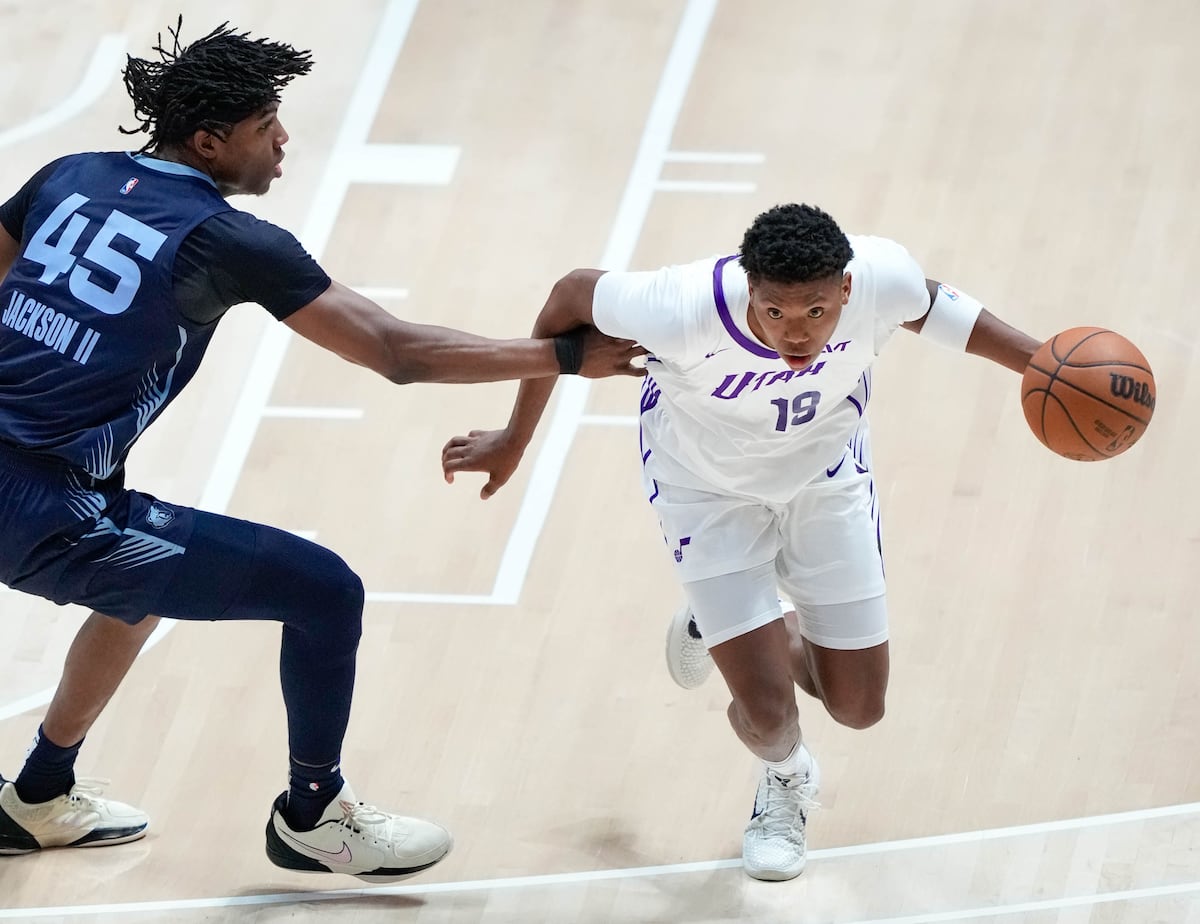
Utah Jazz rookie Ace Bailey is now searching for new representation as he prepares for his first NBA season, The Athletic reports.
Utah Jazz rookie Ace Bailey, the No. 5 pick of the 2025 NBA Draft, is parting ways with manager Omar Cooper, multiple league sources have informed The Athletic.
Bailey, a 6-foot-9 forward out of Rutgers, is seeking new representation. He and his camp have done interviews to this point, league sources say, but a decision on who he will ultimately go with has not been made.
Cooper’s son, Sharife, recently signed with the Washington Wizards on a two-way contract. In the pre-draft process, Cooper advised Bailey not to work out for any of the teams that owned a top-five pick. The wide belief is that Cooper wanted Bailey to land with the Wizards, who owned the No. 6 pick. The Jazz interviewed Bailey at the pre-draft combine in Chicago. But they were not able to get him into Utah for a pre-draft workout.
The only team in the top five that came close to getting Bailey in, according to league sources, was the Philadelphia 76ers, who owned the No. 3 pick. Bailey and his camp committed to a workout, but it fell through, and the Sixers selected guard VJ Edgecombe with the third pick.
Bailey is slated to compete for a spot in head coach Will Hardy’s starting lineup. At the very least, Bailey should become a rotation player in his rookie season.
According to Michael Scotto, the Utah Jazz waived KJ Martin. The Utah Jazz have waived forward KJ Martin. He appeared in 19 games (nine starts) last season with Utah, averaging 6.3 points, 2.8 …
Kevin Love is joining the Jazz after all
According to Grant Afseth, Kevin Love will be joining the Utah Jazz at training camp.
According to Afseth, the Jazz have not advanced buyout discussions and expect Love to join the Utah Jazz training camp next week.
Advertisement
Advertisement
Advertisement
It’s clear that there was not a lot of headway made in the buyout talks, and Love is still technically part of the Jazz. Utah is making such strong moves as they continue to do things in a way they’ve never done before. Kevin Love certainly seemed to expect that every wish would be granted, that he would simply be bought out and join whoever he wanted. Not the case with this Jazz team. Utah will certainly still work with Love to find a situation that works for both sides, but there is no hurry to do something if it doesn’t make sense for the Jazz. Love also brings experience and can be a mentor for the young Jazz bigs.
Utah Jazz waive KJ Martin
According to Michael Scotto, the Utah Jazz waived KJ Martin.
The Utah Jazz have waived forward KJ Martin. He appeared in 19 games (nine starts) last season with Utah, averaging 6.3 points, 2.8 rebounds, and 1.5 assists in 22.7 minutes per game. pic.twitter.com/MXUoeTY1bo
Utah is doing great work cleaning up their books and making sure they’re free and clear with every decision they make. If I could describe the short Austin Ainge stint with the Jazz so far, I’d describe it as disciplined. Utah is keeping their focus on their plan and not making hasty moves that don’t fit with the long-term plan. It’s extremely refreshing.
When do the Utes play BYU? How many NCAA Tournament teams from last season visit the Huntsman Center? The details are out.
All the game dates and opponents are locked into place for both the Utah men’s and women’s basketball teams in the upcoming season, after the Big 12 announced the league schedule for both sports this week.
The women’s schedule came out Monday, with the men’s schedule being released Tuesday.
Advertisement
Advertisement
Advertisement
What stands out from the Utah men’s basketball 2025-26 schedule
One of the biggest surprises on Utah’s Big 12 schedule is that the Runnin’ Utes will play BYU twice in January, just two weeks apart. Utah hosts the Cougars at the Huntsman Center on Jan. 10, then plays in Provo on Jan. 24. The Cougars and Utes split the season series last year, with each team winning at home.
BYU is the only Big 12 team that made the NCAA Tournament last season that Utah will face twice during the conference schedule. The Utes also will face Arizona State and Colorado twice.
The Utes will host national runners-up Houston on Feb. 10. Utah played the Cougars in Houston last season, where it lost by 34.
Advertisement
Advertisement
Advertisement
To open Big 12 play, the Utes will host Arizona on Jan. 3, before school is back in session following the Christmas break. The Wildcats made the NCAA Tournament last year.
Other Big 12 teams that made the NCAAs last season that the Utes will face include hosting Iowa State (Feb. 24), while Utah will travel to Baylor (March 7), Texas Tech (Jan. 14) and Kansas (Feb. 7).
The Utes’ game at Kansas will be their first trip to historic Allen Fieldhouse since joining the Big 12.
During nonconference play, though the Utes have an exhibition game at Oregon, they won’t leave the state during the regular season for the first six games.
Advertisement
Advertisement
Advertisement
Two of Utah’s toughest out-of-conference matchups will happen at the Acrisure Series in California, when the Utes face Grand Canyon, then either Ole Miss or Iowa.
Utah will hit the road twice in nonconference play to take on former Pac-12 rivals in California (Dec. 2) and Washington (Dec. 29).
Weber State is back on Utah’s schedule. The Utes host the Wildcats on Nov. 8.
Utah men’s basketball 2025-26 schedule
Nonconference play
Oct. 17 — Nevada (exhibition)
Oct. 24 — at Oregon (exhibition)
Nov. 3 — San Jose State
Nov. 8 — Weber State
Nov. 10 — Holy Cross
Nov. 15 — Sam Houston State
Nov. 18 — Purdue Fort Wayne
Nov. 20 — Cal Poly
Nov. 25 — vs. Grand Canyon (Acrisure Series, Palm Desert, California)
Nov. 26 — vs. Ole Miss or Iowa
Dec. 2 — at California
Dec. 6 — Cal Baptist
Dec. 13 — vs. Mississippi State (Delta Center)
Dec. 20 — Eastern Washington
Dec. 29 — at Washington
Big 12 schedule
Jan. 3 — Arizona
Jan. 7 — at Colorado
Jan. 10 — BYU
Jan. 14 — at Texas Tech
Jan. 17 — TCU
Jan. 20 — at Kansas State
Jan. 24 — at BYU
Jan. 31 — Oklahoma State
Feb. 4 — Arizona State
Feb. 7 — at Kansas
Feb. 10 — Houston
Feb. 15 — at Cincinnati
Feb. 18 — at West Virginia
Feb. 21 — UCF
Feb. 24 — Iowa State
Feb. 28 — at Arizona State
March 3 — Colorado
March 7 — at Baylor
March 10-14, Big 12 Tournament (T-Mobile Center, Kansas City)
Utah Utes players rush to celebrate with guard Matyson Wilke (23), bottom left, after she made a buzzer beater to win the game against BYU in overtime during a Women’s NCAA basketball game at the Jon M. Huntsman Center on the campus of the University of Utah in Salt Lake City on Saturday, March 1, 2025. | Brice Tucker, Deseret News
What stands out from the Utah women’s basketball 2025-26 schedule
Utah will open its conference portion of its schedule at Arizona on Dec. 22, followed by the Big 12 home opener on New Year’s Eve against Arizona State.
Advertisement
Advertisement
Advertisement
The Utes will play at BYU on Jan. 31, then host the Cougars on Feb. 21. In last year’s game at the Huntsman Center between the two schools, Maty Wilke hit a half-court buzzer-beater to lift Utah past BYU in overtime. The Utes have won their past four games against BYU.
Utah will host defending Big 12 champion TCU on Jan. 3. The Utes lost to the Horned Frogs in Fort Worth, Texas, last season. TCU advanced to the Elite 8 in the NCAA Tournament.
The Utes don’t have a home-and-home with any of the other six Big 12 teams that, like Utah, made the NCAA Tournament. In addition to hosting TCU, the Utes will face Baylor, West Virginia and Iowa State from that group, while traveling to Kansas State and Oklahoma State.
The three teams Utah will face twice — both home and away — include BYU, Arizona and Arizona State.
Advertisement
Advertisement
Advertisement
The highlight game from the nonconference slate is against defending national champion UConn, as well as Syracuse, in the Basketball Hall of Fame Showcase at Mohegan Sun Arena in Uncasville, Connecticut, just before Thanksgiving.
One late addition to the nonconference schedule is that Utah will play at former Mountain West Conference foe Colorado State on Dec. 4. The game was announced by the Rams last week.
Utah women’s basketball 2025-26 schedule
Nonconference play
Oct. 27 — Western Colorado (exhibition)
Nov. 3 — San Diego State
Nov. 7 — at Utah State
Nov. 11 — Utah Valley
Nov. 15 — Washington
Nov. 21 — vs. Syracuse (Basketball Hall of Fame Showcase, Uncasville, Connecticut)
Nov. 23 — vs. UConn (Basketball Hall of Fame Showcase, Uncasville, Connecticut)
Nov. 26 — Weber State
Nov. 29 — at Montana
Dec. 4 — at Colorado State
Dec. 10 — Boise State
Dec. 14 — Northwestern
Dec. 17 — UC Riverside
Big 12 play
Dec. 22 — at Arizona
Dec. 31 — Arizona State
Jan. 3 — TCU
Jan. 7 — at Kansas
Jan. 10 — at Kansas State
Jan. 14 — Baylor
Jan. 17 — at Houston
Jan. 24 — Texas Tech
Jan. 27 — West Virginia
Jan. 31 — at BYU
Feb. 4 — at UCF
Feb. 7 — Iowa State
Feb. 11 — at Arizona State
Feb. 14 — Cincinnati
Feb. 16 — at Oklahoma State
Feb. 21 — BYU
Feb. 24 — at Colorado
Feb. 28 — Arizona
March 4-8, Big 12 Tournament (T-Mobile Center, Kansas City)
John Henry Daley had to bide his time for a year after transferring to Utah, but the wait has been well worth it.
John Henry Daley had to bide his time for a year after transferring to Utah, but the wait has been well worth it.
The Ute sophomore has been filling up the stat sheet this season after winning the starting job, leading the nation in sacks with six and contributing 7.5 tackles for loss (tops in the Big 12 and second in the nation), 18 total tackles, a pass breakup and two forced fumbles.
Advertisement
Advertisement
Advertisement
He’s not only been Utah’s most consistent defensive player — he leads the team with an 89 Pro Football Focus grade — but he’s provided plenty of game-changing plays through the first four games of the season.
In the season-opener against UCLA — Daley’s first start ever — the Alpine, Utah, native sacked quarterback Nico Iamaleava twice. A week later against Cal Poly, Daley registered a sack and 2.5 tackles for loss.
“I mean it was unbelievable being able to go into the Rose Bowl against UCLA and make my first collegiate start. I mean it was a dream come true,” Daley said.
Daley’s real coming out party as a force to be reckoned with came in Laramie in the Utes’ 31-6 win at Wyoming. As Utah’s offense struggled to finish drives, scoring just three points in the first half, Daley and the Ute defense kept them in the game.
Advertisement
Advertisement
Advertisement
In the first quarter, Daley sacked Cowboy quarterback Kaden Anderson on 3rd-and-10 on the Utah 21-yard line to knock Wyoming out of field goal position, saving three points. A quarter later, with the Cowboys again in Ute territory, Daley forced Anderson to cough the ball up on a sack and Utah recovered the fumble.
Daley capped off his phenomenal day with a pass breakup.
Postgame, Utah head coach Kyle Whittingham paid Daley a high compliment, comparing him to Ute great Hunter Dimick, who totaled 150 tackles (45 for loss) with 29.5 sacks and four forced fumbles in his four-year career.
If you’re being compared to Dimick, you’re doing something right — and Daley has been doing a lot right this season.
Advertisement
Advertisement
Advertisement
He continued his impressive play against Texas Tech, leading the charge as Utah’s defense kept the Utes in it despite minimal support from their offense.
Daley made his mark near the end of the first quarter, right after Utah turned the ball over. With Texas Tech taking over with favorable field position near midfield, Daley would not be denied, powering through the block by Red Raider offensive tackle Howard Sampson. Sampson had his arm wrapped around Daley’s face, but it didn’t matter — Daley shed the block and rocked Texas Tech quarterback Behren Morton, jarring the ball loose.
Though Texas Tech recovered the fumble, the play was a loss of 16 and put the Red Raiders behind the sticks, setting the stage for a three-and-out.
“He’s a tough kid. He just keeps coming at you. He’s a throwback guy. He’s old school. He’s just a grinder,” Whittingham said.
Advertisement
Advertisement
Advertisement
Pro Football Focus grades Daley as the No. 10 pass rusher in the entire country (minimum 100 snaps), and he’s well on his way to becoming the next “Mayor of Sack Lake City.”
Before he shined at Utah, Daley was starring at Lone Peak High, where he totaled 136 tackles and 37 sacks, including a 22-sack senior season that saw him named to the Deseret News 6A All-State first team.
He signed with BYU out of high school, serving a mission for The Church of Jesus Christ of Latter-day Saints in Brazil before returning to Provo ahead of the 2023 season.
Utah recruited Daley to come to Salt Lake City, but the allure of playing with his brother Michael and following in the footsteps of his dad, Neal, was too much to pass up. In his freshman year at BYU, Daley played just 32 snaps while sitting behind starters Tyler Batty and Isaiah Bagnah and decided to enter the transfer portal in the offseason.
Advertisement
Advertisement
Advertisement
“I wanted a change of scenery and came up to the University of Utah,” Daley said.
The draw of being coached by defensive ends coach Lewis Powell, who has sent eight players to the NFL, was strong.
“I just saw how many guys they were putting year in and year out to the league and the production and all these amazing players and plays that they were making and I wanted to be a part of that,” Daley said.
Ultimately, a spiritual experience guided Daley to Utah.
“Actually what led me here was actually super cool. A very spiritual experience that guided me here, and so I know that Utah’s the place for me,” Daley said.
Advertisement
Advertisement
Advertisement
Like at BYU, when Daley showed up in Salt Lake City, he again had to wait his turn — this time behind starting defensive ends Logan Fano and Van Fillinger. Daley didn’t play much in 2024, though he registered his first collegiate sack against Southern Utah, but in Utah’s season finale against UCF, he got his first real taste of college football, playing 27 snaps and totaling three tackles and a quarterback hurry.
“It was great getting my feet wet, being able to get out there and make some plays. It was like my first real dose of college football with a couple drives, consistent drives and it was just amazing,” Daley said. “I mean that year, last year, had a lot of great defensive ends. I was just grateful I was part of that group.”
Through working with Powell last season and during spring and fall camp, Daley improved in all aspects of his game, especially his pass rush.
“I definitely feel like my pass rush has gotten much better. I think also just my overall knowledge of the game of certain formations, things to expect, being able to read offensive tackle stances and being able to go through the whole nine yards,” Daley said. “I feel like he’s helped my football IQ increase a ton. And also just confidence in what my abilities are.”
Advertisement
Advertisement
Advertisement
Daley went through a very competitive spring and fall camp battle for the starting defensive end spot opposite Fano with Washington transfer Lance Holtzclaw, Paul Fitzgerald and freshman Kash Dillon.
Daley’s jump from his redshirt freshman to sophomore season was evident in spring and fall camp.
“How haven’t we seen him improve? He’s improved in every aspect of his game. He’s stronger. He’s a technician. I mean, he’s worked on his fundamentals and his techniques extremely hard,” Whittingham said. “He’s got really good pass rush skills as evidenced by, I think he’s still leading the nation in sacks. He’s a guy that has really, really polished up his game over the last year and really made himself into an exceptional player.”
As good as he’s been this season, Daley still feels like he’s still scratching the surface of what he can be as a player — after all, Wednesday’s game was just his fourth start of his career — and the prospect of even more improvement is tantalizing for Utah.
Advertisement
Advertisement
Advertisement
“I feel like I can improve on everything in my game. I mean, this really is my first four games of college and so I’m still getting used to it, getting my feet wet,” Daley said. “I mean, I’ve been able to perform pretty well, but I know that I can do a lot better. So it’s definitely the floor, not the ceiling for me.”
Utah Utes defensive end Lance Holtzclaw (15) and Utah Utes defensive end John Henry Daley (90) chase down UCLA Bruins quarterback Nico Iamaleava (9) as they play at the Rose Bowl in Pasadena on Saturday, Aug. 30, 2025. Utah won 43-10. | Scott G Winterton, Deseret News
Attendees cheer after the International Olympic Committee awarded the 2034 Winter Olympic Games to the Salt Lake City-Utah Committee during a live watch party held at the Salt Lake City and County …
More than 400 sports officials from around the country are expected in Salt Lake City this week for the U.S. Olympic and Paralympic Committee’s annual assembly.
The annual gathering of the USOPC, sport national governing bodies, athletes and others associated with Team USA is being held at the Little America Hotel and is set to begin with a dinner Tuesday and end Sunday.
The series of meetings, which include a Town Hall for all participants on Friday, are intended to focus on finalizing preparations ahead of the next Olympics, the 2026 Winter Games that begin in February in Milan and Cortina, Italy.
The assembly is also seen as an “opportunity to build excitement” for Team USA, the USOPC posted, as well as the decade of Olympic and Paralympic sport in the U.S. that include the 2028 Summer Games in Los Angeles as well as Utah’s next Winter Games, in 2034.
“We’ll use this time to listen, engage and embrace our diverse perspectives, with the goal of emerging as a more unified and collaborative community,” the post said, “so that, together, we can empower American athletes to reach their greatest potential and grow the love of sport in this country.”
Leaders of Utah’s Organizing Committee for the 2034 Olympic and Paralympic Winter Games also are meeting at the hotel on Wednesday, including with the members of their steering committee who serve as advisers.
Utah’s first lady, Abby Cox, is leading a service project Thursday at the hotel as part of her Show Up initiative. She’ll be joined by organizing committee and USOPC officials as well as Olympic athletes to assemble snack kits for Granite School District students.
The USOPC assembly is usually held in Colorado Springs, where the organization that oversees the Olympics in the U.S. is headquartered. Having the event in Salt Lake City is significant, said Fraser Bullock, the organizing committee’s president and executive chair.
“I think it’s very notable that they’re coming to Utah, to our home, to the future host of the 2034 Games,” Bullock said of the U.S. Olympic community. “This gives us the opportunity to showcase Utah, for them to feel what we feel every day here in Utah.”
He wants them to “get the vibe that this is indeed the state of sport and in particular, that we have extensive programs for our youth. In addition to that, we’ll be talking about all of the events coming to Utah over the next nine months, world cups and various other types of competitions.”
It shows that Utah is “100% in on the partnership with the USOPC to grow sports in the United States” and especially in the state, Bullock said. “Over time, we hope to spread that to the entire country.”
Organizers are planning on using some of the more than $200 million in contributions recently pledged by individuals and foundations in Utah to the 2034 Games to launch youth sports programs.
There’s nothing specific that Utah’s Olympic organizers are looking for from the assembly, Bullock said, noting they’ll provide “a general update” on preparations for the 2034 Games that have been underway since the start of the year.
Hosting a second Winter Games in 2034 is “an Olympic-sized opportunity” for the state, according to a new report released Tuesday by the University of Utah’s Kem C. Gardner Policy Institute.
Hosting a second Winter Games in 2034 is “an Olympic-sized opportunity” for the state, according to a new report released Tuesday by the University of Utah’s Kem C. Gardner Policy Institute.
“Few single events in Utah history compare in reach and significance,” states the institute’s second “Keepers of the Flame” report, citing an estimated 15 billion viewer hours of coverage expected during the Olympics and the Paralympics that follow for athletes with disabilities.
That puts pressure on the state to tackle what the report described as “Utah’s Troubling Seven” challenges, just as the 2002 Winter Games pushed officials to deal with problems like I-15 gridlock and the need for more public transportation.
“Even with Utah’s well-documented exceptional economy, our state is changing fast. And even as Utah prospers, serious challenges pose a threat to Utah’s long-term success,” the report warned, but the 2034 Games can serve “as a powerful catalyst to make Utah even better.”
Utah’s seven challenges identified by the institute are:
Housing affordability and homelessness. Housing prices grew faster in Utah than anywhere else in the U.S. from 1991 to 2024, according to the Federal Housing Finance Agency, while the number of Utahns without homes reached a record high this year.
Traffic congestion. Delays on Utah roads between June 2016 and January 2025 grew four times faster than the state’s population, based on six-month moving averages.
Third grade reading proficiency. Considered “a leading indicator for future educational success,” proficiency remains below 50% statewide
College graduation rates. The share of Utah high school graduates enrolling in higher education has dropped in two of the past three years, while half of the state’s eight degree-granting institutions report completion rates below 50%
Water and Great Salt Lake. “Lower water levels put at risk the benefits created by the lake and threaten Utah’s long-term economic, ecological, and human health,” the report said, and “represents one of Utah’s greatest international and national reputational risks”
Energy supply. Utah, like the rest of the country, is facing increased power demands due to growth, energy intensive industries and artificial intelligence, and the need to replace aging plants
Behavioral health. Utah is third in the nation for adults with serious mental illness, and the fourth for those with serious thoughts of suicide, the report said, while the “share of Utah young adults with poor mental health more than doubled in the past 10 years”
Before billions tune into Opening Ceremonies at the University of Utah’s Rice-Eccles Stadium on Feb. 10, 2034, the 44-page report offers starting points to address those challenges, such as creating a statewide community land trust, as “a quick and effective way to lower housing costs” and prioritizing connected autonomous vehicles to ease traffic congestion.
Other “consequential ideas” to be considered are placing reading pros in K-3 classrooms, expanding career-oriented “catalyst centers” into Salt Lake County, conserving up to 500,000 acre-feet of water annually, investing in a state energy research fund, and aligning behavioral health efforts and investments with Utah’s strategic plan.
Insights in the reports that are intended “to help guide Utah and leverage the Games” begin with a call for the state “to lead with dignity,” in “a time of significant polarization and mean-spirited, sometimes even violent, expression and actions.”
Next is tapping in to Utah’s younger generations, followed by focusing on long-term goals at the community level and catalyzing private innovation and investment, possibly through creating an impact fund that could provide both societal benefits and profits.
Utahns stepped up for the 2002 Games, the report noted, with estimated private and public investments in transportation, resorts, venues, housing, hotels and other areas that were made to benefit the 2002 Games add up to $7.25 billion in 2024 dollars.
While about $4 billion of that amount went to rebuild I-15 and add TRAX light rail lines along with other transportation projects, the list also included spending for ski resort and Salt Palace expansions, new hotels and Olympic venues, and a public safety communications system.
Thanks in large part to the work done in the decades before and after 2002, this time around, Utah can claim seven “major achievements in the state’s economic success story,” the report said. Dubbed “Utah’s Magnificent Seven” achievements, they are:
Economic dynamism and diversity. “Utahns have built the most impressive economy in the nation,” the report said, highly diversified with more than double the national average real GDP growth over the past decade
High household income and low poverty. Adjusted for regional price parity, Utah’s 2023 household income ranks the nation’s highest while the state’s three-year average poverty rate from 2021 to 2023 is the lowest, at 6.7%
Upward mobility. Utah is one of only three states nationwide to hit top levels of upward mobility in every county, according to Opportunity Insights at Harvard University estimates
Widespread prosperity. Utah “exhibits the most equal distribution of income in the nation,” according to a Census Bureau measurement
Well-trained and educated workforce. Utah had the nation’s third highest share in 2023 of adults aged 25-64 with postsecondary training, including from trade and technical schools
Fast growing population and youthfulness. Utah’s population increased 18.4% between the 2010 and 2020 censuses, a faster rate than any state in the nation. With a median age of 32.4 in 2024, Utah also has the nation’s youngest population.
Social cohesion. Utah had the highest level of social capital among the state in a 2021 Utah Foundation study of more than 30 measures “in the broad categories of family structure, community participation, and economic mobility.”
The institute’s director, Natalie Gochnour, said the state is positioned to take advantage of another Winter Games.
“The global spotlight of the 2034 Games provides a powerful motivation and deadline for Utah to make strategic investments and pursue innovative solutions to many of our state’s most troubling challenges,” Gochnour said. “By proactively addressing our challenges and building on our strengths, Utah’s Olympic legacy will extend far beyond the Games.”
A flagpole was erected on distinctive Black Rock sometime last week, and the Utah Division of Forestry, Fire and State Lands is investigating the unpermitted installation. The flagpole flies the …
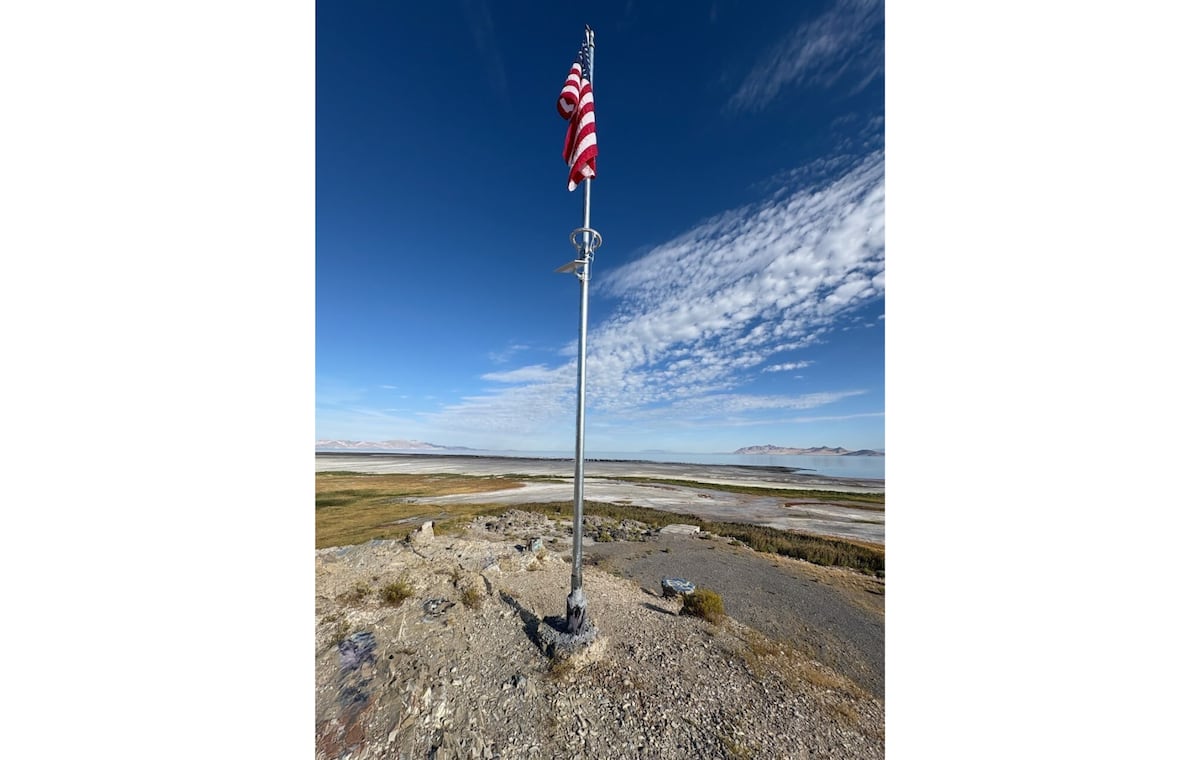
The Stars and Stripes are currently flying above the landmark Black Rock at the Great Salt Lake, but state officials don’t know who put them there.
A flagpole was erected on distinctive Black Rock sometime last week, and the Utah Division of Forestry, Fire and State Lands is investigating the unpermitted installation. The flagpole flies the American flag, and appears to have a concrete base and lighting attached, according to a photo from the division.
The agency is working to figure out what itwill do with the flagpole, said Karl Hunt, public affairs officer for the division, adding that he was unsure of the exact date that law enforcement officers noticed the pole.
Black Rock is listed on the National Register of Historic Places as a “valuable waypoint” for travelers crossing the Great Basin on the California Trail in the 19th century, according to a news release from the division.
The division protects the area as an important historical resource, the release added, and constructing structures on state land without a permit or altering any historical resource is against state law.
Individuals who break the law could be subject to a class B misdemeanor and civil damages, according to Utah state code.
“The issue is not about the flag but the flagpole that was installed into Black Rock,” the division said in a statement.
“The division respects the desire to display the flag but needs to ensure it is done so in a proper and legal manner,” it continued. “This flag has generated a lot of public interest, and we appreciate the dialogue around it. We are working to find an appropriate solution while protecting the historical importance of the site.”
Over the summer, Utah Republican Sen. John Curtis introduced legislation to ensure the American flag could fly permanently at another Utah landmark — the top of Khyv Peak in Provo.
The proposal came after one Utahn reinstalled an American flag each year for nearly two decades on top of the mountain, and was more recently told that his actions were prohibited by the Forest Service, according to a news release from Curtis’ office.
Although Dampier missed multiple practices, he was not listed on Utah’s availability report last week before making his fourth start for the Utes. Despite the setback, Whittingham emphasized that …
Utah quarterback Devon Dampier was not up to standard in a 34-10 loss to Texas Tech this past Saturday, throwing two interceptions and averaging just 2.5 yards per carry — a career low. There was a reason for the rough outing: Coach Kyle Whittingham revealed Monday that Dampier had been dealing with an injury, despite not being listed on the availability reports last week.
“He was doing the best he could,” Whittingham said. “Wasn’t able to practice Tuesday or Wednesday, a little bit Thursday. I’m going to tell you it definitely impacted Devon, but if you’re out there, you got to get it done. So we never use that as an excuse.”
Dampier sustained an ankle injury during Utah’s Week 3 road game at Wyoming, analyst Joel Klatt noted on Saturday’s broadcast. He was also reportedly seen limping after that contest. The injury kept him from fully participating in Utah’s normal padded practices, limiting his preparation for the Big 12 opener against the Red Raiders.
The 2025 season marks the first year of formal Big 12 player availability reports, following the lead of the ACC, Big Ten and SEC. Under the new rules, programs must submit daily reports starting three days before each game, with a final update 90 minutes before kickoff, listing players as available, probable, questionable, doubtful or out.
Big 12 to mandate player availability reports for football, basketball starting in 2025-26
Cody Nagel
Although Dampier missed multiple practices, he was not listed on Utah’s availability report last week before making his fourth start for the Utes.
Despite the setback, Whittingham emphasized that Dampier’s current condition is improving when asked if the injury could be a long-term concern.
“We hope not,” Whittingham said. “But again, we never discuss injuries here other than the injury report, so we will just have to see how it goes. I think he’s in a better place. Well, I know he’s in a better place right now on Monday than he was last Monday, so that bodes well.”
Dampier completed 25 of 38 passes for 162 yards in the loss. Utah’s lone big play came on the first snap of their only touchdown drive, when Dampier connected with Dallen Bentley for a 44-yard gain. That score brought the Utes within 13-10 with 10:22 remaining in the fourth quarter, before Texas Tech pulled away with three unanswered touchdowns to close out the game.
Through the first three games of the season, Dampier had completed 73% of his passes for 628 yards and seven touchdowns without an interception. He had also added 198 rushing yards and a touchdown on the ground, showing the dual-threat ability that makes him Utah’s centerpiece on offense.
“(We) believe in him completely and he’s without a doubt our quarterback and you can’t panic off one game that was not up to par,” Whittingham said. “And again, we already talked about another reason why that may have been. … I don’t think one subpar game is fair to judge him off that. The first three games he was pretty darn good.”
Despite an ankle injury holding him out of practice, Dampier did not appear on any of Utah’s availability reports throughout the week leading up to Saturday’s contest against Texas Tech.
Advertisement
Advertisement
Advertisement
This season, the Big 12 mandated availability reports for all conference football games, starting three days before game day and continuing daily.
For a Saturday game, the first availability report is due Wednesday night, with additional reports coming out on Thursday night and Friday night.
The final injury report is released 90 minutes before kickoff.
In a statement released Monday night by the school, Whittingham explained why Utah did not list Dampier on the availability report despite his injury.
“Quarterback Devon Dampier did not appear on last week’s player availability report because while he was limited in practice early in the week, his status of playing in last Saturday’s game vs. Texas Tech was never in question.
Advertisement
Advertisement
Advertisement
“We have spoken to the conference and have clarified the guidelines moving forward.”
“When an institution becomes aware that a student-athlete may be unable to participate in an upcoming game for any reason (including, but not limited to, injury, illness, suspension, ineligibility, or personal matters), it is required to accurately indicate the student-athlete’s participation status on the Initial Report as outlined below. “Participation status” means only the student-athlete’s name and their expected ability to participate in the upcoming game, using the categories set forth in this policy, and does not include medical diagnoses, treatment plans, or underlying personal details.”
Advertisement
Advertisement
Advertisement
Here is the section titled “Player Participation Status Categories for the Initial Reports”
Utah’s argument is that because Dampier was always expected to play, despite the injury, that his exclusion from the availability report would fall within Big 12 guidelines.
“My availability was never in question,” Dampier said.
Whittingham said last Tuesday that Utah’s training staff would fill out the daily availability reports.
“I’m not a doctor. I wouldn’t make those decisions, who plays, who doesn’t, who’s doubtful, questionable, all that stuff. But the trainer will have that out,” Whittingham said.
Texas Tech had 14 players on its initial availability report, with four different designations as outlined by the Big 12 — out, doubtful, questionable and probable. Utah had four players listed in the “out” section and nothing else.
Advertisement
Advertisement
Advertisement
On Thursday, Utah added defensive tackle Karson Kaufusi to its report under “doubtful,” and on Friday, he was moved to “out.” No other changes were made in the report released 90 minutes before kickoff.
Dampier started in Utah’s 34-10 loss to Texas Tech. He threw for 162 yards and two interceptions on 66% completion. The dual-threat quarterback was shut down by the Red Raiders on the ground, as Texas Tech limited him to 27 yards on 11 rushing attempts.
“I’m going to tell you that it (the injury) definitely impacted Devon, but if you’re out there, you got to get it done, and so we never use that as an excuse,” Whittingham said.
Is there any concern that Dampier’s injury is long-term?
Advertisement
Advertisement
Advertisement
“We hope not, but again, we never discuss injuries here other than the injury report, so we will just have to see how it goes,” Whittingham said. “I think he’s in a better place. Well, I know he’s in a better place right now on Monday than he was last Monday, so that bodes well.”
Dampier was asked about how he is feeling health-wise after Monday’s install day — the Utes don’t have a padded practice to start the week — and responded “great.”
Utah continues Big 12 play at West Virginia on Saturday.
“Now it’s on to West Virginia. Let’s go attack it,” Dampier said.