Where was Utah placed in latest College Football Playoff rankings?

Coming off a bye week, Utah remained in the same spot in the College Football Playoff rankings as it did in the first rankings released a week ago. The Utes (7- …

Coming off a bye week, Utah remained in the same spot in the College Football Playoff rankings as it did in the first rankings released a week ago.

The Utes (7-2, 4-2 Big 12) checked in at No. 13 in the second CFP rankings of the season, which were revealed Tuesday night on ESPN.

Utah was boxed out of the top 12 for the second straight week, with BYU nabbing the No. 12 spot after getting thumped by Texas Tech in a 29-7 final from Lubbock, Texas, on Saturday.

However, both the Utes and Cougars would be sitting on the outside looking in if the postseason started Tuesday. That’s because the selection committee didn’t rank an ACC or Group of 5 team in the top 12. Miami and South Florida would get the No. 11 and No. 12 seeds, respectively, to fill the conference champion requirement.

The playoff will feature a dozen teams with the five highest ranked conference champions earning automatic bids. The four highest ranked teams — regardless of conference championship status — will earn first round byes.

If fewer than five conference champions are among the committee’s top 25 on selection day, then the committee will rank the remaining conference champions. The highest-ranked will be added to the playoff until five conference champions are included in the playoff.

Six SEC teams occupied the top 12 spots, led by Texas A&M, Alabama and Georgia in the top five. Ohio State came in at No. 1 again, followed by Indiana at No. 2 and Oregon at No. 8 from the Big Ten. Notre Dame slotted in at No. 9.

The Red Raiders moved up to No. 6 following their triumphant win over the Cougars. The Big 12 got a fourth team in the top 25 with Cincinnati checking in at No. 25. The Utes beat the Bearcats, 45-14, on Nov. 1.

The Utes have now appeared in 46 CFP rankings since the system debuted in 2014. The Utes have finished in the top 25 seven times, including their highest ranking (No. 8) in 2022.

Utah will look to keep its conference title game and College Football Playoff aspirations intact when it takes on Baylor in Week 12 (Saturday, 5 p.m. MT on ESPN2).

*Projected conference champion bids based on ranking

  1. Ohio State (9-0, 6-0 Big Ten)*
  2. Indiana (10-0, 7-0 Big Ten)
  3. Texas A&M (9-0, 6-0 SEC)*
  4. Alabama (8-1, 6-0 SEC)
  5. Georgia (8-1, 6-1 SEC)
  6. Texas Tech (9-1, 6-1 Big 12)*
  7. Ole Miss (9-1, 5-1 SEC)
  8. Oregon (8-1, 5-1 Big Ten)
  9. Notre Dame (7-2)
  10. Texas (7-2, 4-1 SEC)
  11. Oklahoma (7-2, 3-2 SEC)
  12. BYU (8-1, 5-1 Big 12)
  13. Utah (7-2, 4-2 Big 12)
  14. Vanderbilt (8-2, 4-2 SEC)
  15. Miami (7-2, 3-2 ACC)*
  16. Georgia Tech (8-1, 5-1 ACC)
  17. USC (7-2, 5-1 Big Ten)
  18. Michigan (7-2, 5-1 Big Ten)
  19. Virginia (8-2, 5-1 ACC)
  20. Louisville (7-1, 4-1 ACC)
  21. Iowa (6-3, 4-2 Big Ten)
  22. Pitt (7-2, 5-1 ACC)
  23. Tennessee (6-3, 3-3 SEC)
  24. South Florida (7-2, 4-1 AAC)*
  25. Cincinnati (7-2, 5-1 Big 12)

Rankings based on ESPN FPI

MORE UTAH NEWS & ANALYSIS

Source: Utah News

Utah judge rejects GOP redistricting effort, approving new map with a Democratic seat

A Utah judge rejected new congressional district lines drawn by Republican state lawmakers, instead approving a new map drawing a solidly Democratic seat with voters from Salt Lake City that’s likely …

A Utah judge late Monday night rejected new congressional district lines drawn by Republican state lawmakers, instead approving a map with a solidly Democratic seat ahead of next year’s midterm elections.

The ruling is a major blow for Republicans, who had designed a map to protect the state’s all-GOP congressional delegation. And it gives Democrats a boost as they attempt to respond to Republicans’ mid-decade redistricting efforts around the country and win control of the House in 2026.

The court-ordered map drawn by Republican state lawmakers would have resulted in four districts that were solidly or leaning Republican, though two would have been more competitive than the current iteration.

Advertisement

Advertisement

But Utah District Court Judge Dianna Gibson tossed that map in favor of one suggested by the plaintiffs in the case. She concluded that Republicans had impermissibly considered political data and gerrymandered in favor of their own party.

In its place, she chose a congressional map that includes a Democratic-leaning district anchored in northern Salt Lake County. According to court filings, it is approximately 43% Republican. Utah’s current map splits the populous Salt Lake County into four districts.

The ruling is the latest in a yearslong legal battle over Utah’s anti-gerrymandering rules, which started long before the national redistricting arms race that has played out this year.

Utah voters narrowly approved a ballot initiative in 2018 that created an independent redistricting commission that recommends congressional maps and wrote anti-gerrymandering rules into law. The GOP-controlled Legislature has worked to circumvent the changes by weakening the commission and ignoring its proposed map after the 2020 census.

Advertisement

Advertisement

Advocates including the League of Women Voters of Utah and Mormon Women for Ethical Government filed a lawsuit arguing that Republican lawmakers were gerrymandering in violation of the law. A district court agreed with the plaintiffs and ordered the Legislature to draw a new map.

Utah Republican Party Chair Robert Axson slammed Gibson’s ruling, saying it showed the 2018 ballot measure, known as “Prop 4,” needs to be repealed.

“Prop 4 empowered unelected activists to overrule Utah voters and their elected representatives,” Axson said in a statement. “This is bigger than than maps — it is a direct threat to our constitutional order. Prop 4 created this confusion; this ruling escalates it into a constitutional crisis.”

Meanwhile, Democrats around the country celebrated the ruling.

Advertisement

Advertisement

“An enlightened Utah judge made clear last night that the people of Utah — not MAGA politicians — should decide who represents them in Congress,” House Minority Leader Hakeen Jeffries, D-N.Y., said in a statement. “The court correctly enacted a fair map that reflects the geographical composition of Salt Lake County, instead of the current map that deliberately cracks communities of interest to artificially hand Republicans complete control of the congressional delegation.”

More in Politics

The court’s overnight ruling came just before the state’s election officials need to start preparing for next year’s primary elections Tuesday morning.

Utah and Ohio are the only two states that are required to redraw their maps this year. But they’ve had plenty of company, with Texas, Missouri and North Carolina enacting new maps to shore up the GOP’s narrow U.S. House majority at President Donald Trump’s urging.

In response, voters in California last week approved a new map designed to net Democrats up to five House seats. And Virginia Democrats last month took the first step toward a mid-decade redistricting effort.

Several Republican- and Democratic-led states are also considering redrawing their maps.

This article was originally published on NBCNews.com

Source: Utah News

Utah judge rejects Republican-drawn congressional map, opts for one with a Democratic-leaning district

A Utah judge rejected a new congressional map drawn by Republican lawmakers and adopted an alternate proposal creating a Democrat-leaning district ahead of the 2026 midterm elections.

Salt Lake City — A Utah judge on Monday rejected a new congressional map drawn by Republican lawmakers, adopting an alternate proposal creating a Democrat-leaning district ahead of the 2026 midterm elections.

Republicans hold all four of Utah’s U.S. House seats and had advanced a map poised to protect them.

Judge Dianna Gibson ruled just before a midnight deadline that the Legislature’s new map “unduly favors Republicans and disfavors Democrats.”

She had ordered lawmakers to draw a map that complies with standards established by voters to ensure districts don’t deliberately favor a party, a practice known as gerrymandering. If they failed, Gibson warned she may consider other maps submitted by plaintiffs in the lawsuit that led her to throw out Utah’s existing map.

Gibson ultimately selected a map drawn by plaintiffs, the League of Women Voters of Utah and Mormon Women for Ethical Government. It keeps Salt Lake County almost entirely within one district, instead of dividing the heavily Democratic population center among all four districts, as was the case previously.

The judge’s ruling throws a curveball to Republicans in a state where they expected a clean sweep as they’re working to add winnable seats elsewhere. Nationally, Democrats need to net three U.S. House seats next year to wrest control of the chamber from the GOP, which is trying to buck a historic pattern of the president’s party losing seats in the midterms.

The newly approved map gives Democrats a much stronger chance to flip a seat in a state that has not had a Democrat in Congress since early 2021.

“This is a win for every Utahn,” said state House and Senate Democrats in a joint statement. “We took an oath to serve the people of Utah, and fair representation is the truest measure of that promise.”

In August, Gibson struck down the Utah congressional map adopted after the 2020 census because the Legislature had circumvented anti-gerrymandering standards passed by voters.

The ruling thrust Utah into a national redistricting battle as President Trump urged other Republican-led states to take up mid-decade redistricting to try to help the GOP retain control of the House in 2026. Some Democratic states are considering new maps of their own, with California voters approving a map last week that gives Democrats a shot at winning five more seats. Republicans are still ahead in the redistricting fight.

Redistricting typically occurs once a decade after a census. There are no federal restrictions to redrawing districts mid-decade, but some states – more led by Democrats than Republicans – set their own limitations. The Utah ruling gives an unexpected boost to Democrats, who have fewer opportunities to gain seats through redistricting.

If Gibson had instead approved the map drawn by lawmakers, all four districts would still lean Republican but two would have become slightly competitive for Democrats. Their proposal gambled on Republicans’ ability to protect all four seats under much slimmer margins rather than creating a single-left leaning district.

The ruling came minutes before midnight on the day the state’s top election official said was the latest possible date to enact a new congressional map so county clerks would have enough time to prepare for candidate filings for the 2026 midterms.

Republicans have argued Gibson doesn’t have legal authority to enact a map that wasn’t approved by the Legislature. State Rep. Matt MacPherson called the ruling a “gross abuse of power” and said he has opened a bill to pursue impeachment against Gibson.

Gibson said in her ruling she has an obligation to ensure a lawful map is in place by the deadline.

CBS Salt Lake City affiliate KUTV reports that Republicans have been holding meetings across Utah to push a ballot initiative to repeal Proposition 4, the law that created the state’s Independent Redistricting Commission. Supporters of the repeal effort need to collect about 140,000 signatures to get the measure on the 2026 ballot, giving voters the final say on whether to keep or scrap the commission.

Even if the Utah GOP is successful, Judge Gibson’s ruling dictates Utah’s congressional districts for the 2026 election cycle.

Source: Utah News

Utah is the second-most charitable state in the USA, study says

A study named Utah the second-most charitable state in the U.S., based on factors like volunteering, service, and charitable giving.

SALT LAKE CITY (ABC4) — A study named Utah the second-most charitable state in the U.S., based on factors like volunteering, service, and charitable giving.

According to a recent study from WalletHub, Utah is the second-most charitable state in the country. The study compared the 50 states and the District of Columbia across 17 “key indicators of charitable behavior.” Below are the five most charitable states.

Giving Season: Volunteer and service ideas for the holiday season

Advertisement

Advertisement

The 17 indicators were organized into two categories: charitable giving and volunteering/service.

WalletHub says that the Beehive State ranked number one for volunteering and service, which was based on metrics like volunteer rate, share of population collecting/distributing clothes and food, and volunteer hours per capita.

According to the study, Utah has the highest volunteer rate in the entire U.S. at roughly 47%, and the highest percentage of the population that donates their time. Additionally, 68% of Utahns reported that they helped neighbors with tasks like house sitting, watching children, or lending items in the past year.

The Beehive State ranked a little lower when it came to charitable giving, landing the 19th spot on the list. This is likely because, according to WalletHub, Utah has the fewest charities per capita out of all the states.

Advertisement

Advertisement

Despite this bringing the overall score down, people in the Beehive State donate the second-most in the country out of their personal income — roughly 3.5% of their adjusted gross income on average. Utah also has the third-highest percentage of the population that donates money.

To learn more about the methodology of this study and see how other states ranked, visit WalletHub’s website.

Latest headlines:

Copyright 2025 Nexstar Media, Inc. All rights reserved. This material may not be published, broadcast, rewritten, or redistributed.

For the latest news, weather, sports, and streaming video, head to ABC4 Utah.

Source: Utah News

Minnesota Timberwolves beat Utah Jazz for 2nd time in 4 days; Edwards scores 35

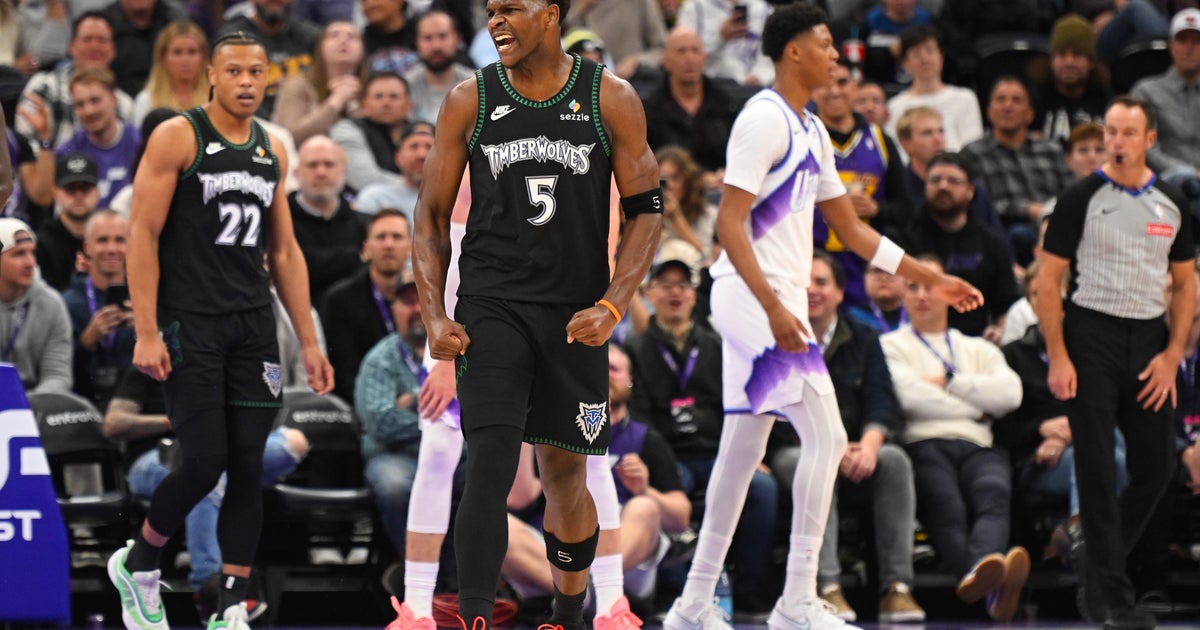
Anthony Edwards had 35 points and six assists as the Timberwolves beat the Jazz 120-113 on Monday night for Minnesota’s second win over Utah in four days.


Anthony Edwards had 35 points and six assists as the Timberwolves beat the Jazz 120-113 on Monday night for Minnesota’s second win over Utah in four days.

Minnesota, which beat Utah 137-97 on Friday and topped Sacramento 144-117 on Sunday, has won three straight games and five of its last six.

Edwards posted his ninth straight game of 30 or more points, marking the longest stretch of 30-point games against the Jazz for any NBA player.

Julius Randle added 27 points, eight rebounds, and seven assists for Minnesota. Rudy Gobert chipped in 14 points and 12 boards.

Keyonte George scored 27 points and Lauri Markkanen added 23 to lead the Jazz.

Back-to-back baskets from George keyed a 10-0 run to close out the first quarter that gave Utah a 30-26 lead. He scored 12 points on 5-of-6 shooting in the quarter.

Minnesota countered with its own 10-0 run to go ahead 47-46 late in the second quarter. Randle powered the spurt by scoring a pair of baskets and assisting a third.

The Timberwolves built on that momentum, going up 66-55 early in the third quarter. Starting with Randle’s reverse layup on the final play before halftime, Minnesota scored 15 unanswered points to surge ahead for good. Edwards fueled the run, scoring three baskets and assisting two others from Randle.

It set the stage for a dominant third quarter for the Timberwolves, who outscored the Jazz 33-9 through the first 8½ minutes of the period to build up an 86-64 lead.

Utah cut the deficit to single digits multiple times in the fourth quarter, but never got closer than seven points.

Up next

Timberwolves: Host Sacramento on Friday.

Jazz: Host Indiana on Tuesday.

Note: The attached video first aired on Oct. 20, 2025.

Source: Utah News

‘I felt like I was inside my TV’: Utah contestants describe ‘Squid Game’ experience

The Challenge this season, participating in a series of high-stakes games in pursuit of a cash prize worth nearly $5 million.

SALT LAKE CITY (ABC4) — Two contestants from Utah competed on “Squid Game: The Challenge” this season, participating in a series of high-stakes games in pursuit of a cash prize worth nearly $5 million.

Contestants Britt Christensen and Lizzie McGee described their experience on the show.

“My favorite game was the six-legged pentathlon,” Christensen said. “I thought, well, that might be dangerous, you know, handcuffing six people together by their ankles, and I just, it wasn’t even on my radar. And the team building that we got to hear about and see from all the other players, I mean, I really almost sent my team home with my Gonggi game.”

Advertisement

Advertisement

Christensen added that their team still made it, despite her lacking performance. She said her team members were very supportive, giving her the courage to keep going.

“That was a really fun team bonding moment for sure,” Christensen said.

McGee added that she soaked in the whole experience.

“When I went into the show, I was really, really nervous for ‘Red Light, Green Light,’” McGee said. “I thought that out of all the games, when I watched the series, I thought Red Light, Green Light is gonna be my demise. I don’t even know if I would be able to have the stamina or figure it out.”

McGee said she had heard that Red Light, Green Light was difficult, with eight hours of filming. She said season one contestants claimed they just stood still for 45 minutes at a time.

Advertisement

Advertisement

“As a theater nerd, I loved Mingle,” McGee said.

The game requires players to form groups of a specific number, called out by a machine, and enter a room within 30 seconds to avoid elimination.

More in Entertainment

McGee added that the fun part of the whole experience was how difficult it was, and how much being there felt like being inside the show.

“I walk in and the set was exactly like the show,” she said. “I felt like I was inside my TV, experiencing this experience, and I couldn’t stop geeking out. And I was really lucky. My team really stuck together and knew the numbers and could figure it out.”

McGee said while the whole experience was indeed stressful and a bit crazy, she had a lot of fun.

Advertisement

Advertisement

You can watch the full interview with Christensen and McGee on News4Utah+ here.

Latest headlines:

Copyright 2025 Nexstar Media, Inc. All rights reserved. This material may not be published, broadcast, rewritten, or redistributed.

For the latest news, weather, sports, and streaming video, head to ABC4 Utah.

Source: Utah News

Utah Is Failing in Affordability and Homebuilding: Can Gov. Cox Rebalance the Market?

Utah’s housing market is under pressure, earning a C in Realtor.com®’s latest report for lagging affordability and uneven construction.

Utah’s housing market has been one of the country’s fastest-growing—but also one of the hardest-hit by rising costs.

The Realtor.com® State-by-State Housing Report Card gave the Beehive State a C, reflecting a steep drop in affordability and lagging new construction relative to demand. The report—part of the Let America Build campaign—grades states on how well they manage the balance between home prices and new housing supply.

President Donald Trump recently put pressure on homebuilders to increase construction nationwide, given the issues with construction in the country. In a post on his Truth Social platform in early October, he accused major builders of hoarding lots to prop up prices—likening them to OPEC, which restricts oil output to maintain high prices.

Advertisement

Advertisement

“They’re my friends … but now, they can get Financing, and they have to start building Homes. They’re sitting on 2 Million empty lots, A RECORD,” Trump wrote. He urged Fannie Mae and Freddie Mac to intervene and “get Big Homebuilders going” to “restore the American Dream.”

Utah’s grade shows that while the state continues to attract new residents and businesses, its housing pipeline hasn’t kept pace.

Utah’s “C” grade explained

Realtor.com’s analysis gave Utah a total score of 51, placing it squarely in the middle of affordability nationwide. The state’s median listing price climbed to $602.230 in 2024, while the median household income reached $88,438—strong earnings but not enough to offset high home prices.

Utah accounted for just 1.6% of national housing permits in 2024, despite holding 1.0% of the U.S. population. That results in a permit-to-population ratio of 1.0, a moderate figure that looks solid on paper but falls short in meeting the needs of one of the nation’s fastest-growing populations. The new construction premium—the price difference between new and existing homes—was 9.3%, reflecting high material and land costs that have pushed new builds out of reach for many families.

Advertisement

Advertisement

Realtor.com economists note that Utah’s housing challenges stem from a perfect storm of strong demand, limited land availability, and rising construction costs. Even with steady permitting, supply can’t keep up with population growth—particularly along the state’s Wasatch Front corridor.

The West’s affordability crisis

Nationally, new construction is helping narrow the affordability gap, but the West continues to lag behind other regions. The Realtor.com New Construction Insights report found that the median new-home price held steady at $450,797, while resale prices climbed 2.4%. That brought the national new construction premium to just 7.8%, the lowest in recorded history.

But the West saw a different trend. Realtor.com data show that while the total number of homes under construction has risen, the share of new-construction listings has dropped—the result of higher costs, restrictive zoning, and limited buildable land.

But again, the pinch is being felt all over.

Advertisement

Advertisement

“America is short more than 4.7 million homes, and every new home built helps close that gap while fueling local economies,” says Shannon McGahn, executive vice president and chief advocacy officer at the National Association of Realtors®.

“NAR research shows that the U.S. has faced a persistent housing shortage for more than a decade, driving up prices and limiting options for buyers. Expanding housing supply creates jobs, supports small businesses, and affords families the opportunity to build generational wealth.”

Governor Cox’s housing reforms take shape

During his 2024 State of the State address, Governor Spencer Cox announced a goal to build 35,000 starter homes in Utah over the next four years.

Since then, he’s made strides to increase construction, but is looking to do more by changing the laws around zoning and permits.

Advertisement

Advertisement

On October 30, 2025, Cox served as the keynote speaker at the Ivory Prize Summit, held at the University of Utah’s David Eccles School of Business. The event brought together more than 100 housing experts from across the country to discuss solutions to the nation’s housing affordability challenges.

More in U.S.

One of the central theme of the summit was Utah’s ongoing debate over how much authority the state should exert in addressing the housing crisis—whether local governments need more state support and autonomy, or whether the state should intervene directly to meet housing goals.

During a discussion at the event, Cox said he believes that, without government regulations, housing shortages would be less severe, citing Texas as an example of a state that has reduced restrictions to allow more flexible development.

The governor also previewed what he described as a “more aggressive” strategy to increase housing supply, which could include statewide zoning preemption measures allowing for smaller and less expensive housing units, regardless of local ordinances.

Advertisement

Advertisement

Utah has recently enacted several housing-related policies aimed at accelerating development, including limited preemptions requiring local governments to approve housing near public transit and to expedite permitting.

This article was produced with editorial input from Dina Sartore-Bodo and Gabriella Iannetta.

Source: Utah News

Minnesota Timberwolves at Utah Jazz odds, picks and predictions

The Minnesota Timberwolves (6-4) and Utah Jazz (3-6) meet Monday at Delta Center in Salt Lake City, Utah. Tip-off is set for 9 p.m. ET. Let’s analyze BetMGM Sportsbook’s NBA odds around the …

The Minnesota Timberwolves (6-4) and Utah Jazz (3-6) meet Monday at Delta Center in Salt Lake City, Utah. Tip-off is set for 9 p.m. ET. Let’s analyze BetMGM Sportsbook’s NBA odds around the Timberwolves vs. Jazz odds and make our expert NBA picks and predictions for the best bets.

Season series: Timberwolves lead 1-0

The Timberwolves throttled the Sacramento Kings 144-117 Sunday, closing as a 4.5-point road favorite. The Over (238) hit. G Anthony Edwards scored a team-high 26 points and made five 3-pointers. In their previous game, Minnesota beat Utah by 40 in their lone matchup so far this season. The Timberwolves, who failed to cover their first 5 games of the season, are now 4-6 against the spread (ATS).

The Jazz’s most recent game was a 137-97 loss to Minnesota Friday, failing to cover as a 12.5-point road underdog. G Keyonte George led Utah with 18 points on 7-for-14 shooting. Utah, which covered its first 4 games of the season, has gone 1-4 ATS over the past week and a half.

Watch the NBA on Fubo!

Timberwolves at Jazz odds

Provided by BetMGM Sportsbook; access USA TODAY Sports Scores and Sports Betting Odds hub for a full list. Lines last updated at 10:41 a.m. ET.

  • Moneyline (ML): Timberwolves -300 (bet $300 to win $100) | Jazz +240 (bet $100 to win $240)
  • Against the spread: Timberwolves -7.5 (-110) | Jazz +7.5 (-110)
  • Over/Under (O/U): 234.5 (O: -110 | U: -110)

Timberwolves at Jazz key injuries

Timberwolves

(Not yet submitted — below was for Sunday’s game)

Jazz

  • C Walker Kessler (shoulder) out
  • F Georges Niang (foot) out

For most recent updates: Official NBA injury report.

Timberwolves at Jazz picks and predictions

Prediction

Timberwolves 118, Jazz 112

PASS.

Avoid this play. The Jazz (+240) have struggled as of late and aren’t worth the risk here.

BET JAZZ +7.5 (-110).

While Utah has struggled as of late, it has played 5 straight road games. At home, it is 2-1 straight up and 3-0 ATS. The Jazz have scored 129 or more points in all 3 home games as well. They should rebound and be able to keep this close.

The Timberwolves could have some tired legs as well, being on the second night of a back-to-back. They are 3-3 ATS on the road and 2-3 ATS as a favorite of 7.5 or more points. Considering those trends, take JAZZ +7.5 (-110).

BET UNDER 234.5 (-110).

The Jazz have been void of that go-to scoring option this season. They have gone Under in 4 of their last 5 games and have tallied 105 or fewer points in all 5 of those performances. Utah ranks 29th (43%) in field-goal percentage, so it has been inefficient for most of the season.

While the Timberwolves have scored at will over their last 2 games, they have scored 115 or fewer points in 5 of their last 9. Back UNDER 234.5 (-110).

For more sports betting picks and tips, check out SportsbookWire.com and BetFTW.

Follow SportsbookWire on Twitter/X and like us on Facebook.

Access more NBA coverage:

HoopsHype | Celtics Wire | Nets Wire | Rockets Wire | Sixers Wire | Thunder Wire | Warriors Wire | LeBron WireRookie Wire | List Wire

Gambling involves risk. Please only gamble with funds that you can comfortably afford to lose.  While we do our utmost to offer good advice and information we cannot be held responsible for any loss that may be incurred as a result of gambling.  We do our best to make sure all the information that we provide on this site is correct. However, from time to time mistakes will be made and we will not be held liable. Please check any stats or information if you are unsure how accurate they are. No guarantees are made with regards to results or financial gain. All forms of betting carry financial risk and it is up to the individual to make bets with or without the assistance of information provided on this site and we cannot be held responsible for any loss that may be incurred as a result of following the betting tips provided on this site.  Past performances do not guarantee success in the future and betting odds fluctuate from one minute to the next. The material contained on this site is intended to inform, entertain and educate the reader and in no way represents an inducement to gamble legally or illegally or any sort of professional advice.

Gannett may earn revenue from sports betting operators for audience referrals to betting services. Sports betting operators have no influence over nor are any such revenues in any way dependent on or linked to the newsrooms or news coverage. Terms apply, see operator site for Terms and Conditions. If you or someone you know has a gambling problem, help is available. Call the National Council on Problem Gambling 24/7 at 1-800-GAMBLER (NJ, OH), 1-800-522-4700 (CO), 1-800-BETS-OFF (IA), 1-800-9-WITH-IT (IN). Must be 21 or older to gamble. Sports betting and gambling are not legal in all locations. Be sure to comply with laws applicable where you reside. It is your sole responsibility to act in accordance with your local laws.

Source: Utah News