
Gov. Cox quickly signed a bill creating a ‘constitutional court’ in Utah. It’s the latest effort in the Utah Legislature’s crusade to reshape the judiciary.
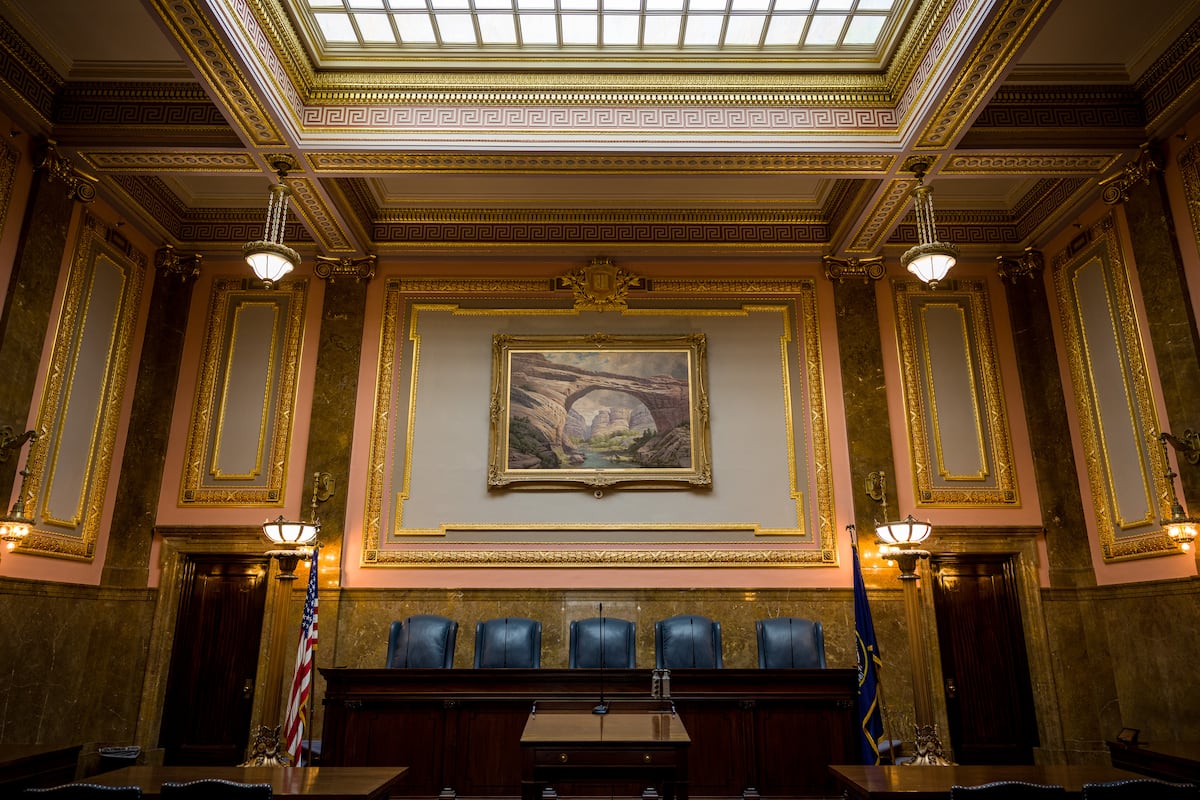
After adding justices to the Utah Supreme Court and, on Friday, creating a new “constitutional court,” Republicans are continuing their crusade to overhaul the state judiciary.
With the backing of House Speaker Mike Schultz, R-Hooper, lawmakers are now aiming to require the courts to stream audio of district and juvenile court cases, submit financial disclosures from judges and, among other measures, prevent judges from joining particular law firms after they leave the bench.
The blitz comes after key pieces of the GOP agenda have been dealt defeat after defeat by judges. In December, Republican lawmakers passed a resolution condemning the courts, accusing the state Supreme Court and lower district court judges of judicial activism.
A group of nearly 700 Utah attorneys — calling itself Co-Equal, referring to the co-equal branches of government — sent a letter to lawmakers this week saying the array of bills, if passed, would politicize judicial selection and retention, weaken judicial independence, meddle with court administration and erode trust in the courts.
“Taken together … they represent a significant and unprecedented restructuring of judicial authority, selection, retention, jurisdiction and administration,” the letter said. “This cumulative impact matters.”
On Friday, Gov. Spencer Cox signed the most recent judicial reform bill to become law, creating the new constitutional court: a special three-judge panel that will hear challenges to laws passed by the Legislature.
Cox signed the bill hours after it was rushed through the Legislature. It takes effect immediately and allows the state — either through the attorney general, Legislature or governor — to take current and future cases away from the judges hearing them and move them to a panel of judges assigned at random from across the state.
(Bethany Baker | The Salt Lake Tribune) Gov. Spencer Cox delivers his State of the State address at the Utah Capitol in Salt Lake City on Thursday, Jan. 22, 2026.
People or groups challenging the Legislature’s laws do not have the same prerogative.
Earlier this month, Cox signed a bill that will add two justices to the Utah Supreme Court — a move GOP leaders said was about giving the high court more resources, but even conservative commentator Glenn Beck said was blatant “court-packing” in response to the courtroom setbacks.
Applications to fill the two new positions on the Supreme Court are being accepted through March 6. The Administrative Office of the Courts has until March 7 to create a process for randomly assigning judges to the new panel.
Questioning the constitutional court
As originally proposed, the constitutional court would have consisted of three judges who would be permanently designated to hear challenges to the constitutionality of laws passed by the Legislature.
But because the Legislature and the governor would almost always be a party to those challenges, and would also be responsible for appointing the three judges, opponents pointed out that they would essentially be picking their own referees.
The new version would randomly assign the three judges from different districts, ensuring geographic diversity on the panel.
Despite the revisions, the Utah State Bar opposed the bill. Friday afternoon, the association said in a statement it is “deeply disappointed” that the legislation was rushed through the process and creates “unequal procedural rights that favor the state over its citizens.”
“Public confidence in the judicial system depends on the belief that the courts remain free from political interference,” the statement read. “This law erodes that trust by allowing the legislative and executive branches to dictate the adjudication of constitutional claims.”
Because the bill received a two-thirds vote in both chambers, it took effect immediately. The state is currently engaged in numerous constitutional challenges to state laws that could be moved to the new venue — including cases dealing with redistricting, elections, incorporation of towns and the Legislature’s bid to ban abortion.
According to the attorney general’s office, the office handled 35 constitutional challenges to state laws in 2025, including cases on drug pricing, bail reform, public lands management and rights of disabled Utahns.
Judicial transparency
The latest bill aimed at the judiciary is HB540, sponsored by Rep. Logan Monson, R-Blanding, part of Schultz’s goal of adding transparency to the courts, which he says is lacking.
It would require the courts to provide a live audio stream of public court proceedings, including juvenile court, free of charge for up to 50 downloads. Currently, cases are recorded and may be purchased for a fee. It would cost an estimated $7.5 million to implement the system.
Kim Cordova, president of the Utah State Bar, said that people who go to court are often in sensitive positions — divorces, employment disputes, evictions, guardianship fights or being accused of or witnesses to a crime.
“This is a vulnerable time in their lives, and for it to be livestreamed, especially when we’re dealing with very serious and private issues, that is a concern for lawyers in the state,” she said. “It could prevent people from coming forward. … There’s intimidation, there’s safety concerns.”
And Steve Burton, director of the Utah Defense Attorneys Association, said he is concerned about information about accused individuals being made public without having the context of the individual’s defense.
Monson said during a hearing on the bill Friday that he recognizes there would need to be exceptions for crime victims and juvenile cases — details that still need to be worked out.
Based on the concerns raised and the gaps still in the bill, the House Judiciary Committee initially voted to hold it while it can be worked on. But after Rep. Jason Thompson, R-River Heights, changed his vote, it moved forward by a 6-5 count for consideration by the full House.
His bill also requires judges to file a financial disclosure, similar to the disclosures filed by legislators, that will be available online.
It also prohibits a law firm that is suing any state entity from hiring a judge for two years after the judge steps down from the bench. Monson compared it to a one-year cooling-off period before legislators can become hired lobbyists.
In recent years, two former Supreme Court justices — Deno Himonas and John Pearce — were hired by a firm that has challenged state laws banning transgender girls from playing high school sports, banning flavored vapes, restricting minors’ access to social media, and other cases.
When former Justice Thomas Lee left the bench, he was hired the same day to represent the state in defending the state’s transgender ban. That would still be allowed under the proposed law. His law partner, John Nielsen, is now a justice on the Supreme Court.
Cordova said the proposed prohibition on hiring by law firms could encroach on the regulation of the practice of law, which under the Utah Constitution is an authority given to the Utah Supreme Court.
Fix The Court, a New York-based progressive nonprofit that has advocated for judicial transparency, particularly from the U.S. Supreme Court, praised the proposed financial disclosures.
The group’s director, Gabe Roth, said passage of the bill would make Idaho the only state that doesn’t require annual financial disclosures from judges.
“Every government official in the country should be obligated to file a financial disclosure each year, and that includes judges and justices,” Roth said in a statement. “Though Utah’s HB540 is not perfect, it represents an important step toward improving the landscape of judicial transparency in this country.”
Still on the docket
There are numerous additional bills aiming to change the way Utah courts do business. They include these:
• HB262 would require judges to get two-thirds of the vote in their retention elections to remain on the bench, rather than a simple majority.
• HB274 adds county sheriffs to the Utah Sentencing Commission, which sets penalties for crimes. Schultz, who is sponsoring the bill, says he thinks criminal penalties have gotten too soft.
• HJR5 seeks to amend the Utah Constitution to allow the governor to nominate anyone he wants to fill a court vacancy and not be limited by recommendations from Judicial Nominating Commissions, which currently vet applicants.
• HJR13 is another proposed constitutional amendment that would allow the Legislature to force a judge to an immediate retention election if lawmakers believe the judge is “incompetent” or has overstepped the court’s authority.
These bills come after the Legislature last year stripped the justices of the power to choose their own chief justice and gave that job to the governor.
Source: Utah News