
The National Center for Atmospheric Research is a widely relied-upon institution whose science touches nearly every aspect of American life.
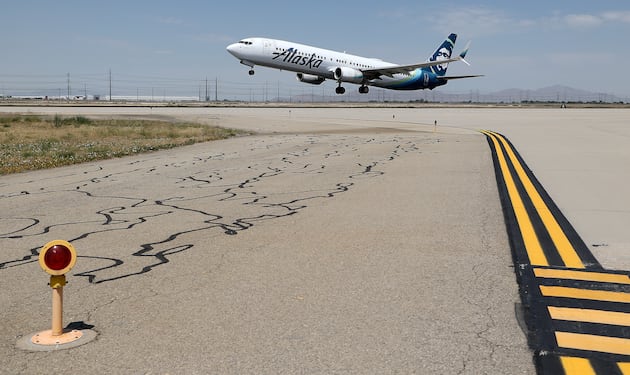
Just after sunrise at Salt Lake City International Airport, the runways and gates are already buzzing. Flights are lining up for takeoff, connections are inbound and the day’s first lake-effect snow flurries begin to roll off the Wasatch Range. In the control tower and dispatch centers, teams are watching not just the skies but also the weather models behind them.
Their ability to see beyond the horizon is made possible by one of the most critical engines of atmospheric science in the country: the National Center for Atmospheric Research, or NCAR. Though few passengers will ever hear its name, NCAR’s research supports the very tools that help keep flights on time — and safe — at airports like SLC and across the country.
Many government programs are bloated and inefficient. Some are controversial. Historically, NCAR has been neither. However, now, its future is uncertain.
A few weeks ago, federal leaders surprised the scientific community when they signaled a planned break-up and redistribution of NCAR’s research functions, all over rumors it was “a source of climate alarmism.” Whether it is or it isn’t, one thing is clear to those of us who work closely in this vital space: Unwinding NCAR runs a deeper risk that we break apart a functioning, widely relied-on institution whose science touches nearly every aspect of American life. With a formal federal review extending into March, this conversation should not fade from view.
NCAR’s work is far from academic abstraction — it directly supports public safety, economic resilience and environmental planning, including here in Utah. In moments of extreme weather, those tools can mean the difference between preparation and tragedy, as the nation was reminded during late-January Winter Storm Fern, when reports tied the weather system to dozens of deaths and widespread disruption across the eastern United States. From tracking smoke and air quality during wildfire season to helping ski resorts and water managers plan around snowpack, NCAR provides the foundational models, data and research systems that underpin the tools our communities rely on every day and in times of emergency.
In aviation, NCAR’s contributions are especially pronounced. Commercial aviation, a ubiquitous component of modern life, is measurably safer and more predictable due in large part to NCAR’s work. Pilots rely on aviation weather tools and systems that are grounded in NCAR-developed science to predict wind shear, anticipate turbulence, and diagnose airborne icing risks. These tools — developed in collaboration with FAA, airlines and the broader aviation weather community — have saved lives, reduced delays and improved fuel efficiency across our airspace system, including at growing regional hubs like Salt Lake City.
We know how important these tools are. At Campbell Scientific, headquartered in Logan, Utah, we develop environmental monitoring systems used by airports, transportation agencies, utilities and researchers around the world. We are a global leader in part because our work is grounded in stable, public research like NCAR’s — research that bridges the gap between science and real-world application. NCAR enables companies like ours to build tools that improve public infrastructure and safety. Its impact is magnified through the broader ecosystem of public-private partnerships that drive American innovation.
Dismantling or fragmenting NCAR would ripple through that ecosystem — delaying innovation, weakening partnerships and potentially eroding the open-access science that enables small businesses and public agencies to act on shared information. It would also undercut the pipeline of trained atmospheric scientists and engineers who go on to serve in critical government and industry roles — many of them here in Utah.
This isn’t about partisanship or ideology. It’s about preserving institutions that work. For decades, NCAR has quietly underpinned U.S. leadership in environmental forecasting. Its presence in the West brings national capability closer to the unique needs of our region, while also serving global efforts to understand and respond to a changing climate.
Utah’s transportation networks, outdoor economy and public lands management all depend on trusted weather and climate science. As our state prepares to host the world once again with the return of the Olympic Winter Games, the value of reliable forecasting, air quality monitoring, and hazard readiness will only grow.
Let’s protect what works. Let’s strengthen — not weaken — the institutions that make our skies safer, our forecasts more accurate and our communities more resilient.
Source: Utah News