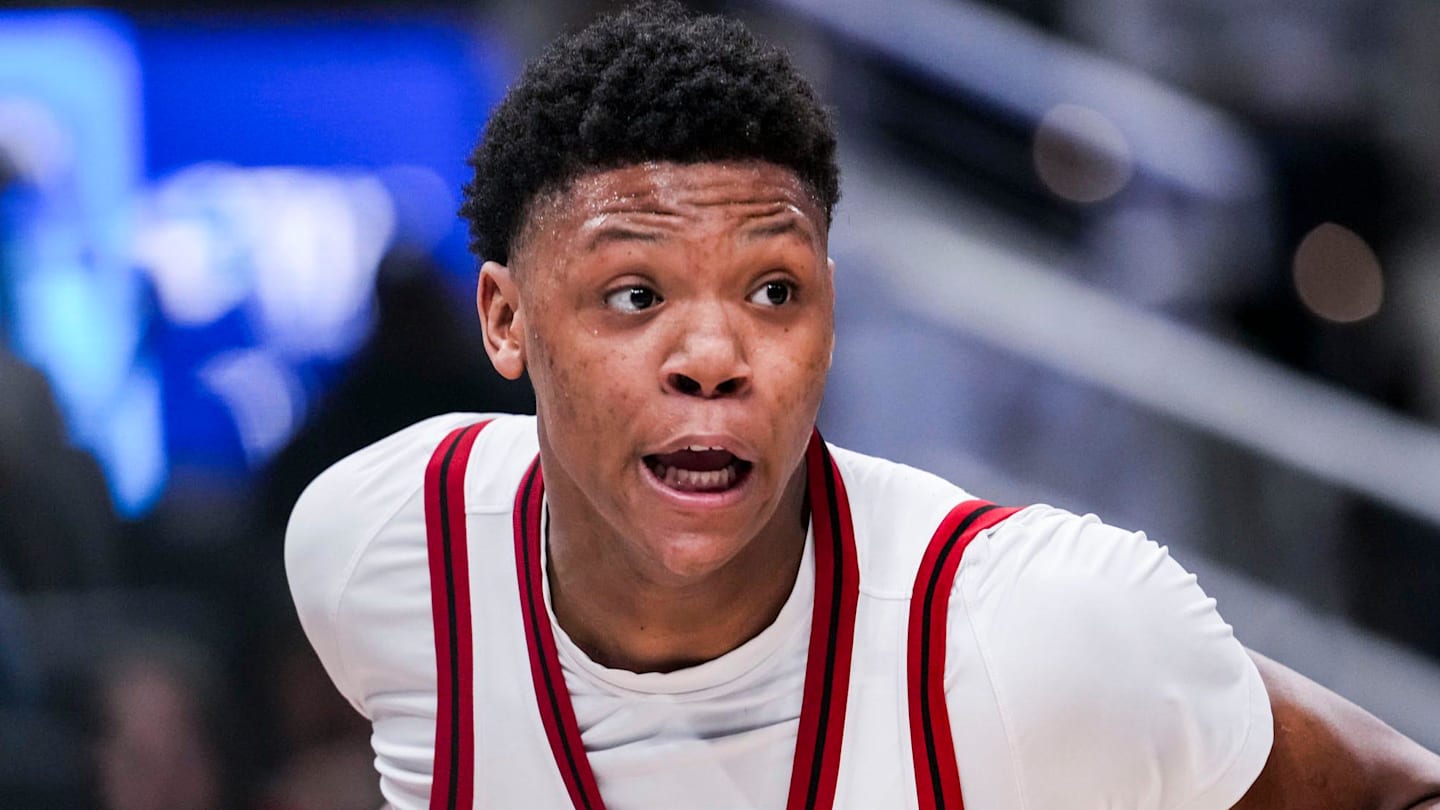
Utah’s star offensive lineman could be a top-10 pick in the 2026 NFL Draft

NFL Draft class settles in, next year’s draft cycle has already begun. The Utah football program didn’t have a player selected during last month’s d …

As the 2025 NFL Draft class settles in, next year’s draft cycle has already begun.

The Utah football program didn’t have a player selected during last month’s draft — several Utes have inked undrafted free agent contracts — though in the months leading up to the college football season, there’s already plenty of pro buzz surrounding star offensive lineman Spencer Fano.

Here’s a closer look at Fano, as Utah Utes on SI examines the Utes’ top five draft-eligible prospects for the 2026 NFL Draft.

Coming off a strong freshman campaign, Fano asserted himself as one of the most dominant tackles in the sport during his sophomore campaign, which ended with him taking home All-America honors from Pro Football Focus and the Associated Press, in addition to a spot on the All-Big 12 first team.

Despite the struggles Utah faced on the offensive side of the ball last season, Fano progressed as a pass-protector and in the run game, earning him the reputation as a premier offensive lineman prospect for the 2026 draft. He’s the third tackle taken off the board in ESPN’s latest mock and considered by many to be a top-10 pick regardless of next year’s draft order.

PFF’s vouch for Fano as the top returning offensive lineman in college football next season certainly doesn’t hurt his draft stock either, but don’t expect all the hype to get to his head anytime soon. In addition to refining the technical aspects of his game, Fano has spent the offseason preparing to take on a new leadership role within the Utes’ offense.

“I want to be the best offensive lineman in the country, and I think I am,” Fano said. “And seeing [rankings and draft projections] — I don’t know, it’s cool, but it’s just — that’s what I already think of myself.”

The advanced metrics from Fano’s sophomore campaign certainly validate his affirmation. According to PFF, his 93.0 grade ranked No. 1 among all FBS tackles last season, while his 93.6 run-blocking grade was also the best in the country by over three points. Only former Texas tackle Kelvin Banks Jr., who was selected by the New Orleans Saints with the No. 9 overall pick in this month’s draft, posted a higher score in “wins above average” than Fano did in 2024. His pass-block grade of 79.5 ranked inside the top 30 at the Power Four level as well.

While Fano’s prowess in the run game and ability to protect the passer stand out, he probably won’t be the Utes’ only offensive lineman selected in the 2026 draft. Caleb Lomu, a 6-foot-6 tackle, is slated to go late in the first round according to ESPN’s mock draft. Needless to say, Utah’s ability to retain all five starters along its offensive line is good news for quarterback Devon Dampier.

“I definitely think we have the best offensive line in the country,” Fano said. “And that doesn’t just mean our own one-on-one responsibilities. We make a lot of calls on the field, and we control a whole lot of what the offense does.”

If the Utes are indeed going to have the best offensive line in college football next season, Fano will certainly play a significant role in that sentiment coming to fruition.

MORE UTAH NEWS & ANALYSIS

Source: Utah News

Utah Utes look to reunite with former tight end recruit

As they round out their 2025 roster, Kyle Whittingham and his Utah coaching staff have reached out to a familiar face in the transfer portal. South Dakota trans …

As they round out their 2025 roster, Kyle Whittingham and his Utah coaching staff have reached out to a familiar face in the transfer portal.

South Dakota transfer Hayden Erickson spent the first three seasons of his career with the Utes before transferring to play for the Coyotes ahead of the 2024 campaign. Now, roughly four years after his journey began as a walk-on, Erickson has received an offer to return to Utah for his fifth season.

A product of Lehi High School (Utah), Erickson previously joined the Utes in the spring of 2021. He had limited opportunities come his way during his first stint with the Utes, as he was buried on depth charts that featured the likes of Dalton Kincaid, Brant Kuithe and Thomas Yassmin. Erickson went on to appear in six games over the next three years without recording a single receiving stat in that span.

However, given that the Utes lost significant depth at tight end to the portal, graduation and pros this offseason, they could look to add another experienced player at the position. Bear Tenney (Sacramento State), Carsen Ryan (BYU), CJ Jacobsen (Louisville) and Landen King (Duke) have departed via the portal, while Caleb Lohner is one of the newest members of the Denver Broncos after being picked in the seventh round of the 2025 NFL Draft.

The rise of redshirt freshman Hunter Andrews has been promising. Utah also explored moving 6-foot-4, 220-pound redshirt senior Otto Tia to the tight end spot toward the end of the spring window. Still, it remains to be seen what role the Utah State transfer will serve in his first season with his new team.

Erickson appeared in all 14 games with the Coyotes last season, recording one catch for 38 yards against Northern Iowa back in October.

MORE UTAH NEWS & ANALYSIS

Source: Utah News

How far would you go to see the Utah Jazz get Cooper Flagg? He went to a Tokyo temple.

As a diehard Utah Jazz fan, faithfully peering out from the first row of the second deck every game for the last decade, Brimhall is all too familiar with the pain his franchise has put fans through …

As a diehard Utah Jazz fan, faithfully peering out from the first row of the second deck every game for the last decade, Brimhall is all too familiar with the pain his franchise has put fans through …

Source: Utah News

She made a temporary move for Goldman Sachs. Then Utah converted her.

The global financial firm has recruited thousands of employees to Salt Lake City. Now a cost-cutting initiative will bring more.

Gemma Carlaw expected to be a temporary Utahn.

The native Londoner moved from the UK in 2013 for Goldman Sachs, to join its burgeoning global markets team in Salt Lake City. It was a short-term change, she thought — she’d put in two years in Utah, get some career development and go home.

But then Carlaw’s office made its own moves: from a small building near the University of Utah, to a downtown office on Salt Lake City’s Main Street, to an even newer office a block north. Each shift felt like proof that Goldman Sachs was growing in Utah, and so were the opportunities, Carlaw said.

She and her husband began a family. They spent their weekends exploring the deserts of southern Utah and skiing at nearby resorts.

(Courtesy photo) Gemma Carlaw expected her move from London to Utah for a job at Goldman Sachs would be temporary. It didn’t turn out that way.

Twelve years later, they have three “American boys” and “this is home,” Carlaw said at a Goldman Sachs volunteer day last month at Rosewood Park.

Now, the global financial services giant is working to convert more employees to Utah.

As part of cost-cutting initiative “Project Voyage,” Entrepreneur recently reported, Goldman Sachs will be asking managers to leave Manhattan (where rent for commercial office buildings is about $80 per square foot) to cheaper outposts ($26 per square foot) in Dallas and Salt Lake City.

The firm also is expected to cut 3%-5% of its workforce, according to reporting from Bloomberg, which put it this way in a headline: “Goldman Gives Managers a Choice: Dallas, Salt Lake City or Leave.”

The news drew immediate advice from protective Utah fans on Reddit: “Please pick Dallas.” “Move to Dallas, it’s really really awesome.” “Yea move to Dallas plz.”

But on another Reddit thread, incoming Goldman employees looking for housing are getting tips from helpful locals about Salt Lake City neighborhoods and transit.

(Francisco Kjolseth | The Salt Lake Tribune) Hundreds of Goldman Sachs staff members celebrate the opening of a branch in Salt Lake City 25 years ago, the third largest in the country, with a tree planting celebration at Rosewood Park on the west side, Wednesday, April 16, 2025.

‘A central part’

Goldman Sachs has now been in Utah for 25 years, growing from its first Salt Lake City office with a few hundred employees to become the company’s third largest U.S. hub, and fifth largest in the world.

Carlaw is one of more than 3,000 current employees, many of whom have also moved from somewhere else. Of the junior staffers in Utah, roughly 70%, according to recent estimates, moved in from out of state, said Stacey Miller, chief operating officer in Salt Lake City.

Goldman Sachs’ career page boasts of Salt Lake City’s “vibrant arts, culinary, and social scene,” plus its proximity to “some of the world’s most magnificent hiking, biking, and skiing in the world.”

Some outsiders still contend, though, with lingering stereotypes about Utah’s drinking scene and dating opportunities, which one trade publication went as far as to call “miserable.” And while cost of living may be lower than in coastal hubs like New York, so, too, are wages, some junior Goldman staff have found.

One pitch Goldman Sachs makes is the wide range of roles available in Utah, despite its distance from world headquarters in New York. What was once more of an “operational hub,” said Jill Borst, head of the Salt Lake City office, is now “a central part of our global enterprise.”

What she means is: Every one of Goldman Sachs’ business segments, including global banking, asset management and financial technology, have employees in Utah.

(Francisco Kjolseth | The Salt Lake Tribune) Jill Borst, head of the Salt Lake City’s Goldman Sachs office, joins hundreds of her staff to celebrate the opening of the branch in Salt Lake City 25 years ago, the third largest in the country, with a tree planting celebration at Rosewood Park on Wednesday, April 16, 2025.

Borst sees Goldman Sachs’ growth as akin to a well-planted garden in fertile ground. The firm was drawn to Utah as Salt Lake City was investing in downtown infrastructure ahead of the 2002 Olympics, and the state’s universities offered a pool of talent. A Utah office also put employees closer to West Coast clients.

And the lifestyle Utah offered — outdoor recreation, a lower cost of living, a younger population — helped the firm grow organically, Borst said.

But that growth hasn’t been an accident, or just a response to cost-cutting efforts, Borst said. “We’ve chosen to invest in Salt Lake City,” she said. “It’s a long-term commitment that we have made.”

Utah taxpayers have also invested in Goldman Sachs. In 2009, the Governor’s Office of Economic Opportunity gave the company a tax incentive of up to $47.2 million, in exchange for the company’s estimated $51 million in spending and its creation of 690 new jobs over 20 years.

It expanded the incentive five years later, agreeing to an additional $13 million contingent on Goldman Sachs creating 350 new jobs and investing up to $40 million in new office space.

Each year that Goldman Sachs meets the criteria in the contracts — including paying salaries higher than Salt Lake County’s average wage — it earns a portion of the incentive. The state’s dashboard lists both tax credits as between 50% and 75% collected by the company.

‘Live the lifestyle’

Mark McCaskill already lived in Utah when he joined the firm 18 years ago, as one of 300 employees.

Now, as a manager of the firm’s global wealth management division, he said his job offers the same professional growth, plus personal fulfillment, as it did nearly two decades ago.

Salt Lake City is, in its own way, the geographic center of the Goldman Sachs universe. McCaskill has colleagues in Asia and can greet them as their day is beginning and his is ending; and he can finish work that started earlier in New York or London, he said.

“I think the opportunity to work for a global investment bank like Goldman Sachs, but then also be able to live the lifestyle that Utah and Salt Lake City affords us,” he said, “is very special.”

On a mostly sunny April day, he and Carlaw stood nearly shoulder-to-shoulder, shovels in hand, digging into the ground at Rosewood Park. They planted Osage orange trees in the holes they dug, as part of a series of service projects the firm planned for its 25th anniversary.

Over the course of three days, roughly 400 volunteers planted 100 trees on Salt Lake City’s west side, which has faced a “real discrepancy” in green space and natural shade compared to neighborhoods east of Interstate 15, Mayor Erin Mendenhall said.

“I hope you feel the connection here,” Mendenhall told the crowd of volunteers. “And may we grow for another 25 years.”

(Francisco Kjolseth | The Salt Lake Tribune) Asahi Pompey, Goldman Sack’s head of corporate engagement, left, is joined by Salt Lake City Mayor Erin Mendenhall as they plant 100 trees around Salt Lake City’s Rosewood Park on Wednesday, April 16, 2025. Hundreds of Goldman Sachs staff members celebrated the opening of their branch in Salt Lake City 25 years ago, the third largest in the country, with the tree planting celebration.

Note to readers • This story is available to Salt Lake Tribune subscribers only. Thank you for supporting local journalism.

Shannon Sollitt is a Report for America corps member covering business accountability and sustainability for The Salt Lake Tribune. Your donation to match our RFA grant helps keep her writing stories like this one; please consider making a tax-deductible gift of any amount today by clicking here.

Source: Utah News

Win or lose come lottery night, it’s a success for the Utah Jazz

While it’s a MASSIVE disappointment not to get the #1 pick, it forces a team to make the best possible pick from the players in the second and third tiers of the draft. More importantly, it forces a …

There is no question about it: the best case scenario for the Utah Jazz on lottery night is to have the lottery balls give them the top pick. Winning the Cooper Flagg sweepstakes will put the Utah Jazz on a strong track towards an NBA championship. The goal for every NBA team is to put together a team that can win a title. Having an MVP-caliber player is the most critical aspect of doing that. Cooper Flagg has that type of potential.

But what if the Jazz lose? Is it a failure?

Advertisement

While it’s a MASSIVE disappointment not to get the #1 pick, it forces a team to make the best possible pick from the players in the second and third tiers of the draft. More importantly, it forces a team to decide on its drafting principles.

For Utah, this draft allows them to solidify those team-building principles. The last three seasons, one thing has been a constant for the Jazz: they are a terrible defensive team. You can see the draft principles in action in the last few drafts to combat this. With their best pick in the last two seasons, the Jazz have picked potential two-way players in Taylor Hendricks and Cody Williams. Their later picks have appeared to be the best player available. It hasn’t worked perfectly, but Utah must continue this strategy.

Utah Jazz v San Antonio Spurs

Utah Jazz v San Antonio Spurs

Things would have gone well if they used this same strategy in the last two drafts and had tanked start-to-finish those seasons. Let’s say the Jazz tanked like they did this year and only got a little lucky with the 4-pick each time in ‘23 and ‘24. That would mean they’d have Amen Thompson and Stephon Castle leading their defense. You can see how that would have already changed the entire perception of the team’s future. The jury is still out with Taylor Hendricks, but he does fit the two-way player mold. We’ll see if Williams can be anything but a bust next year, but that may be a complete wash. Regardless, in this lottery, the Jazz can pick a variety of guys, if they miss out on Flagg, who can both defend on one end and score on the other. They must continue building around core principles that will eventually lead the Jazz to high-level contention.

Advertisement

Finally, remember that, at worst, the Jazz have the #5 pick in this draft. How badly would you have wanted that pick the last two seasons? Utah is in a much better position than it has ever been, and it’s exciting to see what the next step in the rebuild will look like.

More from slcdunk.com:

Source: Utah News

Elkhorn Winner Utah Beach To Seek Second Straight Graded Win In Louisville Stakes

The nine-horse field also includes Sugoi, the front-running winner in last year’s edition of the 1 1/2-mile turf test at …

Jeffrey Amling and Merribelle Stable’s Elkhorn Stakes (G2) winner Utah Beach is set to face eight other turf runners entered for the 88th running of the $250,000 Louisville Stakes (G3), the featured event on Saturday’s Downs After Dark nighttime program at Churchill Downs.

The Louisville, contested at 1½ miles on the Matt Winn Turf Course, will go as Race 9 of 11 with a post time of 10:11 p.m. (ET).

Advertisement

Utah Beach, trained by Ignacio Correas IV, was a gutsy winner in last month’s Elkhorn at Keeneland, defeating 11 rivals at odds of 11-1. The 5-year-old gelded son of English Channel sports a solid record of 14-4-5-1 and purse earnings of $536,265. He’ll be ridden in the Louisville by Vincent Cheminaud from post No. 6.

Chief among Utah Beach’s rivals is last year’s Louisville winner Sugoi. Owned by Paradise Farms Corp. and David Staudacher, Sugoi scored a front-running 1¼-length victory in last year’s race. Trained by Mike Maker, the former $50,000 claim went on to finish second in the Chorleywood Stakes before returning to the winner’s circle earlier this year in the John Connally Turf Cup Stakes at Sam Houston. The veteran 8-year-old Karakontie (JPN) gelding will break from post 9 under Luan Machado.

The complete field for the Louisville from the rail out (with jockey, trainer):
Idratherbeblessed (Ben Curtis, Chris Hartman)
Missed the Cut (Brian Hernandez Jr., Cherie DeVaux)
Rebel Red (GB) (Declan Cannon, Cherie DeVaux)
Tapit Shoes (Rafael Bejarano, Ed Moger Jr.)
Verstappen (Frankie Dettori, Brendan Walsh)
Utah Beach (Vincent Cheminaud, Ignacio Correas IV)
Rock’n a Halo (Edgar Morales, Tom Amoss)
Accredit (Mario Gutierrez, Pavel Matejka)
Sugoi (Luan Machado, Mike Maker)

Source: Utah News

Arizona baseball wins home finale vs. Utah to snap season-long 4-game skid

Easton Breyfogle’s RBI single in the bottom of the 8 th inning scored fellow sophomore Andrew Cain with the winning run in the Wildcats’ 8-7 victory over Utah, snapping a 4-game skid and avoiding a …

With Arizona scuffling of late and its chances of hosting a regional all but gone, Sunday likely marked the final game at Hi Corbett Field not only for its seven seniors but for the majority of the batting order.

So naturally, a pair of underclassmen paved the way for their older brothers to go out on a high note.

Advertisement

Easton Breyfogle’s RBI single in the bottom of the 8th inning scored fellow sophomore Andrew Cain with the winning run in the Wildcats’ 8-7 victory over Utah, snapping a 4-game skid and avoiding a home sweep to the last place team in the Big 12.

Arizona (34-17, 16-11) finished the home slate 24-6, its best record at Hi Corbett since going 31-7 in 2021. The Wildcats had lost the previous three at home, getting outscored 34-17 in those games, but with the conditions ripe for scoring their offense had one of the most productive days of the season with 16 hits—most in a Big 12 games—and six players getting at least two.

“We haven’t played in really that kind of situation a lot,” UA coach Chip Hale said. “I think we just had to hang in there. Even the first two games, if we just could have hung in there in the middle innings with pitching we would have been okay. But I thought we hung in there, and we knew that we would score more than them at some point.”

Yet Arizona also left 15 men on base, including 10 in the first four innings when a 4-0 lead should have been much larger.

Advertisement

Smith Bailey was almost untouchable the first four innings, allowing one hit with five strikeouts. He had retired 11 in a row before Utah (20-26, 7-19) started to get to him, collecting three straight 2-out hits in the 5th to get within 4-3.

The freshman right-hander came back out for the 6th and retired the first two batters before Drake Digiornio homered to tie it.

“I thought Smith Bailey was probably the key to the game, getting us the length,” Hale said of Bailey, who went a career-high six innings and matches his career best with six strikouts and also didn’t walk a batter for the first time since early March.

Arizona would retake the lead in each of the next three innings, first going up 5-4 in the bottom of the 6th on a wild pitch. Utah evened it up in the top of the 7th, only to see the Wildcats score twice more in the bottom of the inning on a solo homer by Breyfogle and a 2-out double from Maddox Mihalakis, who was 4 for 4.

Advertisement

“This year obviously hasn’t been what I wanted it to be, but at this point, it’s just trying to put my team in the best position to win,” said Breyfogle, who came in hitting .205 overall and .161 in Big 12 play. “I’m going up there and with the right mindset … and just trying to get the job done for the team.”

Utah tied it again in the 8th, as Casey Hintz hit the first batter he faced before Digiornio hit his second homer. Tony Pluta came on and, after walking the first retired the next six to get his first win of the season and lower his ERA to 0.66 in Big 12 play.

Cain, who was 2 for 5 with two runs scored, began the bottom of the 8th with a double and with one out came home when Breyfogle singled up the middle.

The 9th saw Pluta get a pair of grounders before appearing to hit Tyler Quinn with a pinch. Hale challenged the call, though, and it was overturned after replay showed it hit the knob of the bat for a foul ball, and one pitch later defensive replacement TJ Adams caught a fly ball on the warning track in left field to end it.

Advertisement

Arizona improved to 9-1 in one-run games in 2025, its only loss a 2-1 defeat to Ole Miss to open the season.

“I think today is a game that can really give us some confidence, because we haven’t won a lot of one-run games that we have to out hit the other team and I think that we did that today,” said Brendan Summerhill, who was 3 for 5 with two RBI and is hitting .411. “I don’t necessarily think, like, everything’s been bad, just the result is bad. And as you know in this game you can’t go off the results. You got to keep fighting. There’s a lot of season left.”

Arizona will be on the road from here on out, starting next weekend at Houston (28-22, 11-15) to wrap up the regular season before bussing to Arlington, Texas for the Big 12 Tournament. The Wildcats are currently tied with Kansas State for fifth place, and finishing outside of the top four would mean opening in the first round rather than get a bye into the quarterfinals.

The UA won three of four games in Houston earlier this season, including wins over Texas A&M and Mississippi State at the Astros Foundation College Classic.

Advertisement

“We’re going to go after Houston, the three games are super important to us for seeding in our in our conference,” Hale said. “We’ve just got to play good baseball. I thought we played a lot better today.”

More from azdesertswarm.com:

Source: Utah News

Opinion: Utah, we have a problem

Utah needs to reform our child care system. Legislators need to listen to early childhood educators, families and child care advocates to make that happen …

I believe accessible, high-quality child care should be a collective priority, not a source of conflict. Loving children and supporting their families so they can thrive should be non-negotiable. Yet, in Utah, when we raise concerns with lawmakers, we continuously take two steps forward only to take twice as many backward later. Now is the time to demand consistent and meaningful reforms in our child care system. But this time, early childhood educators, families and child care advocates must be at the table. As the saying goes, “Nothing about us without us.”

While legislators have good intentions, historically, their proposed solutions often lack insights from the people directly affected. To create legislation, public officials must understand the complexities of caregiving and its critical role in preparing children for lifelong learning by talking to us and diving into research-based information.

We’ve been fortunate to pique the interest of some lawmakers, but we need them to engage further. Utah still has the highestpopulation of children in the nation, yet we’re not funding and supporting them the way we should.

We fully support a recent Utah Childcare Solutions and Workplace Productivity Plan, released by the Women in the Economy Subcommittee of the Governor’s Unified Economic Opportunity Commission before the legislative session. Solutions include increasing wages for the child care workforce, supporting education models that address child behaviors, making accessibility equitable, investing in programs to make child care affordable and working with employers to expand access.

While some families are fortunate enough to enjoy a lifestyle that allows one parent to stay home to care for their child, that’s not the reality for most Utah families. Today’s society typically requires that both parents contribute financially. To suggest that we shift to single-income households or evoke antiquated ideas without putting systems in place to support them is disingenuous.

Working parents are overwhelmed by the cost of child care — if they can find it. In Utah, licensed programs can sufficientlyserve only 36% of children under 6. It’s more dire in rural communities, where much of the state is deemed achild care desert. It forces parents to miss work, quit their jobs, or leave their children in unsafe or low-quality care.

Child care is becomingmore costly than college tuition. Due to stringent rules, some parents are ineligible for funding assistance. Meanwhile, child care providers face rising operational costs while trying to offer competitive wages. This, unfortunately, drives families toward unlicensed care, shifting away from the very support systems vital for children’s development. It becomes a circular problem. Everyone wants to thrive. Everyone wants to care for children. But without additional funding, the system isn’t sustainable.

Many child care advocates have been in this field for many years. Some of us have touched all facets of this work, from early childhood teachers and child care center directors to home providers and licensing officials. No matter our roles, we’re all being dismissed by policymakers as inconsequential.

Although child care educators are essential, they are the lowest-paid workers in Utah — earning about $15 per hour. Pair that with little funding to help mitigate costs and you’ve got a crisis that affects children’s learning and a family’s survival.

We encourage children’s social, emotional and cognitive growth and lifelong academic achievement. We are not babysitters. We are professionals.

Our work is critical to the survival of families, the state economy and the nation. That is why we are participating in the annual Day Without Child Care on May 12. It is the perfect opportunity to amplify the urgency of these issues. Early childhood centers, providers and families in Utah are joining us in at least 10 locations across the state. We call upon everyone who cares for and loves children toshow up and make their voices heard.

As some business owners close their child care centers and parents step away from their jobs, a Day Without Child Care will provide a glimpse into how our economy could be affected by a lack of child care services. According to a U.S. Chamber of Commerce report, Utah’s economy loses an annual $1.36 billion in revenue due to a lack of accessible and affordable child care programs. If providers don’t work, people can’t work. If people don’t work, the state can’t work.

Advocating for an equitable early childhood education system might seem daunting and discouraging. Still, we stand firm and advocate for it vigorously.

Source: Utah News

What Kyle Whittingham’s latest contract says about the Utah football coach’s retirement plans

On the day the Ute great announced his plans to return for his 21st season, he also signed off on changes to his contract.

Kyle Whittingham is busy getting ready for his 21st season.

After leading the Utes to a 5-7 campaign last season, the Utah head coach’s worst season since 2013, rumors of his potential retirement swirled.

Whittingham shut those rumors down with a simple statement.

“We’re back,” the coach announced on Dec. 8.

There were multiple reasons for Whittingham to make his announcement around that time. With the transfer portal opening and signing day approaching, it would be important to let players know the coach’s plans.

But Whittingham also now has an annual deadline to let the U. know whether he intends to keep coaching — and a financial incentive for hitting that deadline.

New contract amendment

On the same day Whittingham made his decision to return for the 2025 season public, the Ute coach also signed an amendment to his contract.

Before that, Whittingham’s contract outlined a five-year role as a special assistant to the university’s athletics director. The position would pay the longtime coach $995,000 per year.

Under the new deal, Whittingham will be paid $3.45 million annually for a two-year term as special assistant.

Whittingham would be obligated to provide consulting advice, attend speaking engagements, fundraising events, and meetings with donors and other prospective donors, according to the contract.

The new amendment also increased the amount Whittingham would receive if he were fired without cause from $3 million for each year left on his deal to $4 million.

In return, Whittingham now has a deadline to inform the university about his retirement plans.

If the Utes are in the Big 12 Championship game, the 65-year-old coach will have to provide a written notification to the university on his retirement decision by Dec. 12, 2025.

If Utah isn’t competing in the conference championship game, Whittingham will have to make a decision by Dec. 8, 2025.

If the coach doesn’t meet the decision deadline, the changes in his contract would revert to their original language.

Incentives for the 2025 season

Utah’s head coach is set to receive a base salary of $5.4 million this season, with an added $500,000 bonus from the university’s Under Armour agreement and another $1 million from Utah’s multi-media rights sponsor, JMI Sports.

That means Whittingham’s fully guaranteed 2025 salary will be $6.9 million this season.

The coach will have the chance for incentive-based compensation, too.

According to the language provided in his new contract, Whittingham would earn a $100,000 bonus if the Utes partake in the Big 12 Championship game in the fall.

If Utah participates in a non-College Football Playoff bowl game, Whittingham would earn $150,000 and another $100,000 for a non-CFP bowl game win.

Utah’s head coach would earn one of the following bonuses for getting the Utes to the 12-team College Football Playoff and advancing through each of its rounds:

  • $500,000 for a first-round appearance.
  • $600,000 for a quarterfinal appearance.
  • $750,000 for semifinal appearance.
  • $900,000 for a national championship appearance
  • $1,000,000 for a national championship win.
  • Other incentives in Whittingham’s deal include a max $75,000 bonus if Utah’s NCAA Academic Progress Rate (APR) is at least 980. He’ll receive the same max bonus amount of $75,000 if the Utes achieve at least an 80% graduation success rate at the end of the year.

    The Ute head coach would also be entitled to a $150,000 bonus if Utah is in the final year-end AP Top 25 poll. He could also earn another $25,000 if the team is ranked inside the top 25 of the CFP rankings and $15,000 if the team is listed in the Top 25 of the AP Poll or the Coaches Poll at any point of the season.

    Whittingham could also earn a $250,000 bonus for winning the National Coach of the Year award. He’d also be entitled to a $100,000 bonus if named as the Big 12 Coach of the Year or co-coach of the year.

    The final bonuses listed in Whittingham’s contract include a “budget bonus,” which would allow the Ute coach to earn $25,000 if costs for the football program are under budget for the year by $50,000. Whittingham would earn an additional $5,000 bonus for each additional $50,000 increment that the Football Program costs are under budget.

    Note to readers • This story is available to Salt Lake Tribune subscribers only. Thank you for supporting local journalism.

    Source: Utah News

    This Utah nursery saves money by using solar to grow plants. Will Congress let other businesses benefit too?

    In Utah, Perennial Favorites plant nursery is saving money; electricians are getting jobs in rural areas. They both show ”energy tax credits work,” said Codey Lindsay, president of the International …

    A new greenhouse at Perennial Favorites, a wholesale plant nursery in Layton, is the last waiting place for thousands of lilies, petunias, geraniums and other plants before they’re shipped out to buyers across the Intermountain West.

    A warehouse would have been cheaper to build and operate, said Perennial CEO Cort Cox. But the greenhouse keeps both plants and employees cool in the hot summer months, and protects them from the elements in harsher weather.

    Cox was willing to opt for the more functional but more expensive choice, he said, in part because of the money he’s saved since installing a 64 kilowatt solar array at his facility last year.

    The energy generated by the panels powers the new greenhouse and roughly 30% of Perennial’s operations, Cox said — and has cut his energy bill in half, even as energy use has grown.

    “Energy is a huge concern for us, especially [with] the greenhouses,” Cox recently said at his farm. “When we can bring down our operating costs, we can invest in new technologies that let us produce faster, and save money while doing it.”

    The nursery installed the solar panels using money from a Rural Energy for American Program (REAP) grant and Investment Tax Credit. Both are federal programs funded by the Inflation Reduction Act, and designed to help rural Americans tap into renewable energy. Their future is in question under President Donald Trump’s administration.

    Cox invited a coalition of stakeholders, including fellow tax credit beneficiaries, energy advocates and journalists, to his nursery Thursday to demonstrate the federal funding in action.

    “We’re a family-owned business; we started small in 1992 and have slowly grown, making smart investments in our production capacity,” he said. “Now, we’ve cut our [energy] usage pretty much in half with this solar array.”

    Trump froze federal funding to climate-related, IRA-funded programs earlier this year. The freeze was lifted in March, but recipients were encouraged to “voluntarily revise their project plans to align with President Trump’s Unleashing American Energy Executive Order,” according to a news release from the U.S. Department of Agriculture.

    “This process gives rural electric providers and small businesses the opportunity to refocus their projects on expanding American energy production while eliminating Biden-era DEIA and climate mandates embedded in previous proposals,” the release said.

    REAP grants have helped fund 140 projects in Utah, said Max Becker, a senior associate with Utah Clean Energy.

    Energy tax credits have also created jobs for electricians across the state, said Codey Lindsay, president of the International Brotherhood of Electrical Workers Local 345, because they have helped fund projects in Utah’s more rural corners.

    It took time to get IRA-funded projects up and running, he said. But now that they’re underway, Lindsay’s 3,200-member union is busy.

    “We’re starting to see projects made possible by these credits take off across the state, including in rural areas,” Lindsay said. “Energy tax credits work. That is how we get investment here, and we’re ready to build it when [Utahns] get those projects.”

    It’s unclear what Congress will do with IRA-funded energy tax credits.

    “They’re being discussed,” Becker said when asked whether such credits were under threat under Trump’s administration. “I think threatened might be a strong term.”

    Trump has called for eliminating some IRA tax incentives, and Ways and Means Committee Chairman Jason Smith called the Biden Administration’s “green new tax scam” a “bad tax policy” in an in a recent interview with Fox News.

    Northern Utah’s U.S. Congressman Blake Moore serves on the Ways and Means Committee.

    Shannon Sollitt is a Report for America corps member covering business accountability and sustainability for The Salt Lake Tribune. Your donation to match our RFA grant helps keep her writing stories like this one; please consider making a tax-deductible gift of any amount today by clicking here.

    Source: Utah News