Utah’s household income is highest in the nation when compared to the cost of living. Here’s why.

Utah’s average household has more buying power than anywhere else in the nation, despite rising housing costs. Here’s why.

Utah’s average household has more buying power than anywhere else in the nation, according to research from the Kem C. Gardner Policy Institute. That’s despite rising housing costs and reflects the Beehive State’s strong economic growth, Gardner Institute economists said.

Utah had the highest-growing gross domestic product of any state in the country last year and is considered the top economy by a conservative, nonprofit group focused on limited government.

When evaluating the state’s economic growth using income as a metric, Natalie Roney, a research economist at the Gardner Institute, noted that this approach also makes Utah look good.

Larger households up income potential

The state has the eighth-highest median household income in the nation, based on data from the U.S. Census Bureau.

Utah’s rating is high largely because its typical household has more people than in other states.

“We just have more workers per household, meaning there’s more income potential in our average household,” Roney said.

Utah jumps to the top spot when using U.S. Bureau of Economic Analysis data to adjust for cost of living.

Roney said that while Utah’s low cost of living might surprise some people due to current housing costs, there are reasons the state’s expensive market doesn’t have as much of an impact.

Housing costs are above the national average, based on data from the Bureau of Economic Analysis that Roney showed during a recent presentation. But goods, utilities and other services are lower. Utilities, in particular, are much lower.

Roney added that the cost-of-living data doesn’t capture higher housing costs in recent years because the average household already owns its home.

Below the national cost-of-living average

Although Utah overall has a low cost-of-living index, regional price parity — or RPP – varies by county.

Summit County has the highest RPP score, something Roney described as “not really surprising.” The county is home to Park City and some of the most expensive housing in the state and was the only county with a score above 100, a marker representing the national cost-of-living average.

Wasatch County has the second-highest score, followed by urban centers, like counties along the Wasatch Front and Washington County.

The lowest cost of living is in Emery County, while other rural counties round out the bottom of the regional price parity scores. business-friendly

In general, Utah is well-positioned for success, said Phil Dean, chief economist at the Gardner Institute.

“We often get asked, ‘Why is Utah experiencing this growth?’ It has been very robust, very strong,” he said. “I always go back to Utah’s very strong fundamentals.”

Those fundamentals, he said, are a young and well-educated population, a diverse economy, business-friendly policies and the ability to talk to each other and work together – Utah’s “secret sauce.”

Consistently ranked top economy by nonprofit

Other economists agree, including those who put together the American Legislative Exchange Council’s Rich States, Poor States report.

The latest report, released earlier this month by the conservative group, again ranks Utah as the top state economy in the nation. The report has 18 iterations and has consistently recognized the Beehive State as having the best economic outlook based on 15 policy variables.

“Rich States, Poor States” particularly recognizes Utah’s lack of a state-level inheritance tax, the state’s right-to-work status and low federal minimum wages, though it notes that Tennessee and North Carolina could catch up

The American Legislative Exchange Council, or ALEC, is a nonprofit that brings together conservative-minded state lawmakers and corporations to draft model legislation. It describes its point of view as “dedicated to the principles of limited government, free markets and federalism.”

In Utah, Republican lawmakers Sen. Lincoln Fillmore and Rep. Karianne Lisonbee serve as ALEC’s state chairs, according to the group’s website.

Jonathan Williams, the organization’s president and chief economist, recalled coming to Utah after the first report, shortly after the state passed a flat tax, which made all taxable income subject to the same rate.

If Utah’s Republican supermajority hadn’t passed additional conservative legislation in the years since, he said, ALEC projects the state would have been ranked 23rd this year instead of first.

The state’s advantage, Gov. Spencer Cox believes, is that leaders look ahead to make sure they are “planting trees not for our shade but for the shade of a future generation.”

House Speaker Mike Schultz, R-Hooper, paraphrased Wayne Gretzky — the Canadian hockey legend who celebrated Donald Trump’s return to the White House at Mar-a-Lago on election night — by saying lawmakers know they need to “skate to where the puck is going to be,” and that gives him optimism.

Megan Banta is The Salt Lake Tribune’s data enterprise reporter, a philanthropically supported position. The Tribune retains control over all editorial decisions.

Source: Utah News

‘It’s different’: A highly-rated edge rusher from Utah has caught Ohio State football’s attention

Ohio State football recently offered a four-star edge rusher from Utah. Here’s what he had to say about the Buckeyes.

COLUMBUS, Ohio — Under a cloudless Sunday sky, Krew Jones lined up against Sam Greer for a one-on-one rep at an Under Armour camp hosted by Pickerington North High School.

The former is a four-star edge rusher in the 2027 class. He’s a prospect with room to grow, but he’s catching the attention of some of the nation’s top schools.

The latter is a four-star offensive tackle in the 2026 class — a 6-foot-6 force committed to stay close to home with Ohio State football.

Greer, an Akron product, won his share of reps against the visitor from Utah. But on this rep, Jones unleashed a wicked spin move which would’ve put a quarterback, had there been one, in an unfavorable situation.

That’s what Jones can do. It’s why he earned an offer from and visited Ohio State two days before.

“It’s different,” Jones said of OSU. “I haven’t been to a school like that yet. Their culture, their motives, their fight. They’re all about development. That’s something I love.

“It’s a big-time school where you’ve got to work to get what you want. They’ll get you where you want to go, so that’s definitely something I love.”

Source: Utah News

Utah man sets Guinness World Record at the Boston Marathon in a banana costume

Jordan Maddocks, who owns 21 Run in South Jordan, has been running in marathons across the country for years. On April 21, he ran in this year’s Boston Marathon, breaking an unusual world record: The …

SOUTH JORDAN, Utah (ABC4) — The Boston Marathon is one of the most popular marathons in the country. And for one Utah man, it was also an opportunity to break a record that some people may find unusual.

Jordan Maddocks, who owns 21 Run in South Jordan, has been running in marathons across the country for years. On April 21, he ran in this year’s Boston Marathon, breaking an unusual world record: The fastest marathon run in a fruit costume.

Advertisement

Maddocks was unable to run in the 2024 Boston Marathon due to injury, when another runner broke his previous record by over six minutes. Maddocks trained for a year while rehabilitating his injury, focused on breaking the record.

  1. Utah resident Jordan Maddocks in a banana costume during the 2025 Boston Marathon

    Utah resident Jordan Maddocks in a banana costume during the 2025 Boston Marathon

  2. Utah resident Jordan Maddocks in a banana costume during the 2025 Boston Marathon

    Utah resident Jordan Maddocks in a banana costume during the 2025 Boston Marathon

  3. Utah resident Jordan Maddocks in a banana costume during the 2025 Boston Marathon

    Utah resident Jordan Maddocks in a banana costume during the 2025 Boston Marathon

  4. Utah resident Jordan Maddocks in a banana costume during the 2025 Boston Marathon

    Utah resident Jordan Maddocks in a banana costume during the 2025 Boston Marathon

  5. Utah resident Jordan Maddocks in a banana costume during the 2025 Boston Marathon

    Utah resident Jordan Maddocks in a banana costume during the 2025 Boston Marathon

  6. Utah resident Jordan Maddocks in a banana costume during the 2025 Boston Marathon

    Utah resident Jordan Maddocks in a banana costume during the 2025 Boston Marathon

  7. Utah resident Jordan Maddocks in a banana costume during the 2025 Boston Marathon

    Utah resident Jordan Maddocks in a banana costume during the 2025 Boston Marathon

  8. Utah resident Jordan Maddocks in a banana costume during the 2025 Boston Marathon

    Utah resident Jordan Maddocks in a banana costume during the 2025 Boston Marathon

  9. Utah resident Jordan Maddocks in a banana costume during the 2025 Boston Marathon

    Utah resident Jordan Maddocks in a banana costume during the 2025 Boston Marathon

  10. Utah resident Jordan Maddocks in a banana costume during the 2025 Boston Marathon

    Utah resident Jordan Maddocks in a banana costume during the 2025 Boston Marathon

That he did — setting the record with a time of two hours, 33 minutes and 19 seconds, over two minutes faster than the previous record. But his journey began well before this year’s marathon.

In 2019, Maddocks made his first run at the record during the Arizona Rock and Roll Marathon, clearing the record in that race by 15 seconds. Unfortunately, in May of that year, Maddocks received a letter stating the record was denied due to the banana suit he wore at the time being one inch too short in the back. But his attempts didn’t stop there.

“I saw that Chiquita Banana had sponsored a guy in Canada to set the record for the fastest half marathon at the Toronto Marathon and he got the record,” Maddocks said. He reached out to the company to ask if they would sponsor him during the 2020 race, and they said yes.

Advertisement

Maddocks added that he also got to run that marathon with his dad, all while he wore the banana costume. But he adds that specific race was about more than just the record and the banana suit.

“I got to crown my dad with his medal at his finish,” Maddocks said. “Out of all the marathons that I’ve done, that was one of the most special moments of my entire career — because I got to be there and watch my dad do something he always wanted to do.”

Maddocks’ long-term goal is to qualify for the 2028 Olympic Trials, but for now, he says he’s going to continue to do what he loves.

Copyright 2025 Nexstar Media, Inc. All rights reserved. This material may not be published, broadcast, rewritten, or redistributed.

For the latest news, weather, sports, and streaming video, head to ABC4 Utah.

Source: Utah News

Reports: Utah receives commitment from two-time all-conference guard out of the transfer portal

Utah’s work in the transfer portal paid off again Monday with the addition of another guard. This time, a commitment came from Western Kentucky’s Don McHenry — as reported by national outlets The …

Utah’s work in the transfer portal paid off again Monday with the addition of another guard.

This time, a commitment came from Western Kentucky’s Don McHenry — as reported by national outlets The Athletic and On3, and later confirmed by McHenry himself on social media.

Source: Utah News

Visitor stumbles across skeletal human remains in nature park, Utah police say

A visitor at a nature park discovered human skeletal remains, Utah police reported. The person reported the find at Lambert Park in Alpine to police at 8:30 p.m. Friday, April 25, the Lone Peak Police …

Officers confirmed the remains were human and called in investigators from the medical examiner’s office, who began working to identify the remains and cause of death.

Officers confirmed the remains were human and called in investigators from the medical examiner’s office, who began working to identify the remains and cause of death.

Getty Images | iStockphoto

A visitor at a nature park discovered human skeletal remains, Utah police reported.

The person reported the find at Lambert Park in Alpine to police at 8:30 p.m. Friday, April 25, the Lone Peak Police Department said in a news release.

A horseback rider discovered the remains, police told KSTU.

Officers confirmed the remains appear human and called in investigators from the medical examiner’s office, who began working to identify the remains and determine the cause of death.

Lambert Park is “largely undeveloped and used for biking, equestrian, and foot traffic,” police said.

Alpine is about a 30-mile drive southeast from Salt Lake City.

Don Sweeney

The Sacramento Bee

Don Sweeney has been a newspaper reporter and editor in California for more than 25 years. He has been a real-time reporter based at The Sacramento Bee since 2016.

Source: Utah News

Utah edge rusher Connor O’Toole signs as a free agent with Seattle

Utah defensive end Connor O’Toole signed a free agent contract with the Seattle Seahawks shortly after the NFL Draft ended. Some observers believe O’Toole has t …

Utah defensive end Connor O’Toole signed a free agent contract with the Seattle Seahawks shortly after the NFL Draft ended.

Some observers believe O’Toole has the skills to work his way into a rotation in the NFL after a career at Utah in which he played in 44 games, with 16 starts at defensive end. He began his career as a wide receiver before switching to defense in the spring of 2022. 

He was slowed by injuries in his last two seasons, playing in eight games each season. He finished with 8.5 career sacks, including 2.5 in his senior season. His best performance was in 2023 when he had 4.5 sacks. He had 104 tackles, 15 of them for loss, forced two fumbles and recovered one. 

O’Toole is 6-foot-4, 252 pounds. According to Draft Network, O’Toole is strongest in the pass rush, where he impressed evaluators with his athleticism, length and burst off the snap. Evaluators say he can win with his hands and can consistently threaten the pocket. He will need to put it all together on all three downs, evaluators say.

His main weaknesses are against the run, including the need for more consistency in pursuing ball carriers. However, he’s a good tackler in space. 

MORE UTAH NEWS & ANALYSIS

Source: Utah News

Former Utah Star RB Picked up by Tennessee Titans

Micah Bernard didn’t hear his name called in the 2025 NFL Draft, but that didn’t stop the Tennessee Titans from giving him a chance. The former Utah Utes running back has signed as an undrafted free …

Micah Bernard didn’t hear his name called in the 2025 NFL Draft, but that didn’t stop the Tennessee Titans from giving him a chance. The former Utah Utes running back has signed as an undrafted free agent, hoping to prove he belongs at the next level.

Bernard put up solid numbers in college, rushing for 1,009 yards last season while averaging 5.1 yards per carry. Over his career with the Utes, he racked up nearly 3,000 rushing and receiving yards, showing his ability to make plays in multiple ways.

Sep 14, 2024; Logan, Utah, USA; Utah Utes running back Micah Bernard (2) looks for running room as Utah State Aggies linebacker John Miller (26) closes in for the tackle in the second half at Merlin Olsen Field at Maverik Stadium. Mandatory Credit: Jamie Sabau-Imagn Images © Jamie Sabau-Imagn Images

Sep 14, 2024; Logan, Utah, USA; Utah Utes running back Micah Bernard (2) looks for running room as Utah State Aggies linebacker John Miller (26) closes in for the tackle in the second half at Merlin Olsen Field at Maverik Stadium. Mandatory Credit: Jamie Sabau-Imagn Images © Jamie Sabau-Imagn Images

Now, he joins a Titans backfield that features Tony Pollard and Tyjae Spears, both of whom bring speed and versatility. Bernard isn’t guaranteed a spot on the roster, but his skill set gives him a legitimate shot. He’s a smooth runner with solid hands, meaning he could carve out a role as a third-down option or even contribute on special teams.

Advertisement

Tennessee’s offense, under coordinator Nick Holz, values backs who can move in space and pick up chunk plays, which fits Bernard’s style perfectly. His ability to catch passes and block in pass protection could give him an edge in training camp.

Making a team as an undrafted free agent isn’t easy, but plenty of players have gone that route and found success. Bernard’s job now is simple: to show up, work hard, and prove he belongs. If he does, the Titans might have just landed a hidden gem.

Related: Utah Running Back Micah Bernard Named a Team Captain

Source: Utah News

Opinion: Utah’s evolving landscape — empowering women in business

Utah consistently ranks low in national studies on women’s equality, but has seen incredible growth in women-owned businesses. How can we foster a supportive environment for women in business?

Utah has long been celebrated as a premier state for business ventures. However, the narrative often overlooks the pivotal role of women in driving this success. Their entrepreneurial spirit and leadership undeniably contribute to Utah’s economic dynamism and resilience. While progress has been made, a concerted effort is needed to address persistent disparities and fully unlock the potential of women in the state’s business sector.

Acknowledging strengths and addressing challenges

Despite Utah’s favorable business climate, it consistently ranks low in national studies regarding women’s equality, particularly in areas like income and representation in executive positions (e.g., WalletHub’s 2025 Best and Worst States for Women’s Equality and the USU Utah Women & Leadership Project’s 2021 Women’s Equality in Utah). This disparity underscores the need for targeted interventions to ensure equitable opportunities for women.

Conversely, Utah’s growth of women-owned businesses is a testament to the state’s evolving support structure. Data from the U.S. Small Business Administration reveals that women own over 44% of Utah’s small businesses. Notably, the state has witnessed a remarkable 77% surge in women-owned firms over the past two decades, a growth rate second only to Nevada. This significant increase highlights the state’s growing economic influence of female entrepreneurs.

Key resources and initiatives driving progress

Several Utah organizations are instrumental in fostering a supportive environment for women in business.

The Governor’s Office of Economic Opportunity’s (GOEO) Startup State Initiative plays a crucial role by providing resources, mentorship and funding opportunities that address barriers disproportionately affecting women, such as access to capital and networking. Furthermore, the office’s 100 Utah Companies Championing Women initiative recognizes and encourages businesses to adopt policies that promote gender diversity and support women’s advancement, including family-friendly practices and programs designed to improve recruitment, retention and leadership opportunities. (The 100 Companies initiative is a partnership with USU’s Utah Women and Leadership Project and the Utah Division of Multicultural Affairs.)

The Women’s Business Center of Utah (WBCUtah) has achieved significant milestones, assisting in launching 292 new companies in 2024 alone, engaging with clients across a vast majority of Utah’s counties, and serving over 1,500 business owners. These efforts have created over 1,300 jobs and generated over $160 million in revenue statewide, demonstrating the tangible impact of targeted support. Last month, the U.S. Small Business Administration announced WBCUtah as one of its 2025 Women’s Business Center of Excellence award recipients.

Further contributing to this momentum is the Utah Women’s Leadership Institute’s (WLI) ElevateHER Challenge, which encourages organizations to increase the impact of women’s leadership. This initiative prompts companies to commit to measurable actions, such as increasing the number of women in senior leadership, improving retention rates, and addressing pay disparities. By fostering a culture that values and promotes women, the ElevateHER Challenge is critical in shifting Utah’s business landscape towards more significant gender equity.

Strategic recommendations for enhanced support

Drawing on insights from initiatives like 100 Companies Championing Women and research from the Utah Women and Leadership Project, the following strategies are crucial for fostering a more inclusive and supportive environment:

  • Enhance access to capital. Implement funding programs and incentives specifically designed to bridge the venture capital gap for women entrepreneurs.
  • Promote leadership diversity. Encourage companies to adopt policies that facilitate women’s advancement into executive roles, including mentorship programs and transparent promotion practices.
  • Implement flexible work policies. Adopt flexible hours, remote work options and part-time professional roles to accommodate diverse employee needs and promote work-life balance.
  • Provide family-friendly benefits. To support employees’ family responsibilities, offer paid family leave, childcare support, and adoption and fertility benefits.
  • Establish women-focused initiatives. Develop mentoring programs, leadership development opportunities and employee resource groups specifically for women.

By implementing these strategies, Utah can solidify its position as a leader in fostering opportunity for all. The businesses and organizations championing gender equity today are laying the groundwork for a future where women are fully empowered to contribute to the state’s economic prosperity. When women receive the tools and opportunities to succeed, communities thrive, innovation accelerates and businesses grow, benefiting the entire state.

Source: Utah News

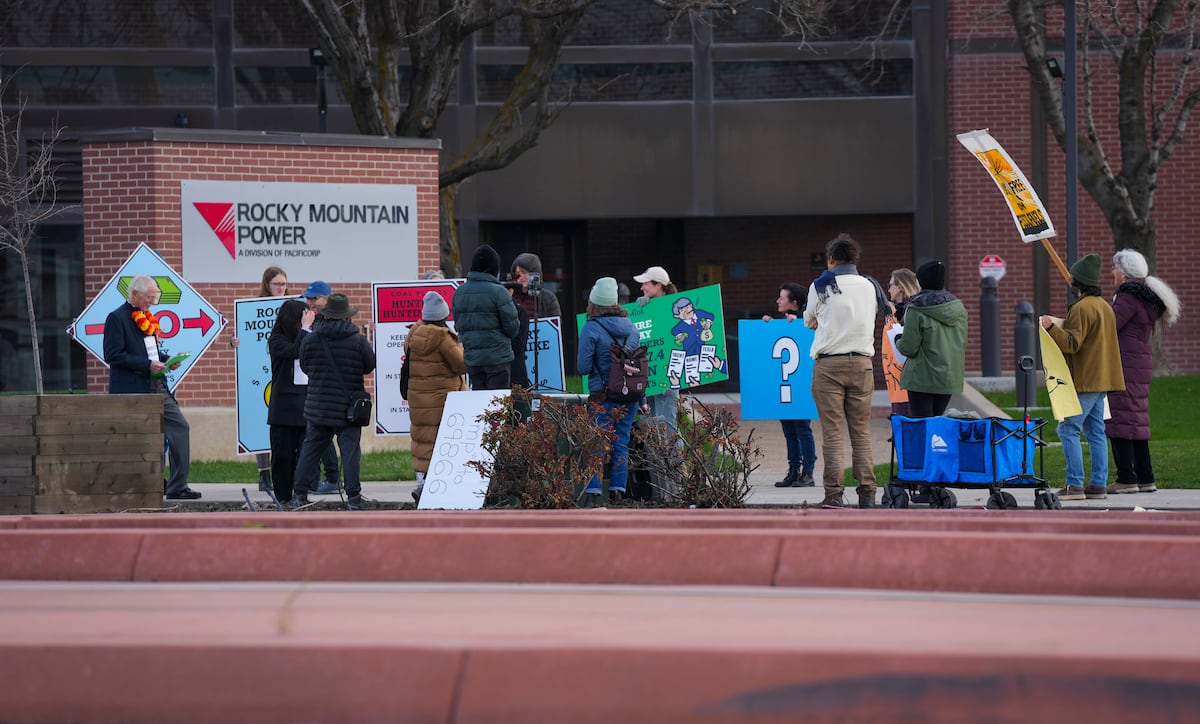
Tribune Editorial: Utah should get with the sustainable energy program

The case for Utah’s move to sustainable energy is so strong that it isn’t necessary to raise the specter of, you should excuse the expression, climate change. The plummeting cost of solar energy …

A stubborn and unthinking devotion to using fossil fuels to power Utah’s energy future can only lead to our state’s economy becoming as dry and dead as all those dinosaur bones.

The future is renewable energy. The technology is advancing. The costs are declining. Even oil-centric states such as Texas are loading up on the solar and wind infrastructure, as Utah — almost deliberately, it seems — is being left behind.

Legislative interference in plans by private industry and energy-producing co-ops, pushing back on moves to renewable energy and clinging to dirty and ever-more-expensive coal, have hobbled what should be Utah’s opportunity to lead the way on moving to clean and abundant energy.

There is reason to be hopeful that innovation and market forces have already begun an inexorable march toward renewables such as wind, solar, geothermal and new nuclear technology, supported by ever-more-efficient batteries and other forms of energy storage.

The share of Utah’s energy that comes from coal has already plummeted from 75% in 2015 to 46% in 2023, according to the U.S. Energy Administration. Of all the energy capacity added in our state since 2015, 93% of it is from solar.

Nationally, coal is already down to 15% of our power production, while solar and wind together outpaced coal in 2024, for the first time ever, at 17%.

Advocates at Utah Clean Energy figure that from 2007 to 2023, sustainable energy growth in the state brought $4.1 billion in construction and investment, $24.6 million in property tax revenue and $6.3 million in lease payments to farmers and other landowners.

Much of the short-term promise going forward comes from the grants, tax breaks and requirements that were part of the 2022 Inflation Reduction Act. That’s an act of Congress that might better have been called the Increasing Energy Act, given how much of that bill’s focus was on clean and sustainable energy projects.

The Trump administration, eager to reduce spending on useful things so it can cut taxes for the rich, is threatening to end IRA funding. That would be a bad idea, and Utah’s all-Republican congressional delegation should oppose such backward steps.

Calculations from groups including the Energy Innovation think tank in California to the Wilkes Center for Climate Science and Policy at the University of Utah show that IRA incentives to new renewable energy projects stand to boost Utah’s gross domestic product significantly over the next decade.

Those numbers also show that removing IRA grants and incentives threaten to cost the state jobs even as it increases our energy costs. Or, perhaps more properly, cost the state jobs because it increases our energy costs.

The case for Utah’s move to sustainable energy is so strong that it isn’t necessary to raise the specter of, you should excuse the expression, climate change. The plummeting cost of solar energy infrastructure and the market’s overall move away from coal — far beyond Utah’s poor power to add or detract — are reason enough.

Editorials represent the opinions of The Salt Lake Tribune editorial board, which operates independently from the newsroom.

Source: Utah News