“Orchids are big into moving their pollen, and so they will give a reward like a nectar. They will put out a fragrance to bring in a different type of pollinator. They have a different shape. There’s …
“Orchids are big into moving their pollen, and so they will give a reward like a nectar. They will put out a fragrance to bring in a different type of pollinator. They have a different shape. There’s actually an orchid that looks like a bee,” said Bruce Hugo, President of Utah Orchid Society.
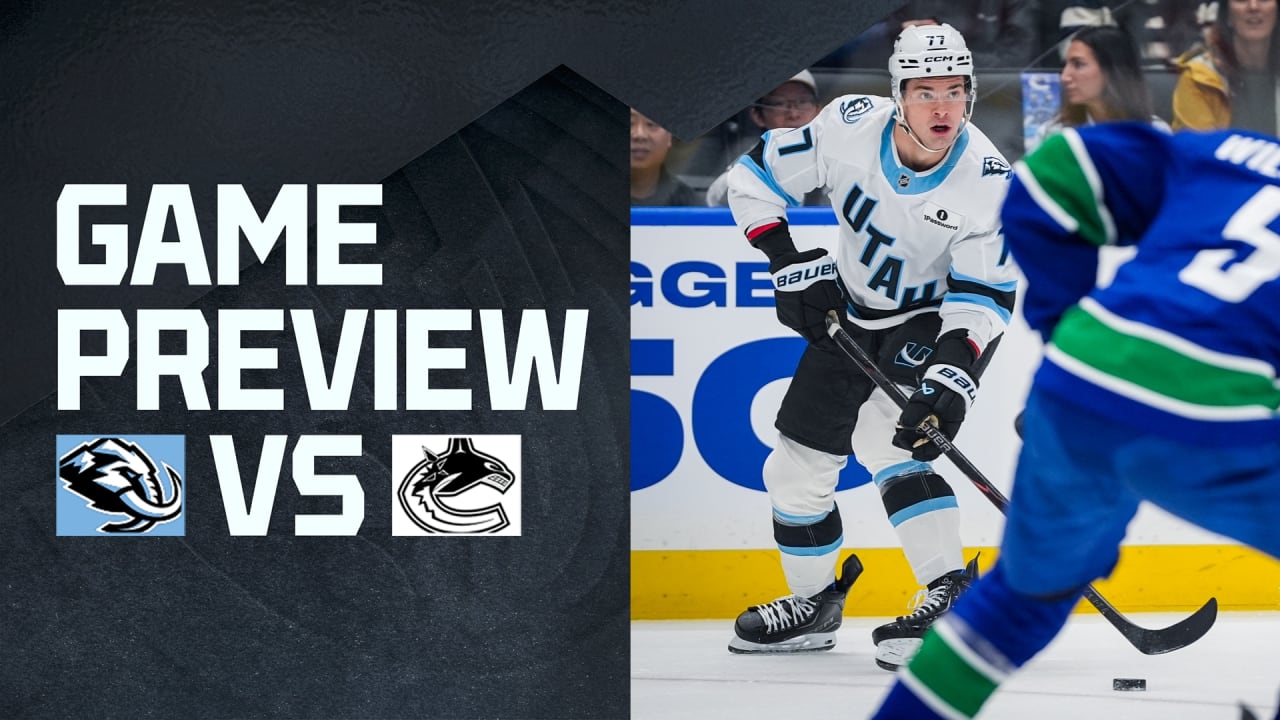
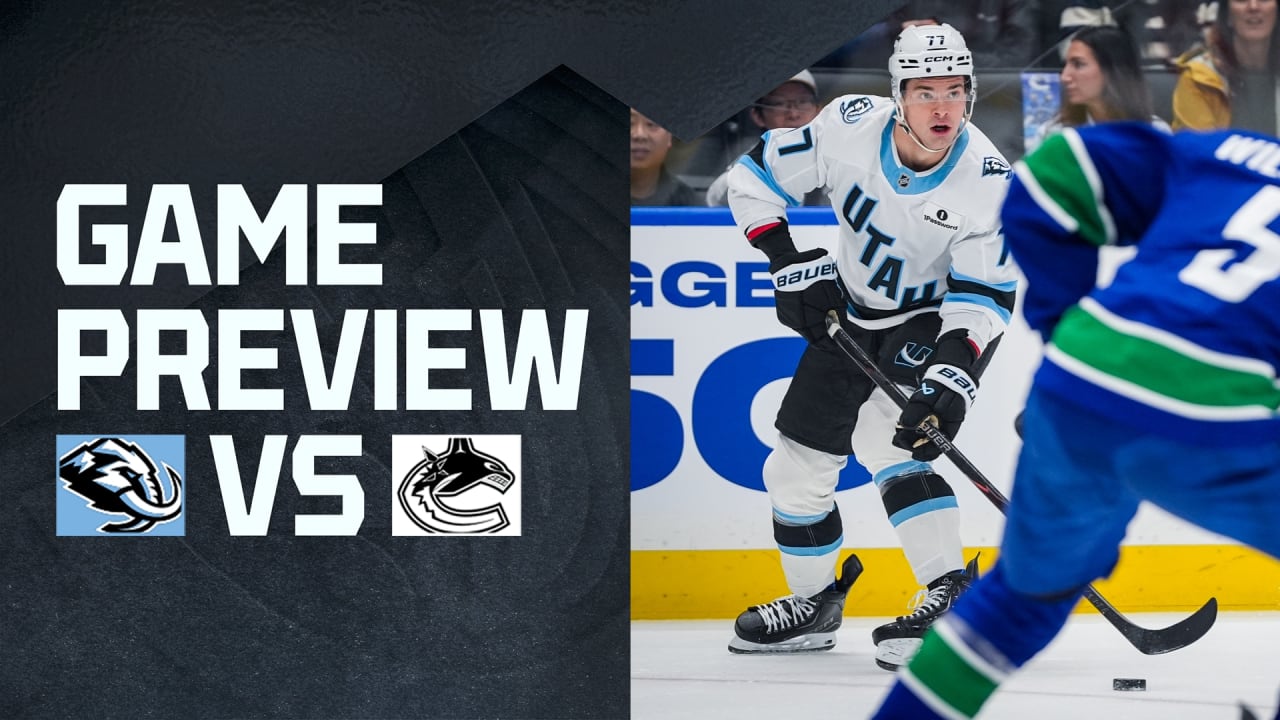
Utah is 39-30-6 this season and 5-4-1 over the last 10 games. The Mammoth are in the first wild card spot with 84 points. Utah has at least a five-point lead over the next teams fighting for a Western …
Utah is 39-30-6 this season and 5-4-1 over the last 10 games. The Mammoth are in the first wild card spot with 84 points. Utah has at least a five-point lead over the next teams fighting for a Western …
Utah’s snowpack on April 1 was the lowest ever observed since systematic snowpack measurements began, and it’s worse when compared to the next lowest year by a wide margin.
SALT LAKE CITY (ABC4) — Utah’s snowpack on April 1 was the lowest ever observed since systematic snowpack measurements began, and it’s worse when compared to the next lowest year by a wide margin.
According to a report from the Natural Resources Conservation Service (NRCS) Utah Snow Survey, historic snow records date back to 1930, and the 2026 Utah snowpack is unprecedented. The next lowest April 1 snow water equivalent (SWE) was in 2015, but even that year was about five times higher than the statewide SWE in 2026.
Snow water equivalent is what you get when you melt snow into its liquid state. The next lowest April 1 SWE in Utah was 1934, 1977, and 2018. The NRCS said that this historically low snowpack is strongly going to influence water supply forecasts for Utah this year.
Our snowpack peaked early this season on March 7, at 8.3 inches of SWE. For comparison, the median peak snowpack in Utah is 14 inches. The 2026 peak is lower than 2015 and 2018 by two whole inches.
The low snowpack is going to have an impact on reservoirs throughout Utah, especially in Southern Utah. The majority of water basins in southern Utah are below 20%, with several below 1%. One of the largest concerns is Lake Powell/Glen Canyon, with officials worrying that the lake will reach dead pool levels, where the Glen Canyon Dam will no longer be able to generate energy.
Advertisement
Advertisement
This year is going to be a difficult year in terms of water supply, but it’s not completely hopeless. Reservoirs still have a decent amount of water, and we’re a little better off now than we were in 2021 and 2022.
“We can recover from this. One of the things we are still benefitting from is a reservoir system that’s between 60 and 70% capacity for the state of Utah,” said Jordan Clayton, data collection officer and supervisor with the Utah Snow Survey.
However, it would take several years of great snowpack to recover, which seems to be less and less common these days.
Latest headlines:
Advertisement
Advertisement
Copyright 2026 Nexstar Media, Inc. All rights reserved. This material may not be published, broadcast, rewritten, or redistributed.
A measles outbreak at the Arizona-Utah border has eclipsed 500 cases, state data shows. The number of Arizona cases in Mohave County may be slowing.
A measles outbreak near the Arizona-Utah border that began in August has surpassed 500 cases, new state numbers show.
The outbreak since August 2025 has totaled 516 cases to date — 274 in Arizona and 242 in southwest Utah, according to data from both states as of April 2. State health officials in Utah and Arizona have confirmed a total of 43 hospitalizations and no deaths from the outbreak.
Case numbers in Mohave County on the Arizona side of the state border appear to have slowed, but cases continue to rise in southwest Utah, as well as in Utah as a whole, data shows. The cases are primarily from in and around the twin communities of Colorado City, Arizona, and Hildale, Utah.
While the early Utah outbreak was centered around the state border with Arizona, “we are now seeing community spread across the whole state of Utah,” Charla Haley, assistant communications director for the Utah Department of Health and Human Services, wrote in an email.
“And, while most of our cases stem from this original border outbreak, they aren’t necessarily tied directly to it or the community.”
New measles cases confirmed in Coconino County
Utah health officials, as of April 2, had confirmed 362 cases of measles to date in 2026, with 142 cases reported during the past three weeks.
By comparison, Arizona has confirmed 71 cases in 2026. Sixty of the Arizona cases to date have been in Mohave County. In 2025, Arizona confirmed 220 measles cases, the highest number in the state in more than three decades.
Utah has had more than three times the number of measles cases as Arizona so far in 2026. Utah’s population, at about 3.5 million, is approximately 54% smaller than Arizona’s estimated 7.6 million.
Health officials in Coconino County in northern Arizona recently confirmed the county’s first measles cases of 2026 and named public exposure sites in Page and in Tuba City, which is on the Navajo Nation. The cases at this time have not been linked to the Mohave County outbreak, Arizona Department of Health Services spokesperson Magda Rodriguez wrote in an email.
Exposure sites from the Coconino County cases, which were confirmed March 20 and March 30, include the Tuba City Regional Health Care emergency department, Banner Page Hospital, the Safeway in Page, a Page Unified School District bus, Manson Mesa High School in Page and Page High School.
Advertisement
“If there is a broader public health risk or a need for community notification, we will share that information promptly,” Coconino County Health and Human Services spokesperson Trish Lees wrote in an email.
“We continue to work closely with state and tribal partners as appropriate to monitor the situation and support prevention efforts, including case investigation, contact notification, and public education regarding measles symptoms, exposure and vaccination.”
Arizona-Utah measles outbreak one of the country’s largest in 2025
The Arizona-Utah flare-up was one of three major U.S. measles outbreaks in 2025. The other two were in Texas and South Carolina. Three deaths have been connected with the Texas outbreak, and the upstate South Carolina outbreak is ongoing, with 698 cases reported in 2026, according to the Johns Hopkins Bloomberg School of Public Health U.S. Measles Tracker.
Outbreaks are occurring in tandem with increased public distrust in science and vaccine skepticism from the Trump administration, including the U.S. Health and Human Services Secretary Robert F. Kennedy Jr. The U.S. is currently at risk of losing its measles elimination status, which it achieved in 2000. Elimination means no continuous spread of the virus for 12 or more months.
Both Utah and Arizona allow parents to exempt their children from school-required vaccinations, including the MMR — measles, mumps and rubella — for personal belief or religious reasons.
Utah and Arizona were among 17 states in the 2024-25 school year where 5% or more of kindergarteners claimed an exemption from the MMR vaccine, which means they did not have community protection against measles. The target for MMR coverage is 95% coverage to provide “herd immunity” or group protection from measles, which is an extremely contagious virus.
California, New York, New Mexico, Maine and Massachusetts are among the states that do not allow personal or religious belief exemptions, and all had herd immunity against MMR during the 2024-25 academic year, according to KFF, a nonprofit health policy research organization.
Most Arizona and U.S. parents continue to vaccinate their children, and recent polls have shown that most Americans believe that childhood vaccines are effective at preventing serious illness.
Ace Bailey #19 of the Utah Jazz shoots a free throw against the Houston Rockets during the second half at Toyota Center on April 03, 2026 in Houston, Te …
The Utah Jazz and the Houston Rockets played in what was clearly an end-of-season game for two teams going in different directions this offseason. Houston won easily, 140-106. Houston is a talented but imperfect team that was able to out-talent the Jazz, who are playing a rotation of developmental players, rookies, and 10-day contract players. Utah is currently in the 5th spot of the lottery, hoping to potentially catch the Sacramento Kings and move into 4th. The Rockets are in the 5th spot in the Western Conference playoff picture, hoping to jump to 4th.
With both teams at almost exact opposites of the standings spectrum, it’s hard not to feel better about the future of the Jazz compared to the Rockets. Houston cashed their chips to bring on Kevin Durant and started the season hot, but have slowly been on a downward trajectory. Losing Steven Adams was a big loss, and they haven’t been right since a recent group chat story involving Kevin Durant during the All-Star break. The Jazz are having to rest every player and sign a group of 10-day contract players to make sure they keep their pick this season. With Jaren Jackson Jr. waiting to join an already interesting core of Keyonte George, Lauri Markkanen, Ace Bailey, and Walker Kessler, it’s hard not to think the Jazz could pass up the Rockets as soon as next season. And what if the Jazz win the lottery?
Advertisement
Advertisement
Advertisement
That said, this is a recap of what happened tonight. Utah lost by a lot, but were able to show some real improvement from some of their young core. Cody Williams scored 27 points on 10/16 shooting from the field, he was 7/10 from the free throw line with 11 rebounds. Oh, and he also dished out 4 assists. Quite the line from a player who was getting called a bust after an up-and-down rookie season. Now, it’s clear that Williams is a player who will be a part of the rotation in future seasons. How much is the question?
Ace Bailey continues to show the flashes of a bright future with his combination of shooting and now impressive drives to the rim. Bailey has been the opposite of his scouting report, where he was called a selfish chucker. Instead, he’s a player who looks for the pass, rebounds, and defends hard while also shooting the ball at a higher level than expected. Tonight, Bailey had 22 points with 6 rebounds, and it didn’t look particularly hard for him to get there.
Brice Sensabaugh was solid again tonight with his 20 points, 5 assists, and 3 rebounds. It’s the 5 assists that are really encouraging. To start the season, Sensabaugh had a style of play that stopped the ball and hurt the flow of the offense. Now, Sensabaugh is looking more and more comfortable playing within the offense and not looking to shoot every time he has the ball. His shooting has also improved, and he’s scoring an impressive amount regardless of the opponent. That scoring is going to make him a valuable player the Jazz can call on in the future when they need scoring off the bench.
Finally, Kyle Filipowski is proving he’s an effective NBA rotation player. His scoring is legit against a wide variety of opponents. Tonight he was solid with 17 points, 7 rebounds, and 2 assists. He’s proving that he can be an effective weapon off the bench as a power forward. Utah will need him next season for depth, even though it may be difficult to find minutes for him. At times, they may use him as a “break-glass-in-case-of-emergency” center if they need a stretch five that can score, but that comes with real problems on defense. That said, Utah has a known commodity in Filipowski, who can score on good efficiency, and his contract makes that really valuable.
Advertisement
Advertisement
Advertisement
Utah now has just four games left and will be watching the standings really closely. There’s a reasonable chance they pass the Kings, but that will take the Kings making silly mistakes. On second thought, maybe that’s a real possibility.
Presidential directive calls for 5-year athlete eligibility limits — but makes exceptions for missionary and military service …
University of Utah President Taylor Randall responded to Friday’s Trump administration-issued executive order “to save college sports” — calling it a “meaningful step” toward stability at a historic moment of staggering disruption.
In an executive order signed just hours before the tip-off of the 2026 NCAA Women’s Final Four, President Donald Trump issued his directive entitled: “Urgent National Action To Save College Sports.”
In his Friday order, Trump referenced a “chaotic state of affairs” that he claims has undermined competition, reduced opportunities for student-athletes and jeopardized women’s and Olympic sports.
“Fair competition cannot occur without a consistent set of rules concerning pay-for-play or player eligibility that cannot be endlessly relitigated in court,” wrote Trump.
Included in the president’s directive are provisions limiting college athlete transfers that are certain to garner broad attention among athletic programs and college sports fans. Student-athletes repeatedly jumping to other programs has dramatically changed the college sports landscape in recent years.
The executive order also notes the pressures being felt by universities to win in football and basketball.
Advertisement
Advertisement
Such expectations, wrote Trump, are coupled with court battles and state legislatures loosening rules concerning player eligibility, transfers and pay-for-play schemes that have created “an out-of-control financial arms race” driving schools into debt — while jeopardizing educational/graduation opportunities for student-athletes.
Such “financial perils”, added the president, will siphon educational and research dollars from universities.
The executive order also warns that without a “comprehensive national solution,” the costs exacted on colleges to succeed in wildly popular sports such as football and basketball could prompt the demise of women’s and Olympics sports — “and may even jeopardize the overall financial well-being of universities.”
Trump called upon Congress to “expeditiously” pass legislation addressing the issues highlighted in his executive order.
Advertisement
Advertisement
Friday’s executive order can’t be legally enforced without the backing of a law passed by Congress, USA Today reported.
More in Politics
And Congress has faced delays on legislation to regulate college sports.
“An executive order’s authority must derive from an already existing statute or a constitutionally enumerated presidential power,” the American Constitution Society states on its website.
But such presidential executive orders still carry legitimate weight.
They can pressure Congress to act on legislation. And universities could face federal funding cuts if they don’t comply with the Trump administration, added the USA Today report.
President Taylor Randall: ‘We will protect & elevate the legacy of Utah Athletics’
“At the University of Utah, that meant advancing innovative solutions like Utah Brand Initiatives — an effort designed to sustain the legacy of Utah Athletics while protecting our core academic, research and health care missions.”
College sports, added Randall, are at an inflection point.
The transfer portal, NIL and last year’s House v. NCAA settlement “has reshaped the landscape introducing both new opportunities and significant financial and structural challenges for institutions across the country.”
Now Friday’s executive order, he added, underscores key priorities discussed at last month’s roundtable.
Advertisement
Advertisement
“Our focus remains clear: We will protect and elevate the legacy of Utah Athletics; support the development of our student-athletes, including those in Olympic and women’s sports, so they thrive in competition, in the classroom and in life; and continue to build a financial model that ensures long-term success without compromising the mission of a leading public research university.”
Trump set his sights on controversial transfer portal
One key element in Friday’s “save college sports” executive order focuses on athletes transferring from one school to another.
The order directs federal agencies to evaluate rules on transferring, eligibility and “pay-for-play” — and then determine if rule violations render a school unfit for federal grants and contracts.
Trump also called for updated rules “to restore financial stability and protect the future of college sports” by establishing athlete eligibility limits — including a five-year participation window.
Advertisement
Advertisement
But college sports fans living in Utah will likely be relieved to read that the order includes a caveat: There would be “limited exceptions” to the five-year eligibility limit that includes military service and missionary service.
The executive order also seeks to limit student-athletes to a single transfer during their five-year period “with immediate playing eligibility” — and one additional transfer for a student-athlete who has claimed a bachelor’s degree.
A directive to implement revenue-sharing between colleges and athletes “in a manner that preserves or expands scholarships and opportunities in women’s and Olympic sports” is also included.
Trump’s “save college sports” executive order provisions would go into effect on Aug. 1, 2026 — and be implemented “consistent with applicable law.”
NCAA president responds to Trump’s order
In response to Friday’s executive order, NCAA President Charlie Baker said Trump’s directives reinforce existing mandatory protections for student-athletes — including guaranteed health care coverage and mental health services.
Advertisement
Advertisement
Baker added the executive order is a “significant” step forward:
“Stabilizing college athletics for student-athletes still requires a permanent, bipartisan federal legislative solution — so we look forward to continuing to work alongside the administration and Congress to enact targeted legislation with the support of student-athlete leaders from all three divisions.”
NCAA President Charlie Baker Statement: “The NCAA has modernized college sports to deliver more benefits for student-athletes, and the Executive Order reinforces many of our mandatory protections – including guaranteed health care coverage, mental health services, and…
The governor and others who traveled to Italy to observe the 2026 Games were able to see how to continue to run services including those that “aren’t the most flashy, exciting things,” like trash …
One of the most lasting lessons organizers of Utah’s 2034 Winter Games learned during Italy’s Olympics may have come from seeing some paper plates proudly displayed on a wall in a Milan classroom.
The plates were part of a program by the organizers of the recently concluded 2026 Winter Games to engage school children in the region by encouraging them to re-create a variety of Olympic-related items.
Advertisement
Advertisement
Advertisement
There were elaborate replicas of the Games’ gold, silver and bronze medals, cauldron that held the Olympic flame, pictograms depicting individual sports, and even carefully detailed copies of artwork showcasing athletic feats.
Visitors take photos at the Olympic cauldron of the 2026 Milan Cortina Winter Olympics at the Arco della Pace in Milan, Italy, on Saturday, Feb. 7, 2026. | Scott G Winterton, Deseret News
But what stood out was something else, a set of ordinary paper plates with all but the rims cut away that had been arranged in the shape of the iconic symbol of the Olympics, the five interlocking blue, yellow, black, green and red rings.
“It doesn’t take a lot to have a big impact,” said Catherine Raney Norman, the vice president for development and athlete relations for the Organizing Committee for the 2034 Olympic and Paralympic Winter Games.
Advertisement
Advertisement
Advertisement
The art project, “literally, just small, colored plates in the colors of the rings, that’s how they made the Olympic rings,” Raney Norman, a four-time Olympic speedskater, said. “It’s very simple right? So I think it’s OK for us to lean into simplicity.”
That means tapping into “our families and our schools to help as well,” she said, as Italian parents and educators enthusiastically did, noting that “there’s a lot of ambition” surrounding what can be done in Utah to involve children in the Olympics.
Even as chair of the bid committee that brought Utah a second Winter Games, Raney Norman was pitching what was being called “Project 29,” a plan to offer Olympic sports opportunities to schools in each of the state’s 29 counties ahead of 2034.
Catherine Raney Norman, vice president for development and athlete relations for the Organizing Committee for the 2034 Olympic and Paralympic Winter Games, in Salt Lake City on Friday, Nov. 28, 2025. | Laura Seitz, Deseret News
A portion of the now more than $250 million in private donations already raised by the organizing committee through its unique “Podium34″ program is expected to go towards the education program.
Advertisement
Advertisement
Advertisement
“Our hope is to execute, or at least pilot on, an education initiative as quickly as we can. But we also want to make sure that it’s set up for success,” Raney Norman said, adding it doesn’t need to be all that complicated.
“My biggest lesson from Milan-Cortina is, simplicity is fine. Really, like it’s OK to just do paper plates. Simplicity is OK in that it’s how you build that experience,” she said. “We don’t have to overthink. It’s easy to overthink when you’re planning a mega sporting event.”
Milan-Cortina’s Olympic education program was a “huge success,” with more than 1.5 million largely grade-school children participating, said Darren Hughes, the organizing committee’s vice president for operations and planning.
Hughes, a veteran of more than a dozen Olympics since working at Utah’s first Winter Games in 2002 kicked off a consulting career, said he was still surprised by the program’s effect on the community.
Hockey fans walk to watch Team USA women and Switzerland’s women at Milano Rho Ice Hockey Arena in the 2026 Milan Cortina Winter Olympics in Milan, Italy, on Monday, Feb. 10, 2026. | Scott G Winterton, Deseret News
“They did this coolest little activation. They basically made an Olympic museum in the school. The tour guides were the students and they delivered the tours in both English and Italian,” Hughes said. “Each of the classrooms had contributed something to this museum.”
Advertisement
Advertisement
Advertisement
Touring the work of the students “was actually really emotional,” he said.
The reason? It was a chance for the school to feel a sense of “ownership over the Games, somehow, or belonging to the Games,” he said. “These are school kids who might not have otherwise had an opportunity to connect to the Games … but they all had the Olympic spirit.”
High bar for Utah’s 2034 Winter Games
There already are big expectations for Utah’s next Olympics, which also carry a big price tag, $4 billion, money that is all anticipated to be raised from private sources including the sale of broadcast rights, sponsorships and tickets.
The International Olympic Committee has set the bar high, with a top official declaring after Utah organizers made their first formal presentation in Italy that with so much already in place for 2034, there’s plenty of time to find ways to improve the Games.
“We have all the conditions for these Games to be outstanding,” the IOC’s Olympic Games executive director, Christophe Dubi, said at the meeting, urging organizers not to plan at this stage but instead to, “Think about innovations. Think about legacy. Think about elevate.”
And this time around, it’s the state, not Salt Lake City, serving as the official host. Gov. Spencer Cox and legislative leaders have made it clear they expect the entire state to be involved even though the Games will be held largely along the Wasatch Front.
Utah Gov. Spencer J. Cox answers a question as he and other 2034 Utah Winter Olympic Games organizers participate in a press conference in the main media center for the 2026 Milan Cortina Winter Olympics in Milan, Italy, on Tuesday, Feb. 10, 2026. | Scott G Winterton, Deseret News
Italy’s Games are a much different story, the first to have two official hosts, Milan, one of Italy’s largest cities, and Cortina, a mountain resort several hundred miles away that was the site of the 1956 Winter Games.
Advertisement
Advertisement
Advertisement
The distance between venues in those and other locations scattered across Northern Italy required six separate villages to house athletes and made it difficult for spectators to see multiple sports due to what’s been described as an “emotional experience” getting around.
Italy’s decision to emphasize its iconic skiing and other venues despite how widespread they were meant many spectators headed to a single location and stayed put rather than attempting to travel to see other events.
Utah will have a much smaller footprint, with a single athletes village located once again at the University of Utah, no more than an hour away from any venue. But that comes with bigger crowds, especially since organizers plan to sell about twice as many tickets.
Kelsey Berg, the organizing committee’s director of government relations, said she’s “grateful that we have some different challenges” than Italian organizers faced although “it will be a challenge to have everyone in one spot.”
Salt Lake City Mayor Erin Mendenhall, laughs as she watches kids try Curling at the Olympic fan in Milan, Italy, on Wednesday, Feb. 11, 2026. | Scott G Winterton, Deseret News
For Berg, who works closely with state and local officials, a key goal for the 2034 Games is a simple one, limiting interruptions in day-to-day activities. While that was never going to be easy, it’s clearly going to be harder than it was in Italy.
Advertisement
Advertisement
Advertisement
“A benefit of the broader, more spread out Games is it doesn’t seem like it’s much of a impact,” she said. “Whereas here, obviously, we’ll have much more of a bigger impact of moving people around for the Games because it will be so compact.”
The governor and others who traveled to Italy to observe the 2026 Games were able to see how to continue to run services including those that “aren’t the most flashy, exciting things,” like trash pickup, when roads are shut down to accommodate Olympic traffic.
“Life still continues,” Berg said. “For residents, you want it to be a good experience. You don’t want it to be an obstacle … because it upends so much of their daily lives. It’s how do you have them participate and yet it be a blessing at the same time.”
In the end, Utahns will get out of the Games what they put in, she said.
Kelsey Berg, Salt Lake City-Utah 2034 Organizing Committee for the Olympic and Paralympic Games government relations director, poses for a portrait at the organizing committee’s office in Salt Lake City on Wednesday, Oct. 22, 2025. | Kristin Murphy, Deseret News
“Everyone will do the Games their own way,” Berg said, just like they do for an event like Midway’s annual Swiss Days. “Some love it because they engage, they volunteer, they’re just willing to accept the traffic and the people” while others want to avoid it entirely.
Advertisement
Advertisement
Advertisement
It’s important to government officials that both of the options work for Utahns, she said.
Berg said that’s “honestly because what we need is that public support to be able to host again. So if it just becomes a nuisance, you’re not going to have the general support and elected leaders reflect their constituents. … We can’t do it on our own.”
Utah’s Olympic pressure
Fraser Bullock, the organizing committee’s president and executive chair, acknowledged the expectations. Bullock, who was the chief operating officer for the 2002 Games and the leader of the bid effort, said that comes with experience.
Advertisement
Advertisement
Advertisement
“Utah 2034 is viewed very positively, partly because of the relationships that have been built over the decades, partly because of the trust they have in us,” he said. “But they’re also looking to us to help advance the movement of the Olympics and the Paralympics.”
That’s an opportunity as well as an obligation, Bullock said, and it adds pressure.
“It doesn’t mean we have to be bigger and grander,” he said, noting finding ways of doing more with less is also important. “There are many areas we can look at in terms of enhancing the delivery of the Games while being more efficient.”
Fraser Bullock, executive chair and president of Olympic Winter Games Utah 2034, speaks the media following Utah’s presentation to the IOC in Milan, Italy, on Tuesday, Feb. 3, 2026. | Scott G Winterton, Deseret News
Those include broad areas like technology as well as solutions to specific issues, Bullock said, like better utilizing the free seats set aside for athletes, IOC members, sport officials and others in what’s called the Olympic family that were only about half full at the Milan-Cortina Games.
Advertisement
Advertisement
Advertisement
Such improvements, though, would take place behind the scenes and organizers have a lot to live up to in terms of what the public sees.
“Let’s note that 2002 was a spectacular success and if we match that, we’ve done a great job. But of course, we aspire to be different and exciting and dynamic,” Bullock said, adding that even equaling what was accomplished at Utah’s first Olympics is still “a big undertaking.”
That doesn’t mean a repeat of 2002. With 40% more events in 2034, including new big air skiing and snowboarding competitions that will require a massive temporary jump to be built in downtown Salt Lake City, that couldn’t happen anyway.
Italy’s embrace of its widespread Games demonstrated the importance of focusing on strengths. After Paris staged an extravagant show throughout the 2024 Summer Games, Italy scaled back, stressing sustainability.
Advertisement
Advertisement
Advertisement
Yet the 2026 venues had unique personalities, created by everything from situating seating to frame stunning views to sport production, the music, videos and other entertainment provided to engage fans before, during and after competitions.
All that combined “to create the excitement, the great spectator experience,” Bullock said, showcasing both the venue and the sport. “There’s an excitement and a vibe … that is really special. It’s not just the competition. It’s the whole experience of being there.”
Italy’s Games also immersed fans in their country’s culture, he said, allowing it “to shine through everywhere we went,” not just in the Opening Ceremonies that typically serve as a showcase for an Olympic host.
“You expect that flair to be there. But with the people, you could feel that Italian hospitality, that was spectacular, the friendliness of the people and their willingness to help in every way with the beautiful Italian accents. It was great,” Bullock said.
Advertisement
Advertisement
Advertisement
In 2034, he said the United States will be celebrated along with Utah.
“We need to obviously stay true to Utah, its history, its values, its culture, but also recognize that we’re part of a great country,” Bullock said. “The U.S. is the host country and we need to recognize that.”
It’s Utah, though, that much is expected of in 2034.
“We had tons of pressure in ‘02 because we hadn’t done it before,” Bullock said. “This time around, yes, we know what to do because we’ve done it before. But it doesn’t change the magnitude of the task, which is a ton of work by a lot of dedicated people.”
Several dozen survivors of sexual assault and advocates celebrated new Utah laws they say will make a difference, including a ban on asking survivors to take a polygraph examination.
Several dozen survivors of sexual assault and advocates celebrated new Utah laws they say will make a difference, including one banning law enforcement and prosecutors from asking survivors to take a polygraph examination.
Advocates say subjecting survivors to polygraph tests can further traumatize them, and the Democratic lawmaker behind the law said she was motivated by hearing the story of a Utah man who accused his counselor of touching him inappropriately. The man, identified only by the pseudonym Andrew, decided to sit for a polygraph, only to have the results say he was lying, said House Minority Leader Angela Romero, D-Salt Lake City.
“That polygraph test came back as he could be being deceitful. It devastated him,” Romero told a group of several dozen survivors and advocates at the Capitol Wednesday. “It broke his heart, because he felt like he wasn’t being believed.”
House Minority Leader Angela Romero, D-Salt Lake City, speaks at an event to kick off National Sexual Assault Awareness and Prevention Month on National Start by Believing Day at the Capitol in Salt Lake City on Wednesday, April 1, 2026. | Tess Crowley
Polygraph tests are not considered to be reliable in forensic, legal or employment settings, according to the American Psychological Association, which said the rate at which they incorrectly label a truth as a lie is unknown.
Advertisement
Advertisement
Romero has tried to run some version of the polygraph bill for several years in a row before finally getting it across the finish line. It was signed by the governor last week and will take effect May 6.
“I think what really motivated me to continue working on that bill was Andrew,” the minority leader said. “He reached out to me and shared his story, and it really touched me, and I knew that I couldn’t let him down.”
Romero spoke at an annual event to kick off Sexual Assault Awareness and Prevention Month, as she and others urged Utahns to sign a statewide pledge to believe people who report being sexually assaulted.
People wear sexual assault awareness ribbons at an event to kick off National Sexual Assault Awareness and Prevention Month on National Start by Believing Day at the Capitol in Salt Lake City on Wednesday, April 1, 2026. | Tess Crowley
While many survivors don’t report being assaulted to law enforcement, Dr. Julie Valentine, who leads the Start by Believing campaign in Utah, said progress has been made. In 2008, only about 12% of survivors formally reported the abuse they endured. Now, that number is just over 25%.
Advertisement
Advertisement
Former Gov. Gary Herbert officially designated Utah as a “Start by Believing” state in 2015.
“Eleven years ago, Utah made a commitment to change the way we respond when someone finds the courage to share that they have experienced violence or abuse — a commitment to listen, a commitment to respond with compassion and a commitment to believe,” Valentine said. “Today, we are here to honor that commitment and to strengthen it.”
More in U.S.
Shelby Lofton, KSL
She said many victims seek help from family members or friends, even if they don’t ultimately come forward to law enforcement. By changing the culture of how regular people respond to reports, Start by Believing aims to increase the likelihood of formal reporting and seeking professional care.
Advertisement
Advertisement
“There were some, when we first introduced Start by Believing, that felt that, ‘Well, there’s a lot of false reports in sexual assault, and we’re going to encourage all this false reporting,” Valentine said. “We have research that shows that false reporting of rape is the same as other crimes. It’s about 2-8%, no more. … So, in dispelling that false myth, that was a hurdle to overcome.”
Julie Valentine, who serves as the Ida May “Dotty” Barnes, R.N., and D. Keith Barnes, M.D., Presidential Endowed Chair at the University of Utah, speaks at an event to kick off National Sexual Assault Awareness and Prevention Month on National Start by Believing Day at the Capitol in Salt Lake City on Wednesday, April 1, 2026. | Tess Crowley
Valentine and Romero praised additional funds the Legislature appropriated for the sexual assault helpline operated by the Utah Coalition Against Sexual Assault but say there is still more work to be done.
HB459 would have ended mandatory reporting of rape and sexual assault when a victim seeks health care, something Valentine said sometimes prevents some survivors from coming forward to get help.
The bill was introduced but never considered.
Advertisement
Advertisement
Romero would also like to establish an affirmative consent law in Utah, which would require partners to explicitly agree to engage in sexual acts. It would flip the common standards of “no means no” and replace it with a standard of “yes means yes.”
She has run similar legislation to do just that in previous years but said she still gets “a lot of resistance.”
“The next step is consent,” Romero said. “I just don’t know if we’re ready as a state or as a country to have those conversations.”
People listen as House Minority Leader Angela Romero, D-Salt Lake City, speaks at an event to kick off National Sexual Assault Awareness and Prevention Month on National Start by Believing Day at the Capitol in Salt Lake City on Wednesday, April 1, 2026. | Tess Crowley
Oil prices plunged and equities rallied on reports that the Iranian president has signaled potential willingness to negotiate an end to the war in the Middle East. Bodycam footage of Tiger Woods’ …
Oil prices plunged and equities rallied on reports that the Iranian president has signaled potential willingness to negotiate an end to the war in the Middle East. Bodycam footage of Tiger Woods’ …
The Utah Jazz are signing Bez Mbeng to a two-year contract, according to Shams Charania via Mbeng’s agent. The Utah Jazz are signing guard Bez Mbeng to a two-year contract, Jason Tranos of …
The Utah Jazz are signing Bez Mbeng to a two-year contract, according to Shams Charania via Mbeng’s agent.
The Utah Jazz are signing guard Bez Mbeng to a two-year contract, Jason Tranos of @PrioritySports tells ESPN. After two 10-day contracts, the undrafted Yale product lands a full NBA deal.
This comes after hearing from Sarah Todd that Mbeng would be signed through the end of the season.
Jazz are planning to sign Bez Mbeng for the remainder of the season following two 10-day contracts (second one ends tomorrow), clearing the way for him to join the Jazz for Summer League play.
This is great news for Mbeng, who brings defensive intensity to the Jazz on the perimeter. It’s a sign of a couple of things for the Jazz. The first being they are looking to solidify their guard depth. The other being a clear focus on improving defensively. It’s well known that Mbeng was a great defender in college, and it’s clear the Jazz are hoping he can continue to improve as a defensive prospect. As Todd mentions, Summer League will be next for Mbeng, who now has a chance to prove he’s an NBA player. In his short time with the Jazz, the effort is definitely there. The question for Mbeng now is, does the production follow?