Storms boosted Utah’s snowpack, but forecasters say it’s ‘too late’ for winter to recover

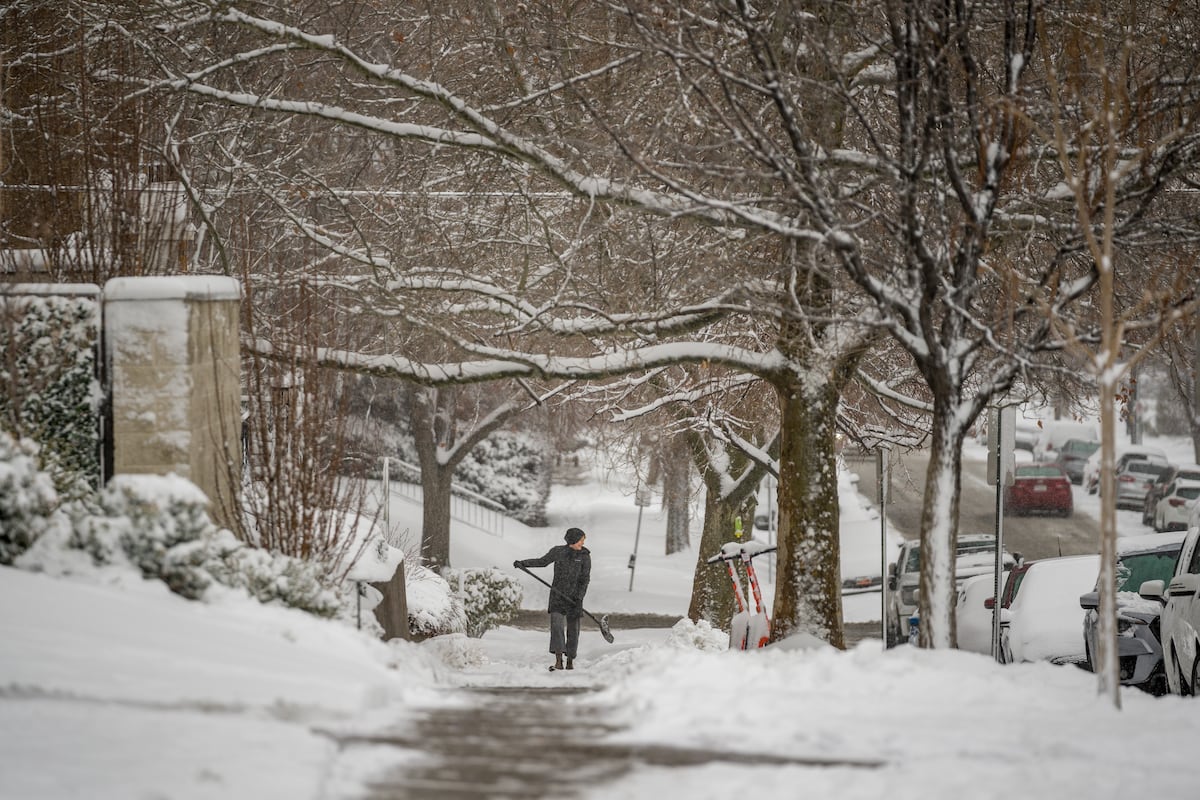
Recent storms pulled Utah out of a record-low snowpack, but experts doubt the state can recover after an unusually warm winter.

Despite a recent spate of storms yanking Utah’s snowpack out of record-low levels, forecasters say they have given up on any chance of a winter rebound.

“We were holding out hopes at the turn of the calendar year, back in January,” said Glen Merrill, a hydrologist at the National Weather Service’s Salt Lake City office. “Now, we only have March and the first week or two of April to bounce back, and it’s just too late in the season to have confidence in recovery at this point.”

By the time February rolled around, an unusually warm winter had left Utah with a historically low snowpack. The series of storms that blew through last week, Merrill said, boosted mountain snow levels to 65% of normal.

“We’ve added a little over 2.5 to 3 inches of water in our snowpack, and that’s gotten us above that record low,” Merrill said. “We’re still very low.”

Some stretches of the Beehive State are faring better than others. The Bear River Basin — which encompasses Cache Valley and other northeast portions of Utah — has a snowpack at 81% of its median for this time of year, according to the Utah Department of Natural Resources. In central Utah, though, the Lower Sevier Watershed sits at 35% of median.

The watershed that includes Salt Lake and Utah counties, meanwhile, is currently at 60% of median for this time of year.

In many of this season’s biggest storms, snow has normally fallen only above 8,000 feet, Merrill said. Because of the unusual warmth, everything lower has gotten rain.

“If you look at our precipitation for the water year, across the state of Utah, it’s near normal,” he said. “We’ve gotten the precipitation, it just hasn’t fallen as snow like it typically does at those low- and mid-elevation areas.”

You can help us bring more local news to Cache Valley.

I’m Brock Marchant, The Salt Lake Tribune’s Cache Valley reporter in partnership with Utah Public Radio. As a valley native, I’ve seen firsthand the issues that people face everywhere from Richmond to Avon — unaffordable housing, dwindling open space and a rapidly increasing population that has cities struggling to keep up. I want to explore local problems by reporting on the ground, not just quote elected officials and news releases. As residents work diligently to overcome challenges, I want to tell their stories and share their solutions. Smart, hard-working people have built the valley’s history, and I’m certain they will frame its future.

As a nonprofit newsroom we rely on donations from readers like you to make this work possible. Donate today to support this reporting.

Source: Utah News

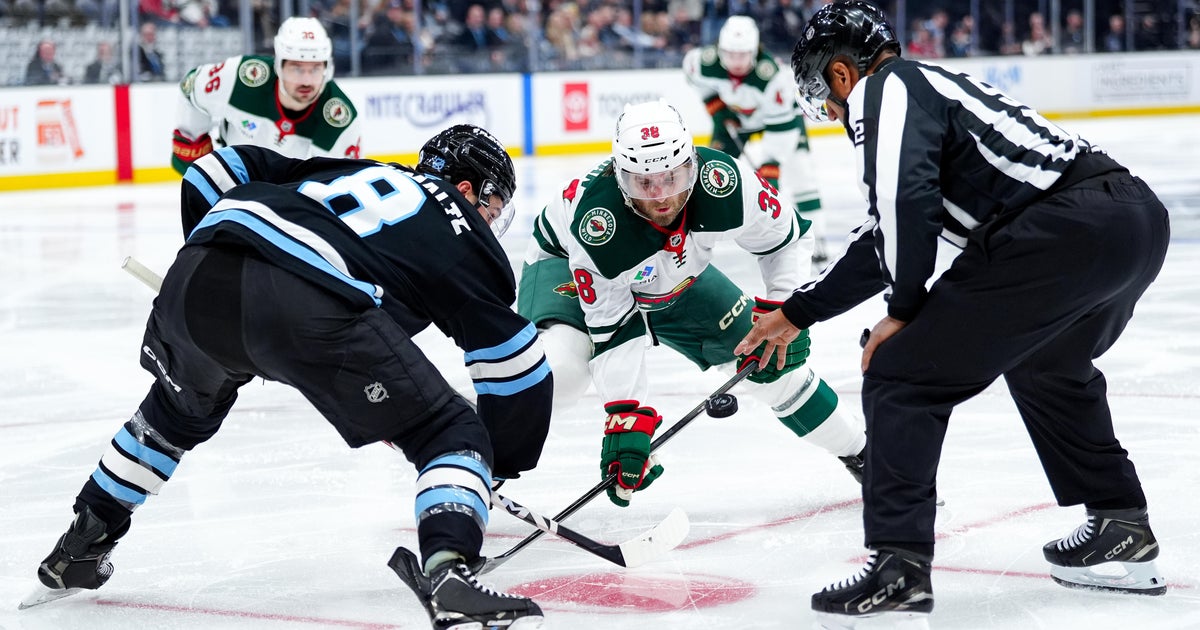
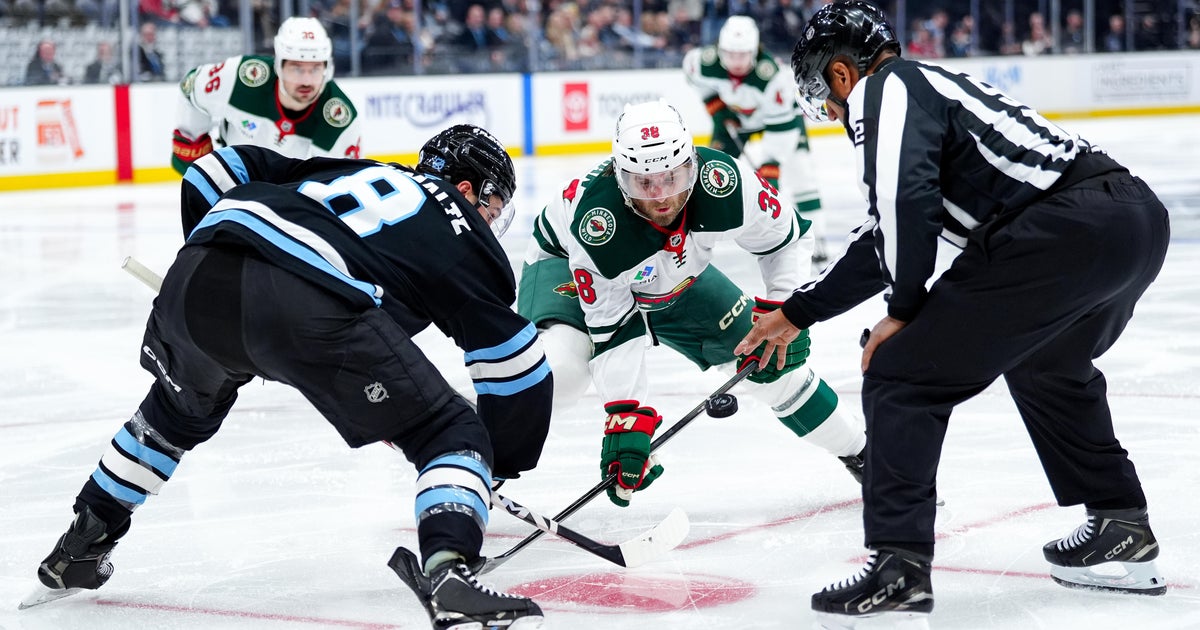
Utah Mammoth take down Minnesota 5-2 to end the Wild’s winning streak at 6

The Wild were taken down by the Utah Mammoth 5-2 on Friday night to end Minnesota’s winning streak at six games.


The Wild were taken down by the Utah Mammoth 5-2 on Friday night to end Minnesota’s winning streak at six games. 

Lawson Crouse scored twice and U.S. Olympian Clayton Keller had a goal and two assists for Utah.

Logan Cooley and Barrett Hayton also scored and Karel Vejmelka made 21 saves to help the Mammoth rebound from a 4-2 home loss to NHL-leading Colorado on Wednesday night in their return from the Olympic break. Utah began the night in the first wild-card spot in the Western Conference.

U.S. Olympian Matt Boldy scored and assisted on Kirill Kaprizov’s goal for Minnesota. Second behind Central Division-rival Colorado in the West, the Wild are 9-2-1 in their last 12. They beat the Avalanche 5-2 on Thursday night in Denver.

Cooley opened the scoring with a short-handed goal with 6:37 left in the first period. The former University of Minnesota star got the puck on the right side off a deflection and put a shot between Wallstedt’s legs for his 15th goal.

Keller scored his 18th at 4:26 of the second. Nick Schmaltz forced a turnover on a forecheck and fed Keller on the right side.

Crouse made it 3-0 at 7:49 of the second. He came down the middle, took a pass from Keller and beat Wallstedt with a backhander.

Kaprizov countered for Minnesota on a power play with 5:57 left in the second. He has 33 goals this season.

Hayton made it 4-1 on a power play at 1:19 of the third, and Crouse added his 16th of the season on a tip with 7:12 to go.

Boldy got his 35th of the season with 5:57 remaining.

Up next

Wild: Host St. Louis on Sunday.

Mammoth: Host Chicago on Sunday.

Source: Utah News

Utah’s pressure too much for Wild

The mountains that dominate the skyline of Salt Lake City were formed from constant and relentless pressure. So was the Utah Mammoth’s 5-2 home win over the Minnesota Wild on Friday night at Delta …

The mountains that dominate the skyline of Salt Lake City were formed from constant and relentless pressure. So was the Utah Mammoth’s 5-2 home win over the Minnesota Wild on Friday night at Delta Center.

Playing the second night of back-to-back road games at high altitude, and coming off a hard-fought emotional win at Colorado, the Wild faced a young and relentless Mammoth team determined to wear them down.

Kirill Kaprizov and Matt Boldy scored, and Jesper Wallstedt finished with 32 saves on a night where highlights were hard to come by for the visitors.

“I thought in the first period we had a good start and played the way we wanted to for, I’d say, the first half. Then I thought we got away from it a little bit and we never got it back,” Wild coach John Hynes said to reporters in Utah. “… After about the first 12 minutes of the first (period), I just thought our puck play, we just fed their transition and their offense like that. I thought that was the biggest difference in the game.”

While Utah made rush after rush, and tested Wallstedt again and again, they also pounced on every one of Minnesota’s mistakes, getting an early shorthanded goal and building a three-score lead before the game was half over.

“They’re a great hockey team,” Wild defensemen Brock Faber said of the Mammoth, in the hunt to make their first playoff trip since relocating from Arizona two years ago. “They’re really skilled. Obviously, we’ve got to find a way to play them better. Tonight we didn’t have our best, and you can talk about the back-to-back all you want, but we just weren’t good enough.”

It could have been worse.

After a fruitless second-period rush into the offensive zone by the Wild, the Mammoth transitioned quickly, and on an odd-man rush slipped a puck past Wallstedt that looked to make it a 4-0 lead. But for the fifth time this season, the Wild successfully challenged the play for offside and the point came off the scoreboard.

Minutes later, with the Wild on a power play, Kaprizov scored on a tap-in at the side of the crease after a cross-ice feed from Matt Boldy. It was the 218th career goal for Kaprizov, leaving him one short of tying Marian Gaborik’s franchise record.

When Joel Eriksson Ek took a high stick to the face and left the game, the ensuing Wild power play provided a window to make it a one-goal game. But the Mammoth penalty kill held firm, and then the Wild took a penalty of their own late in the middle frame, switching the momentum back to the home team.

Eriksson Ek did not return, and Hynes did not have a postgame update on the second line center’s health.

Utah scored early in the third on the man advantage, capitalizing on a scramble in front of the net where Wallstedt had lost his stick, making it 4-1 for the Mammoth.

Minnesota didn’t lack opportunities to get back into the game, with Boldy springing for a pair of shorthanded breakaway. Both were thwarted by Karel Vejmelka. The Mammoth goalie finished with 21 saves as Utah improved to 2-0 versus the Wild this season.

“Not our best, obviously. I think these guys have kind of been our Kryptonite the last couple years,” Wild forward Mats Zuccarello said. “They play real good against us, and it’s a tough team to play against. … We don’t play our best, but they prevent us from playing our best, too. So, you’ve got to give them credit.”

After the Mammoth opened up a 5-1 lead, Boldy scored for the third time in the past two games to pull Minnesota back within three. It was Boldy’s team-leading 35th goal of the season.

By missing the score sheet on Friday, defenseman Quinn Hughes’ franchise-record assist streak was halted at 11 games. Minnesota returns home to open March with a 4 p.m. Sunday afternoon game versus St. Louis at Grand Casino Arena.

Source: Utah News

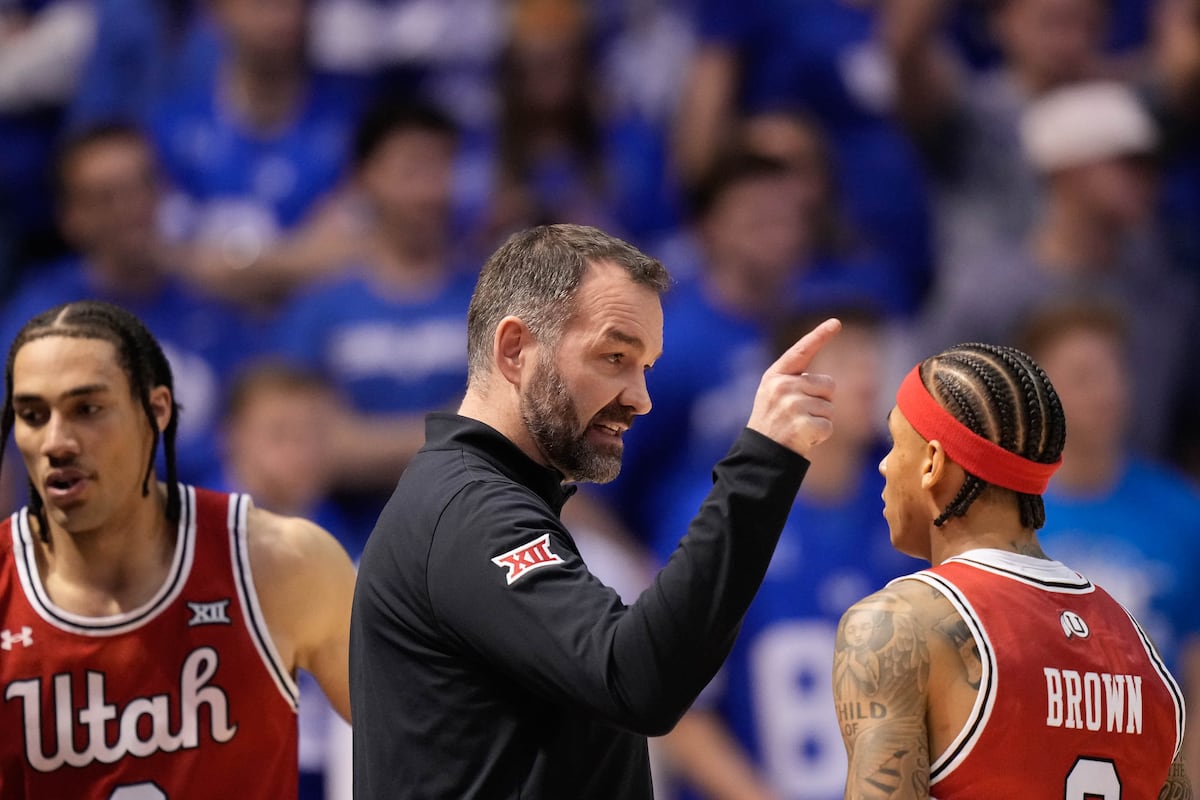
How Alex Jensen plans to outlast a tough first year and rebuild Utah basketball

The Runnin’ Utes legend now knows what it feels like to lose inside the Huntsman Center. But his belief in the future is unwavering.

Rick Majerus unleashed one of his patented rants, while a 6-foot-7 figure remained motionless on the practice court.

“Look at Al. Al’s not going to get out of his stance. Al’s not going to put his head down,” Majerus shouted at his coaching staff and players, as he pointed toward the frozen figure.

The unmoving man was Alex Jensen, the Runnin’ Utes legend and then Majerus’ assistant coach at Saint Louis University.

Jensen remained in the stance for 10 minutes.

“Al was like a statue,” former Billikens assistant and current ESPN analyst Paul Biancardi told The Salt Lake Tribune. “He never moved. It was funny at the moment, but afterwards I was like ‘this poor guy.’”

It’s been almost two decades since that moment. Jensen, who was just a first-time assistant coach then, has worked his way up from a college assistant to the G League to the NBA and now the head coach at his alma mater, Utah.

Jensen is back in the Jon M. Huntsman Center, trying to lead his program back to the glory days it once had under Majerus.

But the Runnin’ Utes are currently 10-18 and 2-13 in the Big 12.

“I knew it was going to be a lot,” Jensen told The Salt Lake Tribune of his expectations when he first took the job. “Our only goal is to be here and make it good. So it gives us the luxury of taking our time and doing it right.”

Jensen’s first season hasn’t gone as he would have liked.

Some — like Biancardi did years ago — might even feel bad for him.

Jensen remains unwavering, though. He’s sticking to the posture and purpose that he knows to be true to build the Runnin’ Utes back up the right way.

‘Special place in his heart’

(Steve Griffin | The Salt Lake Tribune) Head coach Rick Majerus grimaces on the sideline as the Utes start to falter against Kentucky in the 1998 national championship in San Antonio, Texas.

Keith Van Horn was on his way to becoming a Utah legend and an NBA lottery pick.

But in Majerus’ eyes, he could never live up to Jensen’s standards. The often complex and tyrannical head coach, who led Utah to the 1998 Final Four, reminded Van Horn that after every missed box out and rebound.

“Jesus, Keith,” former Utah center Michael Doleac remembers Majerus yelling at Van Horn with his thick midwestern accent, “your savior is at a bus station in London right now.”

Jensen was, indeed, in London serving on his mission for The Church of Jesus Christ of Latter-day Saints after playing his freshman season from 1994-95. Majerus refused to offer any of his players special treatment.

But “he always had a special place in his heart for Al,” Doleac said.

Majerus gave Jensen the nickname “Al” because he reminded him of the late great Marquette coach Al McGuire, with whom he played under and later coached. Jensen’s Ute teammates often made fun of the 6-foot-7 forward, calling him Majerus’ “adopted son.’

“There were only three people Rick got teary-eyed talking about,” said former Runnin’ Ute Jeff Johnsen. “It was Al McGuire, his mom and Alex Jensen.”

After Jensen left the U. to play pro basketball overseas in Asia and Europe, Majerus stepped down from the program in 2004, citing health issues.

The duo couldn’t stay apart for long after that. Once he was done with his playing career, Jensen joined Majerus at Saint Louis.

Jensen often drove Majerus to the pool in the mornings at Saint Louis. Majerus made Jensen run full-court drills with players in practice.

“They had a father, son; player, coach; boss, co-worker type of relationship,” said Oklahoma coach Porter Moser, another one of Majerus’ former assistants at Saint Louis.

Jensen says he still carries those memories and lessons with him today.

“I don’t think anybody can argue that there has ever been a better teacher in the game than Coach Majerus,” Jensen said. “That was a great foundation for me to have.”

He still rattles off some of his mentor’s quotes when he gets the chance.

“He [Majerus] used to have a phrase that he’d always say: ‘Everything we do makes sense,’ ” Jensen recalled. “There’s always going to have to be a purpose in what you do.

“The people that are successful do just that.”

A player’s coach

(Rick Egan | The Salt Lake Tribune) Jazz assistant coach Alex Jensen works with Rudy Gobert, during practice at the Zions Bank Practice Center, on Tuesday, Nov. 9, 2021.

Alex Jensen’s Utah program currently remains a big project.

But he’s worked on something like that before.

Long before becoming a four-time NBA Defensive Player of the Year, Rudy Gobert was a lanky and unfinished prospect selected with the 27th pick in the 2013 NBA Draft.

But he had all the potential.

“Rudy was this big unknown,” former Utah Jazz assistant Mike Wells said. “But then Alex builds this relationship with him, and we get to see somebody blossom as a player and become a cornerstone of the franchise.”

You’d be hard-pressed to find Gobert without Jensen in Salt Lake City. They were always watching film or bruising each other under the basket after practices.

“Alex, I felt, was an excellent partner for saying no to Rudy,” former Jazz general manager Dennis Lindsey said. “There were some tough messages from Alex. But Rudy always knew that Alex cared about him deeply, and he had his best interest at heart.”

Each summer of Gobert’s near-decade with the Jazz, he could be found working out on his hometown court in Saint-Quentin, France, with none other than Jensen.

The two made it an offseason tradition to visit the city 80 miles northeast of Paris. Together, they’d work at Gobert’s youth basketball camps. Then they would hit the gym and hone Gobert’s skills as a defensive stalwart.

Rinse. Repeat.

“He was the one that was primarily working with me,” Gobert told The Tribune. “It was an opportunity for me to get up and care for the kids and sometimes still get better and still work out.”

During the down years of Gobert’s first few seasons, Jensen often hosted the French big man at his home for dinners.

When there was downtime in France, Jensen shared stories with Gobert about how he met his wife, Natalie Jensen, his life’s journey and more. Basketball hit the back burner then.

“Over the years, our relationship got stronger and stronger,” Gobert said.

Those fleeting moments helped foster multiple deep playoff runs in Salt Lake City years ago.

It certainly helped Gobert become the player he is today.

“His knowledge is very valuable,” Gobert said. “I always thought he would become a head coach.”

‘Take my time’

(Bethany Baker | The Salt Lake Tribune) Utah Utes head coach Alex Jensen watches during the game between the Utah Utes and the Arizona Wildcats in Salt Lake City on Saturday, Jan. 3, 2026.

At dinners with Majerus, Jensen and the rest of the Saint Louis coaching staff, the former Utah head coach would always remind his assistants of one major fun fact about his favorite player.

Jensen never lost a home game in Salt Lake City under him.

“He told us that 26 times,’ Moser said.

Jensen can still brag that he didn’t lose a single game at the Huntsman Center as a player. But he’s now lost eight games there as a head coach.

“The first year is never — and it’s not an excuse — easy,” Jensen said recently. “You hope when the next year rolls around and people come in, they can sense … how things are done, and what expectations are, which has gotten better over the years.”

The Runnin’ Utes have had their fair share of ups and downs this season. They’re 10-18 overall. They’ve only won two games in the Big 12 so far. Some conference losses have been close. Others have been blowouts.

“You always want to win,” Jensen said after Utah’s 66-52 loss to No. 2 Houston recently. “This is a good game for us to realize how far we need to go, and how much we need to work on.”

Utah’s players can feel Jensen’s impact, too.

“We can really compete with everybody,” Utah forward Keanu Dawes said. “We just have to put it together for 40 minutes.”

The Runnin’ Utes’ season isn’t over yet, but Jensen is already putting together his roster for 2026-27. The Utes recently earned a commitment from an intriguing international big man, Fynn Schott.

Jensen is just starting what he hopes is a return to the days of the Runnin’ Utes playing postseason basketball.

Like all those years ago — once a younger, beardless coach stuck in a pose to be the example for his mentor Majerus — Jensen remains steadfast in the same principles that he believes will bring the Runnin’ Utes back to relevancy.

“I’m going to take my time. I’m going to do it right,” Jensen said.

“I’ve held true to those values, so nobody can say that that’s not what I’ve done. That’s the way you build an organization.”

Help The Tribune report the stories others can’t—or won’t.

For over 150 years, The Salt Lake Tribune has been Utah’s independent news source. Our reporters work tirelessly to uncover the stories that matter most to Utahns, from unraveling the complexities of court rulings to allowing tax payers to see where and how their hard earned dollars are being spent. This critical work wouldn’t be possible without people like you—individuals who understand the importance of local, independent journalism.  As a nonprofit newsroom, every subscription and every donation fuels our mission, supporting the in-depth reporting that shines a light on the is sues shaping Utah today.

You can help power this work.

Source: Utah News

Utah’s snowpack hit a record low this month. How much did recent storms help?

Recent storms pulled Utah out of a record-low snowpack, but experts doubt the state can recover after an unusually warm winter.

Despite a recent spate of storms yanking Utah’s snowpack out of record-low levels, forecasters say they have given up on any chance of a winter rebound.

“We were holding out hopes at the turn of the calendar year, back in January,” said Glen Merrill, a hydrologist at the National Weather Service’s Salt Lake City office. “Now, we only have March and the first week or two of April to bounce back, and it’s just too late in the season to have confidence in recovery at this point.”

By the time February rolled around, an unusually warm winter had left Utah with a historically low snowpack. The series of storms that blew through last week, Merrill said, boosted mountain snow levels to 65% of normal.

“We’ve added a little over 2.5 to 3 inches of water in our snowpack, and that’s gotten us above that record low,” Merrill said. “We’re still very low.”

Some stretches of the Beehive State are faring better than others. The Bear River Basin — which encompasses Cache Valley and other northeast portions of Utah — has a snowpack at 81% of its median for this time of year, according to the Utah Department of Natural Resources. In central Utah, though, the Lower Sevier Watershed sits at 35% of median.

The watershed that includes Salt Lake and Utah counties, meanwhile, is currently at 60% of median for this time of year.

In many of this season’s biggest storms, snow has normally fallen only above 8,000 feet, Merrill said. Because of the unusual warmth, everything lower has gotten rain.

“If you look at our precipitation for the water year, across the state of Utah, it’s near normal,” he said. “We’ve gotten the precipitation, it just hasn’t fallen as snow like it typically does at those low- and mid-elevation areas.”

Help The Tribune report the stories others can’t—or won’t.

For over 150 years, The Salt Lake Tribune has been Utah’s independent news source. Our reporters work tirelessly to uncover the stories that matter most to Utahns, from unraveling the complexities of court rulings to allowing tax payers to see where and how their hard earned dollars are being spent. This critical work wouldn’t be possible without people like you—individuals who understand the importance of local, independent journalism.  As a nonprofit newsroom, every subscription and every donation fuels our mission, supporting the in-depth reporting that shines a light on the is sues shaping Utah today.

You can help power this work.
Source: Utah News

The nation now sees Utah as a ‘sports boomtown.’ Here’s the role the Utah Royals help to play

Utah continues to grow its reputation as the state of sport, and the Royals “fit in right at the top,” Miller Sports + Entertainment president says.

Utah continues to grow its reputation as the state of sport, and the country is finally noticing.

A recent article from The Athletic published this week called Utah “a sports boomtown” with its multiple professional teams and as the future home of a second Winter Olympics in 2034.

Advertisement

While the majority of the article explored Utah’s efforts to land an MLB team, Miller Sports + Entertainment president Michelle Smith believes the NWSL’s Utah Royals “fit in right at the top” in the state’s “sports boomtown” reputation, she told the Deseret News Thursday at the team’s kit launch event.

Smith has been a vocal champion for the Royals, even raising her hand in a meeting and saying, “Hey, I really think we need to keep the Royals” when there was an opportunity for another buyer to purchase the team.

Smith saw value in the Royals, especially within the community, as well as the power that came from both the Royals and Real Salt Lake working together to elevate each other, she said.

For Smith, it’s important for the Utah Royals to use its platform as a women’s professional team to make an impact on the community whether it’s through players building a love of sports in youth or giving back to the community with service projects at every home match.

Advertisement

“I am so excited that Utah gets to be the stewards of women’s professional sports and not just soccer, but softball and volleyball,” she said.

0516socroyals.spt

Young Royals fans enjoy the game as the Utah Royals and Chicago Red Stars play at America First Field in Sandy on Saturday, March 16, 2024. | Scott G Winterton, Deseret News

The tumultuous history of the Utah Royals

Utah Royals FC first came to Utah when Dell Loy Hansen purchased the club in November 2017 and relocated it from Kansas City ahead of the 2018 season.

It was the professional home for U.S. women’s national team stars Christen Press, Kelley O’Hara and Becky Sauerbrunn. But over the course of three seasons, the Royals never reached the playoffs.

In December 2020, Hansen sold the team to an ownership group led by Chris and Angie Long, which moved the club back to Kansas City following the 2020 season.

Advertisement

The Royals would return to Utah a few years later, but this time as an expansion club bought by Real Salt Lake owner David Blitzer and Utah Jazz owner Ryan Smith as a minority owner.

Unlike the original iteration of the club, the new Royals didn’t inherit any personnel and had to start from scratch.

The 2024 Utah Royals featured a new sporting director, head coach and an entirely new roster assembled through the NWSL entry draft, free agency and one lone player through the expansion draft: captain Paige Monaghan (the other expansion draftee, Elyse Bennett, was traded days later).

The Royals struggled on the pitch in their inaugural season, leading to a coaching change midway through the season.

Advertisement

Then-assistant coach Jimmy Coenraets was named interim head coach after the firing of Amy Rodriguez. Coenraets was later named head coach a week and a half before the season finale.

A new era for the Utah Royals

A month into the 2025 season, the Royals and Real Salt Lake underwent an ownership change when the Larry H. Miller Company purchased majority control of the teams with Blitzer staying on as a minority owner.

Defender Kate Del Fava was drafted by the Royals in 2020 and is the only player on the team who has played for both iterations of the club.

On Thursday, Del Fava said the current Utah Royals “really doesn’t” feel like the same organization she began her career with.

Advertisement

“It feels totally different this time around,” she said. “This time around, it just really feels like it’s one club, it’s one Utah, it’s one community. And it feels like the women’s side is just as invested in as the men’s side and it’s taken just as seriously, and they’re just as proud to have us here representing the state.”

The support of the team’s current ownership was evident Thursday when Michelle Smith became emotional during her remarks.

“I think any time you have a part of ownership get up and get choked up talking about the team, that really motivates the girls,” Del Fava said.

LHM Special Announcement_LS_0014.JPG

Larry H. Miller Company board chairman Steve Miller, right, and Steve Starks, Miller Company CEO, speak at a press conference at America First Field in Sandy on Friday, April 18, 2025. The Miller family and Miller Sports + Entertainment bought a controlling interest in the Real Salt Lake and Utah Royals FC soccer teams from David Blitzer in a deal that includes the Utah Monarchs, America First Field, and Zions Bank Training Center and Zions Bank Stadium in Herriman. | Laura Seitz, Deseret News

Monaghan also spoke highly of the Millers at this season’s Royals media day.

Advertisement

“I think when you strive for perfection and you arrive at greatness, that’s a pretty great place to be, so, I think, obviously, they’ve (the Millers) done that in the community. They did that a while ago with Utah Jazz, obviously, the Bees and now us,” she said. “So to be a part of that is what you want in elite sports. So I think it starts in the top and funnels down. So selfishly, I’m so excited that I get to reap that benefit.”

Monaghan pointed to the infrastructure the Royals have built, comparing it to her college days at Butler University.

She said while she was in college, she liked getting extra individual reps with her coaches, but with only “two coaches, they didn’t have time to do that,” which left Monaghan to do them on her own.

That’s not the case with the Utah Royals, according to Monaghan.

Advertisement

“Now, we have this infrastructure where I can do everything I can to be the best I can be, and I have the resources to do that,” she said.

Monaghan’s and Del Fava’s sentiments about the Miller ownership group are part of Michelle Smith’s hopes for the club’s future.

“I hope that we create an environment and a culture for these women athletes to feel like they’re valued and they’re seen and they’re respected and they have an incredible career and can look back and say, ‘I couldn’t have played for a better team. … I couldn’t have played for a better club and a better ownership,’ and that will continue to build into their DNA as they continue to carry on in wherever their journey takes them.”

What’s Michelle Smith’s other hope for the Royals to accomplish on the pitch?

“Obviously, my greatest hope is that we can get a title, for sure. There’s nothing more fun than to experience the success on the field, especially at that level,” she said.

Source: Utah News

Utah Jazz sign Mo Bamba to 10-day contract

7-footer Mo Bamba is signing a 10-day contract with the Utah Jazz, Mark Bartelstein of @PrioritySports and Greer Love tell ESPN. Bamba spent time earlier this season with the Raptors and has averaged …

According to Shams Charania (through agents), the Utah Jazz have signed Mo Bamba to a 10-day contract.

This likely comes because of the loss to Jusuf Nurkic, who is out for the season. Bamba was on the Jazz roster to start the season and now makes his return. We’ll see if this will turn into a larger contract, but we may be seeing multiple 10-day contracts as the season goes on.

Advertisement

Bamba has not been able to find a home in the NBA, and it’s unlikely this is a long-term thing. That said, Bamba is a true center, something the Jazz do not have on their roster. This allows the Jazz to use their young players with a true center in certain lineups. The closest thing they have to that right now is Kyle Filipowski, but he doesn’t look like a long-term fit at center for Utah. We may not see Bamba at all, but it is a nice option for Utah to get a lineup on the floor that vaguely resembles what we might see next season.

Source: Utah News

Dixon-Waters scores 20 in San Diego State’s victory against Utah State

SAN DIEGO (AP) — Reese Dixon-Waters had 20 points in San Diego State’s 89-72 win over Utah State on Wednesday night.

SAN DIEGO (AP) — Reese Dixon-Waters had 20 points in San Diego State’s 89-72 win over Utah State on Wednesday night.

Dixon-Waters went 6 for 13 from the field, including 3 of 6 from 3-point range, and went 5 for 5 from the free-throw line for the Aztecs (19-8, 13-4 Mountain West Conference). Taj DeGourville scored 12 points and added eight assists. Pharaoh Compton shot 5 of 7 from the field and 1 for 3 from the line to finish with 11 points.

Michael Collins Jr. led the way for the Aggies (23-5, 13-4) with 18 points. Mason Falslev added 14 points for Utah State. Adlan Elamin also had 12 points, six rebounds and two steals.

San Diego State outscored Utah State by six points in the second half, while DeGourville led the way with a team-high 11 second-half points.

The Associated Press created this story using technology provided by Data Skrive and data from Sportradar.

Source: Utah News

‘It’s not a windfall’: Utah farmers largely left out of federal aid meant to help offset tariffs

Even with bridge funding, Utah farmers say rising costs and weak commodity prices still leave many barely breaking even. “For me personally,” one said, “it’s going to be enough to cover my fuel bill.” …

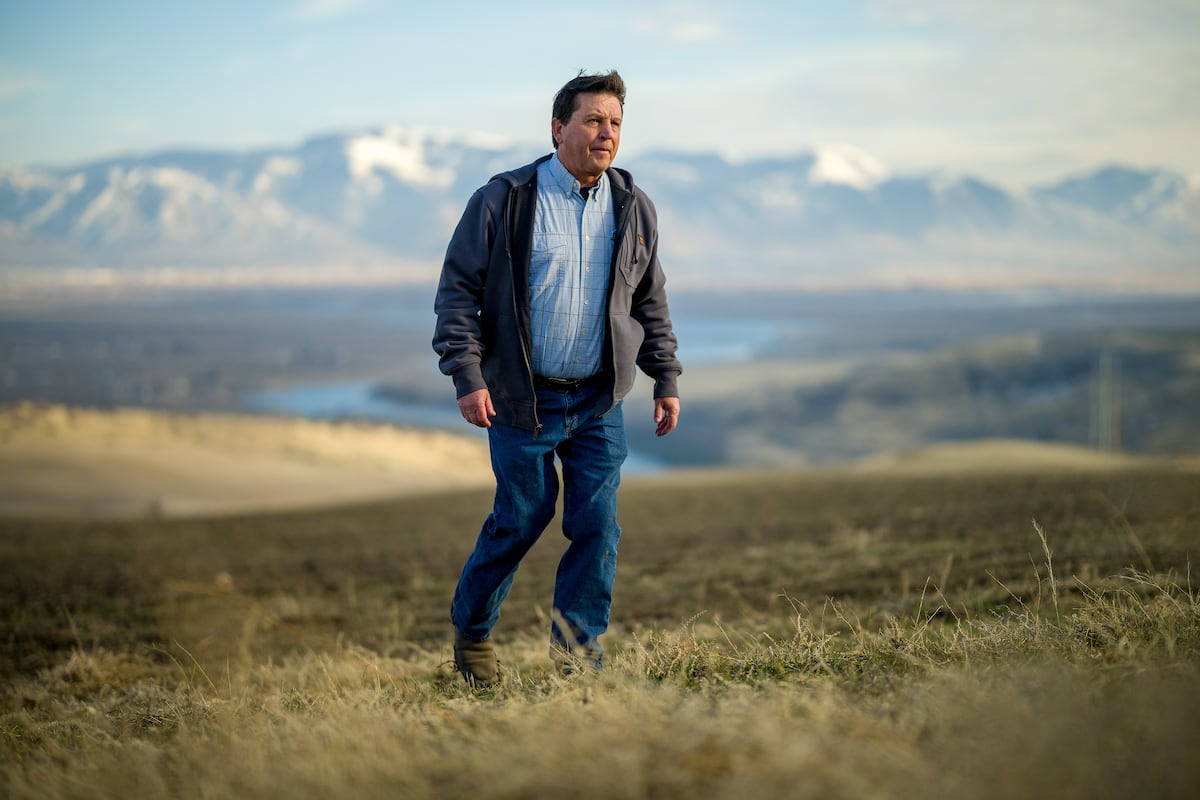
Newton Valjay Rigby bent down, plucked a stalk of hard red winter wheat and rolled it between his fingers as he surveyed the 1,500 acres his family has farmed and ranched for five generations in northern Utah.

Much of the land on his family farm, Rigby Ranch, is planted with alfalfa, wheat, safflower and other small grains. But Rigby said farming has grown increasingly tough as costs climb and supply prices have doubled.

To help the nation’s struggling farmers, President Donald Trump announced a $12 billion federal aid package in December.

Rigby, who also serves as president of the Utah Farm Bureau, expects to receive a portion of the funds. Still, he said Utah producers are unlikely to see much of that relief at a time when expenses remain high and profit margins thin.

“It’s just to help us get by until some of the other programs come in,” Rigby said. “For me personally, it’s going to be enough to cover my fuel bill. So, it’s not a windfall or anything.”

(Trent Nelson | The Salt Lake Tribune) Valjay Rigby, in a field where his family farm grows hard red winter wheat, in Newton on Friday, Feb. 6, 2026.

The aid comes through the U.S. Department of Agriculture’s Farmer Bridge Assistance (FBA) Program. Farmers are eligible if they reported their acreage to the agency by Dec. 19.

The agriculture department announced Feb. 20 that enrollment opened Monday and runs through April 17. Producers who applied online could receive payments as early as Feb. 28, the department said.

Payments are calculated per acre and vary by crop, with the highest amounts going to cotton and rice — two crops rarely grown in Utah.

(Christopher Cherrington | The Salt Lake Tribune)

About $11 billion is earmarked for row crops, while the remaining $1 billion goes to specialty crops not covered by the FBA program.

“We appreciate the help,” Rigby said. “It’s just — there’s some external things that have happened in the last year, or last couple years, that have really just affected the price that we’re able to sell our products for. And we want to produce food for people.”

Corn Belt states collecting the most

(Trent Nelson | The Salt Lake Tribune) Valjay Rigby, in a field where his family farm grows hard red winter wheat, in Newton on Friday, Feb. 6, 2026.

An analysis by the American Farm Bureau shows the biggest payments are headed to Texas, which could see $1.1 billion.

That’s followed by Iowa at $893 million, Kansas at $888 million and Illinois at $832 million.

Overall, Midwest and Corn Belt states are expected to collect $6.9 billion — about 64% of the total — while Southern and Southeast states are projected to receive roughly $2.8 billion, or 26%.

Western states and the Northeast have fewer eligible acres, said Matt Hargreaves, vice president of communications for the state’s farm bureau, so their share of the FBA program is smaller.

In Utah, if every qualifying farmer applied, Hargreaves said the state could see around $9 million in payments.

‘I couldn’t afford to do it’

(Trent Nelson | The Salt Lake Tribune) Valjay Rigby, on land his family farms, in Newton on Friday, Feb. 6, 2026.

Allen Staker runs a 700-acre farm in Emery County, where he grows mostly wheat, corn and barley, with a bit of alfalfa.

He expects to see some relief from the federal bridge payments, he said, but the past few years have been tough. Fertilizer alone last year cost him $100,000, and the price has more than doubled over the past decade.

Staker stays afloat by raising cattle, which provides a more steady income when crop prices and yields aren’t enough to cover expenses.

“If I had to depend on just the crops,” he said, “yeah — I couldn’t afford to do it.”

Rigby said Utah farmers are losing money on their crops because the prices they can get aren’t enough to cover rising costs.

He used to be able to sell alfalfa for around $300 a ton, he said. Now, buyers won’t pay more than $150.

Part of the problem, he said, is that dairies — his main alfalfa customers — can’t afford to pay more, since the price of milk is lower than the cost to produce it.

‘A historic agriculture trade deficit’

(Trent Nelson | The Salt Lake Tribune) Valjay Rigby in Newton on Friday, Feb. 6, 2026.

Mounting financial strain on America’s farmers prompted a bipartisan group of former USDA officials and farm leaders to write a letter to the House and Senate agricultural committees earlier this month, warning that the industry is at a breaking point.

“Farmer bankruptcies have doubled, barely half of all farms will be profitable this year, and the U.S. is running a historic agriculture trade deficit,” the letter read.

“There are few tragedies greater than the loss of a family farm, representing not just a loss of livelihood but a loss of a way of life for rural families,” the letter continued. “And when American farmers suffer, the entire rural economy is impacted — from schools, to churches, to main street businesses.”

A similar message was shared in January, when 56 agriculture groups urged Congress to do more. The bridge assistance is a meaningful step, they said, but it falls short.

Together, they warned the funds “do not cover the extensive and cumulative losses that farmers have absorbed over the last several years.”

“Even after including crop insurance, farm bill programs … losses for principal crops and specialty crops remain deep,” the letter reads.

Spencer Gibbons, CEO of the Utah Farm Bureau, said he expects farmers will see more meaningful relief later this year, but he worries about those who can’t wait that long.

Staker, in southeastern Utah, said many operations are already stretched thin.

“We need somebody to understand that if we’re going to produce food for this nation,” he said, “we’ve got to be able to afford to do it.”

Note to readers • This story is available to Salt Lake Tribune subscribers only. Thank you for supporting local journalism.

Help The Tribune report the stories others can’t—or won’t.

For over 150 years, The Salt Lake Tribune has been Utah’s independent news source. Our reporters work tirelessly to uncover the stories that matter most to Utahns, from unraveling the complexities of court rulings to allowing tax payers to see where and how their hard earned dollars are being spent. This critical work wouldn’t be possible without people like you—individuals who understand the importance of local, independent journalism.  As a nonprofit newsroom, every subscription and every donation fuels our mission, supporting the in-depth reporting that shines a light on the is sues shaping Utah today.

You can help power this work.
Source: Utah News