Forward Keanu Dawes is the team’s lone returnee who played any minutes for the Utes last season — he averaged 8.3 points and 6.4 rebounds as a sophomore in 2024-25 — while forward Ibi Traore is back …
The University of Utah has dipped into the Western Kentucky transfer portal well for the second time this week.
This time, five days after former Hilltopper guard Don McHenry committed to Utah, forward Babacar Faye signed with the Runnin’ Utes, according to 247 Sports’ Matt Zenitz and Chris Hummer.
Who is Babacar Faye?
Faye is a native of Senegal who stands 6-foot-8 and weighs 215 pounds. He will have one year of eligibility remaining.
Advertisement
Advertisement
Advertisement
Faye played at Western Kentucky the past two seasons after two years at the College of Charleston.
In that limited time frame, Faye had his best collegiate season to date, averaging 15.2 points and 7.8 rebounds per game for Western Kentucky while shooting 53.7% from the floor.
Faye, who has shot above 50% from the floor throughout his career, also shot a career-best 80.4% from the free-throw line last season. He averaged 5.6 free-throw attempts per game, a number that would have been second on the team for Utah during the 2024-25 campaign.
Advertisement
Advertisement
Advertisement
Faye played in the NCAA tournament during his junior season, scoring six points and pulling down five rebounds in a first-round loss against Marquette.
One of his most impressive performances last season came in a loss to Kentucky, when he scored 16 points on a team-high 5 of 7 shooting, while adding six rebounds, two steals and a block. He also fouled out and turned the ball over three times.
How is Utah’s roster shaping up for 2025-26 with Babacar Faye’s addition?
With Faye’s signing, the Utes now have 11 players committed to suit up for head coach Alex Jensen’s squad next season. That leaves them with four potential other scholarship spots to fill.
Forward Keanu Dawes is the team’s lone returnee who played any minutes for the Utes last season — he averaged 8.3 points and 6.4 rebounds as a sophomore in 2024-25 — while forward Ibi Traore is back after missing his freshman season due to injury.
The Utes are also bringing in former Salt Lake Community College guard Alvin Jackson III and forward Kendyl Sanders as part of their 2025 recruiting class.
Even in its earliest days, amid the string of rejections from venues, the band saw fans begin to emerge, welcoming their sound.
Several years before a band out of Provo, Utah, called Neon Trees burst onto the scene with the pop-rock song “Animal” and an up-and-coming group named Imagine Dragons had an EP release party at Provo’s Velour, a few guys in the neighboring city of Orem were recording demos in a closet.
Influenced by the grungy sound of Nirvana, their music was heavy and messy. It featured screamo-tinged melodies that explored with raw emotion themes like the cycle of addiction, feeling stuck and the desire to branch out and see the world.
The young musicians, who would eventually call themselves The Used, all had their sights on making it big.
“We all wanted to be on tour,” The Used lead singer Bert McCracken recently told the Deseret News. “That was like our life goal, just to be out on the road, to play Warped Tour, to play with anyone. Our driving force was just to be able to do what we do.”
But to do that, they had to start small.
And according to McCracken and Used bassist Jeph Howard, venues in Utah County weren’t ready for what they had to offer at the start of the millennium.
Following The Used’s first show, a 2001 gig at Johnny B’s Comedy Club in Provo, the band was “immediately asked to never come back again,” McCracken recalled.
“It was too rowdy,” Howard added. “We had people jumping off the balconies. … And I think somebody got his front teeth knocked out, too.”
The band played just a handful of shows in Utah before they were signed by Reprise Records. Each place they played was one and done.
“They just weren’t ready for heavy music anywhere in Utah County,” McCracken said. “It was still kind of frowned upon, and we were definitely ostracized for our style of music.”
They just weren’t ready for heavy music anywhere in Utah County. It was still kind of frowned upon, and we were definitely ostracized for our style of music.
— The Used singer Bert McCracken
But even in those early days, amid the string of rejections from venues, the band saw fans begin to emerge, welcoming their sound.
“I think it was something brand new and something that had never been heard before, and people were excited,” McCracken said.
Now, as part of a 25th anniversary tour, The Used is returning to its Utah roots to do something that would’ve seemed impossible in those earliest days: play the same venue three times.
The band will perform Saturday, Monday and Tuesday at Salt Lake’s Union Event Center, each night playing through one of their first three albums.
Ahead of the shows, McCracken and Howard reflected on The Used’s rapid rise to fame — and how, even after more than two decades, Utah still holds a special place in their hearts.
A whirlwind year: From Utah County to the big time
As McCracken and Howard tell it, there wasn’t much of a music scene in Utah County back in 2000 — or at least one that was well-defined.
Any band that was a band would play together, sharing the stage to support each other. On any given night, a single show could have everything from ska to metal to pop punk.
“We were just all holding it together,” Howard said. “We weren’t really worried about having a genre. It was just, if you’re trying to hold on and play music, then we’ll work it out.”
With that kind of fluidity, Howard and McCracken — who were each in their own bands — were already aware of each other before The Used formed.
Howard was staying in a spare room at his mom’s apartment in Orem when The Used started composing music in a closet-turned-studio. In need of a vocalist, McCracken came to mind.
For the then-18-year-old singer, the opportunity couldn’t have come at a better time.
“I was at a pretty low point in my life, kind of sleeping around on friends’ couches and whatnot,” McCracken said, recalling how the band members clicked and they were able to quickly write the song “Maybe Memories.” “It’s kind of all uphill from there.”
The band later rented a house in Orem and turned yet another closet into a vocal booth where they could record a bunch of demos. During one recording session, as McCracken and Howard recalled with a surprising amount of fondness, a bat fluttered out and flew all over the house before Howard caught it in a Tupperware container and released it.
While venues close to home were skeptical of their sound, the band’s demos caught the attention of producer John Feldmann, the lead singer/guitarist of the ska band Goldfinger out in Los Angeles.
Roughly a year after forming, with only a handful of live shows to its name, The Used had signed to a label.
And they were ready for it.
‘We’ve never shied away from where we came from’
The Used had support from fans even in their earliest shows, but the musicians felt a major shift in momentum — a kind of lightning bolt moment that assured them the band would make it — when they played in Salt Lake City for the 2002 Warped Tour.
The band’s self-titled debut album had only been out for about a month. But to their delight, when the power went out on the small Volcom stage at Utah State Fairpark, fans in the crowd kept on singing their breakout hit “Taste of Ink.”
“I think right then I was like, ‘Wow, we really have something,’” McCracken said.
Although the music video for “The Taste of Ink” was filmed in Los Angeles, references to Utah are peppered throughout it — one woman wears a BYU shirt and a sign on a convenience store in the video reads “UtahCo, Utah’s finest snack.”
“We’ve never shied away from where we came from,” McCracken said. “It’s always been a bit of a point of pride for the band.”
We’ve never shied away from where we came from. It’s always been a bit of a point of pride for the band.
— The Used singer Bert McCracken
The Used will perform “Taste of Ink”— and all of the songs on the self-titled album — Saturday night.
For McCracken and Howard, that debut record brings them back to those early days of trying to rise out of Utah County and make it as a band, the urge to get out and experience the world.
The band will play through its follow-up album, “In Love and Death,” Monday night. The 2004 offering came after they’d been touring for a bit, and had a little more control in and understanding of the music industry. The album was also heavily influenced by tragedy that hit close to home for McCracken.
The third album, McCracken and Howard only sort of joke, is how they can tell who their “hardcore fans” are.
“We kind of get a feel for who is in love with the first two records, and then we see who the hardcore fans are — they come out and sing ‘Lies for the Liars,’” McCracken said. “True hardcore fans are coming out and singing every word.”
“Lies for the Liars” marked somewhat of a stylistic departure from the band’s original sound — ”We wanted to make something very theatrical and almost Tim Burton-esque,” McCracken said.
“Throughout the years, the band has kind of taken on a new face, but at the same time, remained true to our origins,” the singer continued. “Twenty-five years later, we’re all completely different people, but I think in the writing sessions, we’re the same people. We like to open up about our problems and really capture something that makes sense for the time … which is not a lot different from when we wrote the self-titled.”
I think music and art itself has to evolve, and if it doesn’t, it’s kind of lying. If you’re not progressing and changing — even in a negative way — you’re sort of lying to yourself and lying to people.
— The Used bassist Jeph Howard
“I think music and art itself has to evolve, and if it doesn’t, it’s kind of lying,” Howard added. “If you’re not progressing and changing — even in a negative way — you’re sort of lying to yourself and lying to people.”
A hometown show: ‘They’ve stuck by us since the beginning’
It’s been a little over a month since The Used kicked off the 25th anniversary tour.
While a three-night stint in each city may seem taxing, it has actually been somewhat of a welcome change for the band since the runtime of an album is roughly 20-30 minutes shorter than their regular set — something McCracken said he has been appreciating at his age.
McCracken and Howard have loved the fan response to the tour, including learning from fans and meet and greets about why a certain album resonates more than another.
“Each night is very different,” Howard said.
Playing through these albums in Utah, the home of their very first fans, gives The Used the chance to reflect on their humble start while also celebrating how far they’ve come over 25 years.
“Our fans are some of the most loyal in the world, and they’ve stuck by us since the beginning, and they’re the reason why our dreams have come true,” McCracken said. “So we’re just so humbled and so grateful for their love and support.”
Brad Wheeler found out his longtime friend and Salt Lake City music scene staple John Paul Brophy Jr. was dying in an email from the man himself. Brophy’s farewell email was deeply personal, Wheeler …
Brad Wheeler found out his longtime friend and Salt Lake City music scene staple John Paul Brophy Jr. was dying in an email from the man himself. Brophy’s farewell email was deeply personal, Wheeler …
A New York-based company with a checkered Idaho past was selected Friday to manage Utah’s $100 million school voucher program, the Utah Fits All Scholarship, which remains in operation after a judge …
A New York-based company that touts itself as the first designed “specifically for education savings accounts” was selected Friday afternoon to manage Utah’s $100 million school voucher program, the Utah Fits All Scholarship, which remains in operation after a judge last month ruled it was unconstitutional.
The company, called Odyssey, has a questionable track record stemming from its recent management of a similar voucher program in neighboring Idaho. That checkered past was cited before all but one of the 12 Utah state school board leaders present Friday signed off on an initial contract with the company.
The decision comes a little over a month after the state terminated its multiyear deal with The Alliance for Choice in Education (ACE), citing “convenience” as the official reason for parting ways with the program manager less than a year after formally launching Utah Fits All.
The new Odyssey agreement is set to begin May 16, according to the $9.7 million contract that the Utah State Board of Education approved. That’s a day after ACE officially steps down, according to board documents. Odyssey’s two-year contract will run through June 2027.
USBE officials said in a statement that they are now working on the transition process, which “includes determining the process for possibly transferring the use of the existing UFA website.”
ACE was invited to reapply but did not submit a bid, according to Deputy Superintendent Scott Jones. Just one other organization in addition to Odyssey responded to the state’s request for proposal, Jones said.
“We are excited to work with the State and Utah families in enabling access to personalized learning opportunities for students across the state,” Odyssey said in a statement to The Salt Lake Tribune on Friday.
The same company was hired in 2022 to oversee Idaho’s then-$50 million Empowering Parents microgrant program, the Idaho Education News reported.
After reports surfaced that Odyssey had reimbursed families for improper purchases — such as clothing, TVs, smart watches and household cleaning supplies — the Idaho state board launched an internal review in April 2023.
They determined that less than 1% of reimbursed purchases, totaling $180,000, were ineligible and ordered Odyssey to pay back the funds, which the company agreed to do.
Separately, in June 2023, Idaho’s Department of Administration found that Odyssey had earned and collected nearly $500,000 in interest from the Empowering Parents account, a breach of its contract. Odyssey also agreed to pay that back to the state.
Odyssey in an email late Friday asserted that when it first operated the program, the state of Idaho had asked it to be the trustee on the account, but later changed its mind.
Utah board members on Thursday expressed concern about whether Odyssey’s repayment situation could interfere with its new responsibilities in Utah.
Deputy Superintendent Scott Jones assured board members Friday that he had addressed their concerns with Odyssey and emailed the board its responses, but he did not publicly disclose what all had been discussed.
He said the state typically enters five-year contracts with vendors but noted Odyssey’s was approved for only two years with the option for renewal.
“The reason for that is because of the complexity of these programs,” Jones said. “And because we want to follow the legislative law, or intent, for the program.”
Utah Fits All most ‘complex’ school choice program in nation
In the Utah Fits All program’s first year, lawmakers allocated about $80 million toward it — enough to award $8,000 scholarships to 10,000 students.
Families could spend the funds on a range of “educational expenses,” including private school tuition, tutoring, homeschooling expenses and even entirely on extracurricular activities, such as violin or swim lessons.
About 80% of recipients for the program’s inaugural year (2024-25) were homeschoolers, which made managing reimbursements challenging, USBE member Cindy Davis said during an earlier meeting Thursday — and made for a far more complicated workload than other states.
“In other states, 80% of these reimbursements are payments to a private school,” Davis said. “Well, in this state, 80% of the reimbursements are thousands of little reimbursements that you have to vet and evaluate.”
Board Chair Matt Hymas agreed.
“It has been a nightmare,” Hymas said Thursday, ahead of the Friday vote. “The previous vendor was not ready for it. And I’ll tell you right now, I doubt that this current, this new vendor, will be. … I would love to see us get a vendor and then say, ‘Good luck.’”
Utah Fits All still faces legal challenges
To further complicate the situation, Odyssey’s management will come online as the constitutionality of Utah Fits All remains in legal limbo.
Her April 18 decision came almost a year after the Utah Education Association, the state’s largest teachers’ union, sued the state, alleging that the voucher program was an unconstitutional use of the state’s income tax dollars — which are reserved only for public education, higher education and services for people with disabilities.
“Why would any organization want to take over a program that was just declared unconstitutional?” USBE member Joseph Kerry asked Friday.
“I think that’s a question that’s better answered by the vendor,” Jones replied.
If Utah Fits All survives, major changes are ahead for the now-$100 million program after lawmakers boosted its funding by 25% during the 2025 legislative session.
There will be new limits on spending for certain extracurriculars — as well as varying scholarship amounts, depending on a student’s age and whether they are homeschooled.
Homeschoolers age 5-11 will receive a $4,000 scholarship, for example, and homeschoolers age 12-18 will qualify for $6,000. Students attending private schools still will receive the full $8,000, regardless of age.
This means the more than $100 million in taxpayer-backed scholarships — if allowed — could be spread across more recipients. Applications for the 2025-26 school year closed Thursday.
Clarification • May 2, 8:55 p.m.:This story has been updated to reflect that the $180,000 that Odyssey was ordered to pay back in Idaho amounted to less than 1% — rather than 1% — of reimbursed purchases. Context has also been added from Odyssey about the history of the Idaho interest dispute.
Note to readers •This story is available to Salt Lake Tribune subscribers only. Thank you for supporting local journalism.
Dilan Battle, a member of the 2025 recruiting class, is headed to Salt Lake City with four years of eligibility after spending the spring in the Tigers’ program.
Kyle Whittingham’s Utah program added a commitment at a position of need out of the transfer portal Friday.
Battle is a 6-foot-2, 313-pound defensive tackle out of Arlington, Texas, who played at Mansfield Timberview High.
He was rated a three-star prospect with an 87 grade in 247 Sports’ composite rankings as a member of the 2025 recruiting class, and the No. 76 defensive tackle recruit nationally.
Battle originally signed with LSU out of high school, picking the Tigers over an impressive list of offers that included Alabama, Auburn, Florida, Miami, Michigan, Oregon and Texas A&M, among others, according to 247 Sports.
He spent the spring with LSU before hitting the transfer portal, and will have four years of eligibility remaining.
Battle was a high school teammate with Utah safety Nate Tilmon, a three-star recruit and another member of the Utes’ 2025 recruiting class.
How does Dilan Battle fit into Utah’s plans?
The Utes lost a pair of starters at defensive tackle this offseason, with Junior Tafuna exhausting his eligibility — he signed an undrafted free agent deal with the Houston Texans — and Keanu Tanuvasa transferring to BYU.
While sophomore Dallas Vakalahi and grad student Aliki Vimahi are back for Utah this season, the team needed to add depth and talent at the position.
The Utes’ 2025 class already included defensive tackles in Karson Kaufusi, who had a strong spring and stood out at the spring game, and Sione Motuapuaka; Battle adds another young prospect to the defensive tackles room.
He is the fourth transfer to commit to Utah since the spring transfer portal window opened, including cornerbacks JC Hart (formerly of Auburn) and Jaylen Moson (Furman) and wide receiver Larry Simmons (Southern Miss).
Sen. Mike Lee and Rep. John James introduced the App Store Accountability Act, which would require age verification in app stores.
Joined by Michigan Rep. John James, Utah Sen. Mike Lee this week introduced a bill that would work to increase safety for children online.
The bill, titled the App Store Accountability Act, would require app stores to use privacy-protecting age verification and would link children’s accounts to their parent’s accounts, giving parents the final say on whether the minor can download or purchase apps.
It would also require app stores to annually certify a user’s age and prohibit the sale of age-related data collection.
In an opinion piece for The Hill, Lee and Michael Toscano wrote that the legislation “tackles the grave danger of apps systemically misleading parents with deceptive ratings, funneling millions of children toward dangerous and inappropriate content.”
“For too long, Big Tech has profited from app stores through which children in America and across the world access violent and sexual material while risking contact from online predators,” Lee said in the bill’s press release.
The senator promised this legislation would “bring age verification and accountability to the source of the problem.”
The bill follows Utah legislation passed in 2025
Under the same name, SB142 was signed into Utah law after the most recent legislative session, requiring app developers to verify a user’s age category and confirm that the user’s parent gave yearly consent to the app store.
Utah’s version also gives parents of harmed minors the right to sue developers if the app store violates the law’s provisions.
During a ceremonial signing by Gov. Spencer Cox on April 4, the bill sponsor, Sen. Todd Weiler, R-Woods Cross, described the need for this kind of legislation in Utah.
“Everyone in this room knows, and every first year law school student knows, that kids can’t enter contracts,” Weiler said.
However, for decades, app stores have allowed children to do so. Weiler explained, “Every time someone downloads an app or an app changes, and it pops up and says do you accept these terms and conditions, we’re allowing our 11-year-olds, our 13-year-olds and our 15-year-olds to enter into binding contracts.”
CNN reported that if Lee’s bill were to be signed into law, app stores would need to inform app developers of the user’s age, and Big Tech may see this as a win amid pressures to make the internet safer for children.
After Weiler’s bill was passed in Utah, Meta, X and Snap released a joint statement, saying, “Parents want a one-stop shop to verify their child’s age and grant permission for them to download apps in a privacy-preserving way. The app store is the best place for it.”
Bill gains support from Utah organization
The Salt Lake City-based think tank the Sutherland Institute expressed support for Lee’s legislation in a press release Friday morning.
“We welcome the introduction of this common-sense measure to protect parents’ ability to help their children navigate online commerce,” Bill Duncan, constitutional law and religious freedom fellow, said, according to the institute.
“This bill provides an appropriate and constitutional way to empower parents who want to help their children avoid harmful apps and unfair service contracts,” he added.
The cat was found next to a couple that authorities said had died after falling from a popular tourist spot within Bryce Canyon National Park.
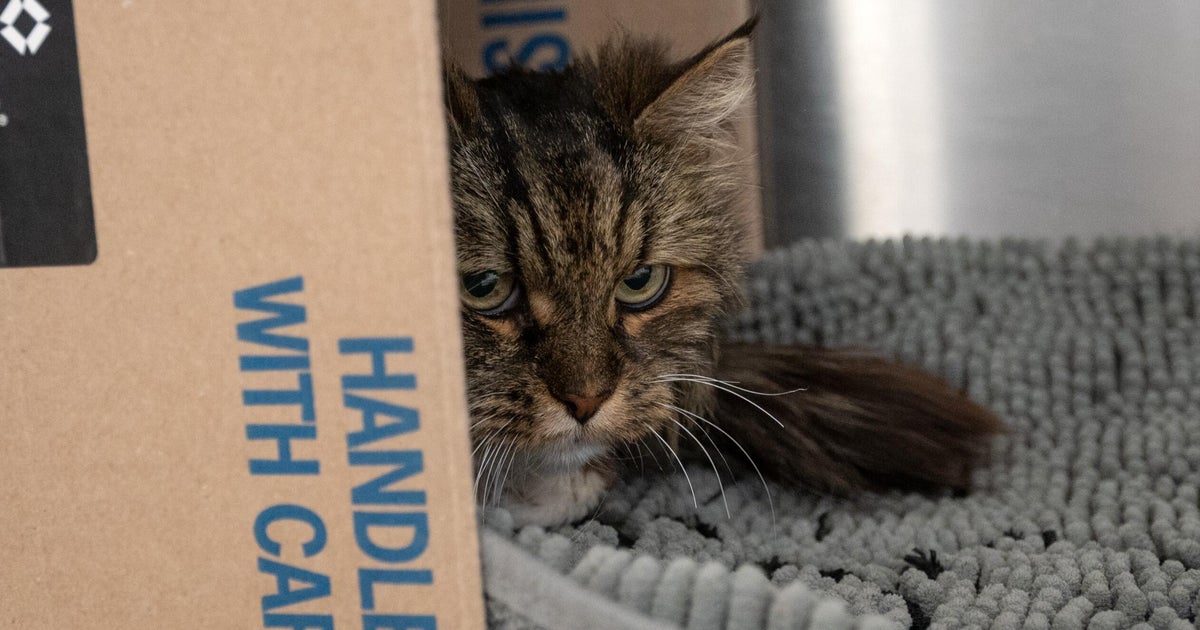
A cat that fell alongside a couple into a 380-foot-high canyon was the only survivor of the incident at a national park in Utah, an animal sanctuary said Thursday.
The feline “was found in a black soft-sided carrier that was dirty and torn, but seemed to have weathered the fall fairly well,” the Best Friends Animal Society said.
Its staff estimated the cat is 12 years old. It was found next to two people, a couple that local authorities said had died after falling from a popular tourist spot within Bryce Canyon National Park earlier this week.
The Garfield County Sheriff’s Office on Wednesday identified the deceased as Matthew Nannen, 45, and Bailee Crane, 58.
Tourists spotted the bodies Tuesday below Inspiration Point after the two fell late Monday or early Tuesday, the Garfield County Sheriff’s Office said in a statement. How they fell was unknown, but they had crossed over safety railings, according to the statement.
Nannen and Crane were living in a U-Haul van and recently spent a significant amount of time in Arizona. Florida was their last state of permanent residence, according to the sheriff’s office.
The cat, now named Mirage, was rescued alive Tuesday night and taken to an animal facility.
Mirage, a senior cat, miraculously survived a nearly 400-foot fall off a Bryce Canyon cliff that left two people dead.
Initially, the cat was taken to Pawz Dogs boarding facility in Panguitch on April 29, but the next day, Best Friends was contacted by the sheriff’s office and transported Mirage nearly 70 miles to their sanctuary in Kanab, CBS affiliate KUTV reported.
“She was matted and a bit sore, but friendly upon examination, as well as drinking and eating on her own,” the Best Friends Animal Society said.
It added that Mirage’s bloodwork showed no signs of abnormality but that staff was awaiting x-rays to determine whether there were any other injuries.
Bryce Canyon is a colorful maze of spires, cliffs and ravines eroded in soft rock and soil at the edge of a plateau. More than 2 million people visit the park every year.
The Utah Warriors grabbed their fourth Major League Rugby (MLR) game at Zions Bank Stadium after defeating the San Diego Legion 38–31 in a hard-fought game. With this win, the Warriors took the top …
By Allan Kokwon
The Utah Warriors grabbed their fourth Major League Rugby (MLR) game at Zions Bank Stadium after defeating the San Diego Legion 38–31 in a hard-fought game. With this win, the Warriors took the top spot in the MLR rankings and became the Western Conference’s leaders.
Advertisement
Advertisement
Advertisement
Teams exchanged advantages with one another throughout the whole match, keeping the competition close. Just before the half, San Diego’s quick goal tied the score at 14–14, showcasing their unwavering determination and will to win. Vugakoto R. scored a try in the 68th minute to give Utah a commanding lead in the second half and lead them to victory.
Leuila D. completed the conversion after Utah’s Crowley L. scored a try in the 74th minute. After the pivotal try by Crowley L. proved to be the game-winning margin, the Warriors took control of the match, and San Diego was unable to score back in the remaining minutes.
The Warriors’ victory was historic because it was the first time they had ever defeated a top MLR squad at home. Throughout the game, every Warriors player displayed steady tactical execution, with key players making vital contributions in high-pressure circumstances.
The Warriors will aim to maintain their top-of-the-standings position going into the season. The Warriors’ ability to make it to the playoffs and win their first championship in MLR history will depend on their next games.
With a balanced addition of seasoned foreign players to complement up-and-coming domestic talent, the Warriors set themselves up for significant effects throughout the remainder of 2025. San Diego continues to be ranked lower than other teams.
A few years later, Smith was one of eight recent graduates invited back to the University of Utah to realize Virginia Tanner’s dream of a professional Utah-based dance company, using seed grant …
KEY POINTS
ESPN sports journalist and University of Utah alum Holly Rowe keynotes annual commencement ceremony.
Some 8,900 students form school’s graduating Class of 2025.
Student speaker Tracie Yellowman Tséyíníítso encourages fellow graduates to embrace “the courage to lead.”
Veteran ESPN sports commentator/ University of Utah alum Holly Rowe has interviewed most of sports’ heavyweights over the past three decades — from Micheal Jordan and LeBron James, to Kobe Bryant and Caitlin Clark.
The Bountiful, Utah, native has also been to the White House and won a national Emmy award. She’s even met Oprah.
But as Rowe told the University of Utah’s newest graduates on Thursday, the journey from her childhood years in Davis County to ultimately covering sports’ biggest events was not always certain and smooth.
“I had a lot of stops and starts,” she said during her keynote address at the 2025 University of Utah Commencement at the Jon M. Huntsman Center.
Holly Rowe delivers the commencement address during commencement at the University of Utah in Salt Lake City on Thursday, May 1, 2025. | Tess Crowley, Deseret News
Thursday’s annual graduation event doubled as a celebration for the school’s 8,908 graduates. And for many, Thursday’s commencement exercises also marked the culmination of years of sacrifice, hard work and surely a few doubtful moments.
Rowe — a self-described “mediocre student” — can relate.
“I barely graduated,” she joked. “I was kind of nervous to speak today because I was on a payment plan for many years, post-college, for parking tickets that I received — so I’m freaking out because now they know where I am.”
Rowe remembered putting herself through college and scraping together just enough money for tuition. She performed a series of odd jobs — including working at the State Legislature, cleaning office buildings and donating plasma.
But young Holly Rowe drew upon a strict work ethic and her goals to imagine — and then create — the professional life she wanted: being a sportscaster.
Fueled by “irrational confidence,” Rowe said she volunteered for any “grunt job” that moved her closer to mastering her craft and realizing her sportscasting dream. She performed “a million internships” and did the work that others did not want to do.
But later, she was rewarded with opportunities. “I earned those — other people didn’t get those opportunities.”
Very few of today’s graduates, she added, will immediately be handed their “dream job.”
“But you guys can all get your dream jobs — it’s just going to take you a minute. And I want you to have some grace as you’re sitting here today, and as you leave here. Give yourselves a little grace to stay on that path for your dream job.”
Take time to envision the life that you want, she added, “and then create it.”
Graduates listen to commencement speaker Holly Rowe during commencement at the University of Utah in Salt Lake City on Thursday, May 1, 2025. | Tess Crowley, Deseret News
At the height of her professional career, Rowe was diagnosed with Stage 4 metastatic cancer. Her life, she said, has been spared by a “clinical trial and cutting-edge immunotherapy.”
But her ongoing cancer battle has served as a reminder of always remaining true to one’s priorities and dreams. She continues to live and create the life she had always wanted.
Rowe concluded by challenging her new fellow University of Utah alums to continue their pursuit of knowledge.
“Every single day, stretch yourself and grow. Seek others who are different from you. … Find people with diverse processes and ideas who can broaden your life view.
“Diversity is our greatest teacher — and I want you all to embrace it.”
Student speaker: The tools to thrive
Tracie Yellowman Tséyíníítso, a 2025 University of Utah graduate claiming a degree in community health education and promotion, was Thursday’s student speaker.
Tséyíníítso introduced herself as “a proud Dine (Navajo) woman from Utah’s Four Corners area.
Student speaker Tracie Yellowman Tséyíníítsó speaks during commencement at the University of Utah in Salt Lake City on Thursday, May 1, 2025. | Tess Crowley, Deseret News
“I stand before you today carrying the strength of my ancestors, a lineage of warriors, particularly Hastiin Kayeeli, my great grandfather many times over, whose resilience is instilled within me today and has given me the strength to survive and thrive in not only my everyday life, but in my educational journey,” she said.
“That spirit is alive within me and guides me in every step I take.”
Like many graduates, Tséyíníítso’s path to graduation was seldom easy.
“As a foster alumna, a mother, a pipe welder, and a student, there were days when the weight of my responsibilities felt insurmountable,” she said.
But she discovered strength in the belief and support of her family, friends and faith.
Tséyíníítso remembered being intimidated walking into her first classroom at the University of Utah. She felt out of place. She wondered if she belonged on campus and if she was doing the right thing enrolling in college.
“But I remembered something of my ancestors: We are equipped with the tools to endure and adapt, and with the courage to overcome. There, I adjusted my invisible quiver and bow, and I accepted that challenge.”
With each subsequent semester, Tséyíníítso found her rhythm and community. “My classmates, with their energy and intellect, inspired me every day. In my own quiet way, I honored each of them, wishing for their success as I navigated my own journey.”
Tséyíníítso said each member of the Class of 2025 has followed unique paths. But she reminded her classmates that they too are equipped with the tools needed to overcome challenges.
“As a proud University of Utah Ute, I know that each of us carry within us the spirit of perseverance, the ability to adapt, and the courage to lead.”
Student speaker Tracie Yellowman Tséyíníítsó exits commencement at the University of Utah in Salt Lake City on Thursday, May 1, 2025. | Tess Crowley, Deseret News
Near the conclusion of Thursday’s commencement ceremony, University of Utah President Taylor Randall reminded the Class of 2025 that they will never really leave “The U.” behind.
“You’re about to join the incredible ranks of 300,000 University of Utah alumni worldwide,” he said. “And speaking as a fellow alum, we’re thrilled to have you.”
University President Taylor Randall high-fives all the graduates as they file out after commencement at the University of Utah in Salt Lake City on Thursday, May 1, 2025. | Tess Crowley, Deseret News
A quartet of honorary degrees recipients
The University of Utah awarded honorary degrees to four recipients during Thursday’s commencement ceremony:
— I. King Jordan was awarded an honorary doctorate of education.
I. King Jordan, center, receives an honorary Doctor of Education during commencement at the University of Utah in Salt Lake City on Thursday, May 1, 2025. | Tess Crowley, Deseret News
Jordan served as the first deaf president of Gallaudet University from 1988 to 2006.
His leadership, according to the university, heightened public awareness of the importance of Gallaudet’s educational contributions to the nation and the world.
Jordan served as Gallaudet’s president until 2006, boosting the institution’s national and international profile and serving as an advocate and spokesman for deaf and hard of hearing people around the world. Since leaving that post, he has continued to speak about and in support of the deaf community.
Over his tenure, he served as an international spokesperson and advocate for deaf and hearing impaired people
— Julie A. Lassonde was awarded an honorary doctorate of education.
Julie A. Lassonde receives an honorary Doctor of Engineering during commencement at the University of Utah in Salt Lake City on Thursday, May 1, 2025. | Tess Crowley, Deseret News
Lassonde earned her undergraduate degree from Queen’s University (Canada) before embarking on a 20-year career in mining engineering and financial services.
She has perpetuated her family’s commitment to encouraging and mentoring women pursuing STEM degrees and careers.
Her parents, Claudette MacKay-Lassonde and Pierre Lassonde, created the Lassonde Family Foundation, based on three pillars — education, the arts, and community. After launching a New Venture Development Center at the University of Utah in 2002, a Lassonde family gift formed the foundation of the Lassonde Entrepreneur Institute at the university in 2006.
Now dedicated to managing the family’s philanthropic efforts along with her father, Lassonde returned to school for an executive-MBA and, most recently, a master’s degree in art history from Brown University.
Both degrees guide her philanthropic work.
— Dr. Cecil Samuelson was awarded an honorary doctorate of science.
Cecil O. Samuelson Jr., center, receives an honorary Doctor of Science during commencement at the University of Utah in Salt Lake City on Thursday, May 1, 2025. | Tess Crowley, Deseret News
A physician and a former faculty member and administrator at the University of Utah’s medical school, Samuelson also served as president of IHC Hospitals.
In 1994, Samuelson was called to be a member of The Church of Jesus Christ of Latter-day Saint’s First Quorum of the Seventy, a post he held for 17 years.
In 2003, he was named president of Brigham Young University.
He stayed in that job for 11 years, according to the university, “Building friendships with Utah presidents Bernie Machen and Michael Young. Together, the two schools’ leaders made a dedicated case for higher education, research and collegiate athletics in Utah.”
— Linda C. Smith was awarded an honorary doctorate of fine arts.
Linda C. Smith, center, receives an honorary Doctor of Fine Arts during commencement at the University of Utah in Salt Lake City on Thursday, May 1, 2025. | Tess Crowley, Deseret News
Smith has enjoyed an illustrious, lifelong connection to dance. In 1964, she was one of the first graduates of the University of Utah’s new fine arts-based dance program.
A few years later, Smith was one of eight recent graduates invited back to the University of Utah to realize Virginia Tanner’s dream of a professional Utah-based dance company, using seed grant funding from the Rockefeller Foundation.
The fledgling Repertory Dance Theater (RDT), the first of its kind, was based in an old barracks building on the school’s health sciences campus.
In 1983, the barracks was coming down and Smith, the company’s new artistic director, needed to find a home. She shared her vision with Salt Lake County leaders and Utah philanthropist Izzy Wagner, and a public-private partnership was developed to create the Rose Wagner Performing Arts Center, according to the university.
Students enter the Jon M. Huntsman Center through the tunnel for commencement at the University of Utah in Salt Lake City on Thursday, May 1, 2025. | Tess Crowley, Deseret News
Faculty arrive to commencement carrying flags at the University of Utah in Salt Lake City on Thursday, May 1, 2025. | Tess Crowley, Deseret News
The University of Utah Marching Band arrives to commencement at the University of Utah in Salt Lake City on Thursday, May 1, 2025. | Tess Crowley, Deseret News
A graduate has “Live Vibrantly” written on their cap as they wait outside before commencement at the University of Utah in Salt Lake City on Thursday, May 1, 2025. | Tess Crowley, Deseret News
University President Taylor Randall arrives to commencement at the University of Utah in Salt Lake City on Thursday, May 1, 2025. | Tess Crowley, Deseret News
Sam Plumb, vocal performance major, sings the national anthem during commencement at the University of Utah in Salt Lake City on Thursday, May 1, 2025. | Tess Crowley, Deseret News
Graduates cheer during commencement at the University of Utah in Salt Lake City on Thursday, May 1, 2025. | Tess Crowley, Deseret News
Christian Gardner, chair of the board of trustees, delivers the conferral of honorary degrees during commencement at the University of Utah in Salt Lake City on Thursday, May 1, 2025. | Tess Crowley, Deseret News
University of Utah graduate, student athlete and Olympic gymnast Grace McCallum is recognized during commencement at the University of Utah in Salt Lake City on Thursday, May 1, 2025. | Tess Crowley, Deseret News
Jamie Sorenson, president of the Alumni Board of Governors, speaks during commencement at the University of Utah in Salt Lake City on Thursday, May 1, 2025. | Tess Crowley, Deseret News
College of Education students are recognized during commencement at the University of Utah in Salt Lake City on Thursday, May 1, 2025. | Tess Crowley, Deseret News
Student speaker Tracie Yellowman Tséyíníítsó speaks during commencement at the University of Utah in Salt Lake City on Thursday, May 1, 2025. | Tess Crowley, Deseret News
University of Utah graduate and Presidential Intern Januel Gomez smiles as the University of Utah Marching Band plays at the end of commencement at the University of Utah in Salt Lake City on Thursday, May 1, 2025. | Tess Crowley, Deseret News
Joseph Boyden, Associated Students of the University of Utah student body president, introduces commencement speaker Holly Rowe during commencement at the University of Utah in Salt Lake City on Thursday, May 1, 2025. | Tess Crowley, Deseret News
Students cheer for the David Eccles School of Business graduates during commencement at the University of Utah in Salt Lake City on Thursday, May 1, 2025. | Tess Crowley, Deseret News
Bob S. Carter, CEO of University of Utah Health and Senior Vice President for Health Sciences, recognizes faculty award recipients during commencement at the University of Utah in Salt Lake City on Thursday, May 1, 2025. | Tess Crowley, Deseret News
Students cheer for the College of Health graduates during commencement at the University of Utah in Salt Lake City on Thursday, May 1, 2025. | Tess Crowley, Deseret News
College of Social and Behavioral Science graduate Sarah Adams looks up to find her family at the end of commencement at the University of Utah in Salt Lake City on Thursday, May 1, 2025. | Tess Crowley, Deseret News
Graduate Hannah Paik admires flowers she was given after the commencement ceremony at the University of Utah in Salt Lake City on Thursday, May 1, 2025. | Tess Crowley, Deseret News