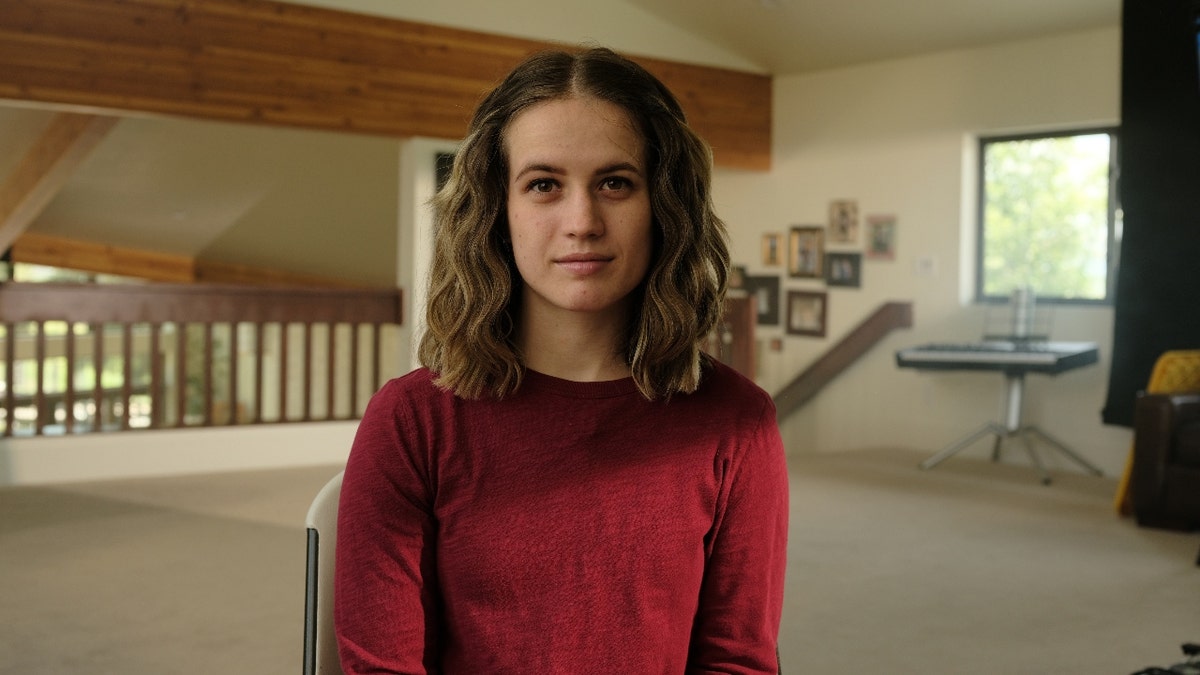
High school junior David “Van” Hafner joined forces with the Utah Lunch Debt Relief Foundation to pay off a Cottonwood Heights elementary school’s student lunch debt.
When an Alta High School student reached out to the Utah Lunch Debt Relief Foundation to donate $2,500 to help relieve students’ school lunch debt, DJ Bracken was in disbelief.
“That was the most incredible thing I’d ever heard,” said Bracken, the nonprofit’s founder and executive director.
High school junior David “Van” Hafner used his savings, combined with funds from the Utah Lunch Debt Relief Foundation, to help pay off Butler Elementary School’s over $6,000 school lunch debt.
Advertisement
Advertisement
Advertisement
Bracken and Hafner presented the school with the check on Friday, March 21, marking the 12th school the foundation has helped make debt-free. Now, Hafner is planning to continue working with the Utah Lunch Debt Relief Foundation to help raise the funds necessary to erase three more schools’ school lunch debt by the end of the summer.
“We certainly hope, going forward, that if more students want to come and help their community thrive, and help their fellow students pay down this debt, that is something we can facilitate and would love to do,” Bracken said.
Bracken created the Utah Lunch Debt Relief Foundation in July 2024 and has since raised about $50,000 to address Utah’s $2.8 million school lunch debt. He said it all began when he first learned about the state’s school lunch debt in a news article and couldn’t believe it was true.
“I called my local school district to verify that debt, and they said, ‘Not only is it true that there is that much debt in state; just in your school district, just the elementary schools, there’s $88,000 in debt,'” said Bracken. “And I said, ‘OK, great; send me a list of the schools, and I’m just gonna start paying them off one by one.'”
Advertisement
Advertisement
Advertisement
He began by using his own money to pay Bluffdale Elementary School’s $835 school lunch debt. Bracken then started the nonprofit in hopes others would feel inspired to help the cause. At first, he was worried the issue wouldn’t gain traction in the community, but he was pleasantly surprised when the foundation raised $5,000 on Day 1. Since then, it has continued to gather donations to relieve schools of their lunch debt one by one.
However, the foundation does not only intend to pay off school lunch debt; its goal is to eliminate the problem as a whole by advocating for policy change. The Utah Lunch Debt Relief Foundation worked with advocates and state representatives during the recent legislative session to introduce HB100, a bill that would allow students who are currently eligible for reduced-price lunch to receive free lunch and breakfast at school.
“The number is just so significant that even if I had a corporate donor come in today and say, ‘I’ll give you $2.8 million,’ it would just be back next year,” Bracken said. “So we can get things like this passed and still help kids at the same time. That’s how I know the organization is doing what it needs to do.”
Sponsored by Rep. Tyler Clancy, R-Provo, the bill also includes provisions that would prevent students from being publicly stigmatized due to having a meal debt. According to Bracken, some school districts will send students’ meal debt to collections in order to receive payment and then send students home with a collections notice to give to their parents. But this bill requires schools to communicate with parents directly rather than through students.
Advertisement
Advertisement
Advertisement
HB100 gained favor from both the Senate and the House during the legislative session and was signed into law by Gov. Spencer Cox on Tuesday.
More in U.S.
“It’s just really significant; I’m really proud to have been a part of the process,” Bracken said.
While he feels significant progress has been made in the last year, he says Utah Lunch Debt Relief Foundation will continue to work as long as there is even $1 of student lunch debt. He expressed that the support the foundation has received is evidence to him that members of the community can work together to make change.
“I think, right now, there’s a lot of cynicism out there — just the current environment we live in — and founding (Utah Lunch Debt Relief Foundation) really showed me that one person can make a difference with the power of other people, too,” Bracken said. “Sometimes, you just take one step in the right direction, and everybody decides to come with you, and it’s really been the case here.”
More information about the Utah Lunch Debt Relief Foundation can be found at utldr.org.
Disgraced Utah parenting blogger Ruby Franke’s eldest daughter, Shari Franke, has taken action to help protect other kids with a new child actor law in her home state with HB 322.
Join Fox News for access to this content
Plus special access to select articles and other premium content with your account – free of charge.
The eldest daughter of disgraced Utah parenting blogger Ruby Franke has taken action to help protect other kids with a new child actor law in her home state.
Utah Gov. Spencer Cox signed the bill that Shari Franke helped promote, HB322, which gives certain payment and privacy protections to minors involved in entertainment, which could include traditional acting, i.e. acting in TV commercials, or acting in social media content.
“I have been working on drafting HB322 that would protect child influencers in our state,” Shari Franke said in a February Instagram post. “This bill would require parents to create a trust fund for their children and require parents to pay children a minimum amount. It would also allow children influencers, at 18, to have any content they appeared in to be removed from all social media platforms.”
Shari added that certain family bloggers and lobbyists in Utah are against the legislation, but wrote that “[i]f family vlogging is as good as ‘ethical’ family vloggers want you to think, they should not fear being mandated to pay their children (because they say the children are already being paid anyway).”
Shari Franke details the last word she said to her mother in her new memoir, “The House of My Mother.”(Handout)
“And if children are supposedly consenting to being filmed, why fear the kids would want content removed once 18?” she wrote.
Shari’s support of HB322 is one of many actions she has taken to try and help protect the rights of children whose parents are social media influencers since her mother pleaded guilty to multiple counts of child abuse in 2023 and sentenced to years in prison.
“It’s a bill that has a couple different parts: one is it protects traditional child actors, like in the film industry or making commercials, [it] has their parents set aside 15% of their earnings for when they become an adult, and that is copying a number of other states,” Owens said. “And then it goes further and also includes protections for children in social media content.”
He added that it is “usually” children’s parents featuring kids in their content and, in turn, earning money from that content.
Utah authorities found two malnourished and emaciated children at a home in Utah prior to arresting Franke and Hildebrandt.(Instagram/ moms_of_truth)
“It … requires the parents or other adult to save some of that money for the kids when they get to be an adult,” he said. “And then it also has a third part, which says that if you are a child in content creation, when you get to be an adult and you find that content embarrassing or emotionally damaging in some way, you can have that removed from the website later so that it gives kids some protection for when they get to be an adult.”
“[I]f you are a child in content creation, when you get to be an adult and you find that content embarrassing or emotionally damaging in some way, you can have that removed.”
— Utah State Rep. Doug Owens
Ruby Franke, a 43-year-old mother of six, and Jodi Hildebrandt, a 55-year-old mother of two, ran a joint parenting and lifestyle YouTube channel called ConneXions Classrooms before they were arrested and pleaded guilty to four of six counts of second-degree aggravated child abuse in a St. George courtroom in December 2023.
Utah police found a “panic room” inside Jodi Hildebrandt’s $5.3 million Ivins home, where Ruby Franke sent her children to stay with Hildebrandt.(Washington County Attorney’s Office)
Utah authorities initially arrested Ruby Franke and Hildebrandt for abusing Franke’s two youngest children, a 9-year-old girl and 12-year-old boy, after Franke’s son approached a neighbor for help in 2022, and the neighbor called 911. Some of the abuse occurred in Hildebrandt’s home in Ivins, Utah.
Prior to ConneXions, Ruby Franke ran a parenting vlog, or video blog, called 8Passengers, centered around her own family of six children and two parents. But the 8Passengers empire came crumbling down once users started to notice Franke’s unusual behavior and punishments for her children. Ruby Franke stopped posting to the 8Passengers YouTube channel after her last video was uploaded on June 5, 2019.
In earlier videos without Hildebrandt, Franke complained about her children’s school using TikTok to teach dances, the dangers of sleepovers, bullying, and other topics. Some of her videos included her husband, including a “live couples workshop” about managing finances.(YouTube/ ConneXions)
Fox News is not aware of any evidence that Ruby Franke or anyone associated with 8Passengers engaged in any illegal conduct during the period she was actively vlogging on the 8Passengers YouTube channel.
Franke and Hildebrandt were both sentenced to serve up to 30 years in prison.
Shari also wrote a memoir titled “The House of My Mother,” in which she explains how she and her siblings were listed as 8Passengers LLC’s “employees.”
Shari Franke explained how she tried for years to get the Department of Family and Child Services to take action against her mother in her memoir.(Hulu)
In dozens of YouTube videos and social media posts, Franke and Hildebrandt coached parents in calm voices from a living room couch on how to raise their children in “truth.” In a video posted just before their arrests, Hildebrandt said pain can be a good thing for children of a certain age.
The case has prompted discussions about how parenting and lifestyle blogs often present only a sliver of a person’s or family’s reality, as well as children’s rights to their own privacy if their parent is a social media star.
The Utah basketball program’s roster turnover as it transitions from Craig Smith to Alex Jensen in the head coach chair is reportedly continuing. On Saturday evening, college basketball recruiting …
Utah Utes forward Keanu Dawes (8) puts up a 3-pointer shot during a first round game of the Big 12 Championship between the Utah Utes and the UCF Knights at the T-Mobile Center in Kansas City, Missouri, on Tuesday, March 11, 2025. The Utah Utes were knocked out of the championship by the UCF Knights, with a final score of 87-72. | Brice Tucker, Deseret News
The Utah basketball program’s roster turnover as it transitions from Craig Smith to Alex Jensen in the head coach chair is reportedly continuing.
On Saturday evening, college basketball recruiting analyst Sam Kayser reported that forward Keanu Dawes is entering the transfer portal after one season with the Runnin’ Utes.
The 6-foot-9, 220-pound Dawes transferred to Utah last offseason after his freshman season at Rice. The move made a lot of personal sense for Dawes, as he lived in Utah until he was 9 and is the nephew of former BYU forward Derek Dawes.
Advertisement
Advertisement
Advertisement
This season, Keanu Dawes played in 30 of 32 games with one start — Utah’s lone contest of the Big 12 Conference tournament, against UCF.
In mostly coming off the bench during the season, he averaged exactly eight points, 6.3 rebounds and exactly one assist in 18.3 minutes per game.
His best game of the season came in that game against UCF, when he tallied 21 points, 15 rebounds, two assists and two steals.
Though he’s been solid in two collegiate seasons now, he hasn’t quite lived up to the expectations he had has a top 150 recruit in the entire country in the Class of 2023 out of Houston, Texas.
Advertisement
Advertisement
Advertisement
When Dawes opted to stay home and sign with Rice out of high school, he was also considering Utah, BYU, Texas A&M, Texas and Oklahoma State.
Dawes becomes the ninth Runnin’ Ute — and fifth main rotation player — to enter the transfer portal in recent weeks as the team gets ready to begin play in the College Basketball Crown tournament.
Maty Wilke, a former Wisconsin transfer with two years in the Utah system, started 19 games over the past two seasons when other players have gotten hurt, and she’s made plenty of critical plays over …
Utah Utes guard Ines Vieira (2) celebrates with guard Gianna Kneepkens (5) after Kneepkens earned an and-one opprotunity after being fouled on her made shot during an NCAA women’s basketball game between the University of Utah and Arizona State University held at the Jon M. Huntsman Center in Salt Lake City on Saturday, Dec. 21, 2024. | Isaac Hale, Deseret News
Gianna Kneepkens has made a lasting mark on the Utah women’s basketball program over the past four seasons.
From her immediate impact as a freshman to oftentimes carrying a veteran Utes squad during the 2024-25 season, Kneepkens has played a vital role in one of the university’s most successful athletic programs in recent years.
Advertisement
Advertisement
Advertisement
She had a career year this season, averaging 19.3 points per game while shooting 50.4% from the field, 44.8% from 3-point range and 89% from the free-throw line.
Kneepkens’ time in a Utah uniform is over though.
On Friday, Kneepkens announced she is entering the NCAA transfer portal and will spend her final collegiate season elsewhere.
Kneepkens expressed her appreciation for the University of Utah, the people she’s come to know while at the school and the education she’s received in her social media announcement entitled, “My next chapter.”
“I have been treated with respect, care, and generosity,” she wrote. “I am a better person and student-athlete because of my time at the University of Utah. I will always be proud of my decision to be a Ute.
Advertisement
Advertisement
Advertisement
“Life also provides opportunities, challenges, and times of discomfort so people can stretch themselves. After conversations, prayerful discernment, and much introspection, I have decided to enter the transfer portal.”
It’s an unexpected move — the two most likely choices for her next year appeared to be playing one last season at Utah, which would have been her fifth season in the program after a medical redshirt year, or declaring for the WNBA draft and pursuing a pro career.
Kneepkens will be highly coveted in the transfer portal. She is a career 49.5% shooter, including 43.2% from 3-point range, and has averaged 15.6 points per game over her four collegiate seasons.
The 6-foot Kneepkens has earned a long list of accolades (the Pac-12 Freshman of the Year four years ago and three first-team all-conference honors among them) during her time at Utah and her ability to impact the game in a variety of ways — from shooting to facilitating to rebounding — will be appealing to numerous suitors.
Advertisement
Advertisement
Advertisement
As she explained in her announcement, Kneepkens is embracing the unknown — much like she did during the 2023-24 season when a broken foot forced her to the sidelines and she stayed active in the day-to-day scheming and game plans even while being unable to play.
“The University has become a large part of who I am due to the love, support, and formation I have received over the past four years. I will carry Utah with me no matter where I am in life,” Kneepkens wrote.
“However, I am taking my grad year to pursue the education that comes with the unknown, seeking a difference that will enhance my educational and athletic journey.”
Utah guard Gianna Kneepkens (5) celebrates with teammate Jenna Johnson during the Utes’ 79-61 win over Kansas at the Huntsman Center in Salt Lake City on Wednesday, Jan. 22, 2025. | Liv Medivitz
What Gianna Kneepkens has meant to Utah women’s basketball
Kneepkens has been a linchpin to Utah’s success since arriving in Salt Lake City ahead of the 2021-22 season as part of a recruiting class that included Jenna Johnson and Ines Vieira.
Advertisement
Advertisement
Advertisement
Along with Kennady McQueen, who joined the program a year earlier and was granted an extra year of eligibility due to COVID-19, those four players have been a part of every team in Utah’s run of four straight NCAA Tournament appearances.
It’s only the second time in program history that Utah has made the NCAAs four straight seasons.
With Johnson, Vieira and McQueen out of eligibility, Kneepkens will be playing without those three for the first time in her career — and it makes sense that her fifth “bonus” season, made possible due to a medical redshirt because of last year’s broken foot, gives Kneepkens a chance to explore and find her best path to finishing her collegiate career.
“Those girls mean everything to me. They’re my best friends. I’m just grateful I have had the past four years to play with them. It’s gonna be weird knowing that we don’t play basketball again together.”
Gianna Kneepkens, on Jenna Johnson, Kennady McQueen and Ines Vieira
“Those girls mean everything to me. They’re my best friends. I’m just grateful I have had the past four years to play with them. It’s gonna be weird knowing that we don’t play basketball again together,” Kneepkens said after Utah’s NCAA Tournament first-round loss to Indiana on March 21.
Advertisement
Advertisement
Advertisement
”But I know that they’ll hear from me, and I know I’ll hear from them. No matter where we go, what their next steps of life will be, (I’m) so grateful for the relationships (we have).”
What that group of four has accomplished together should be applauded, and it extends beyond the bounds of the court.
“The program just means everything to me. This was my dream all growing up, to be in this spot right here with Utah across the front of my jersey, and then to do it with these type of people, Gianna and my senior class that’s with me, us collective as a whole,” McQueen said after the Indiana game.
“They’re my best friends, and it’s just been awesome. Our conversations off the court, beyond basketball, have just been incredible here.”
Advertisement
Advertisement
Advertisement
Prior to Kneepkens stepping on campus in the summer of 2021 alongside Johnson and Vieira — and joining McQueen — Utah hadn’t been to the NCAA Tournament in over a decade.
After coming off the bench the first eight games of her college career, Kneepkens joined Johnson and McQueen in the starting lineup during that 2021-22 season, helping the Utes reach the NCAA Tournament, where they advanced to the second round.
Kneepkens earned Pac 12 Freshman of the Year and All-Pac-12 first team honors that year while averaging 11.8 points and 4.4 rebounds per game.
The most successful season for this group of Kneepkens, Johnson, Vieira and McQueen — who also had All-American forward Alissa Pili as a teammate for two years — came two seasons ago, when the Utes earned a share of the Pac-12 regular-season championship and hosted the first two rounds of the NCAA Tournament.
Advertisement
Advertisement
Advertisement
That team ended up making the Sweet 16, where it lost to eventual national champion LSU. It was the first time in 22 years that Utah made the Sweet 16.
From left, Utah’s Kennady McQueen (24), Gianna Kneepkens (5) and Jenna Johnson (22) celebrate after defeating Oregon in an NCAA college basketball game in the semifinal round of the Pac-12 women’s tournament Friday, March 4, 2022, in Las Vegas. (AP Photo/John Locher) | John Locher, Associated Press
Arguably one of the biggest what-ifs is what the Utes could have accomplished during the 2023-24 season if Kneepkens hadn’t broken her foot eight games into the year.
While Pili, a future first-round WNBA draft pick, headlined that group, there was a tremendous adjustment when Kneepkens was lost for the season.
That team, which started the year ranked No. 5 in the country, still made the NCAA Tournament and reached the second round.
Even though the Utes lost in the first round of the NCAAs this year, Kneepkens was the leader of a veteran group as she experienced a career year, averaging 19.3 points per game while being one of the country’s elite shooters in all three facets.
Advertisement
Advertisement
Advertisement
Over the final 14 games of the season, Kneepkens scored 20 or more points 10 times, including a career-high 32 in a win over UCF.
She also averaged 5.0 rebounds, 3.0 assists and 1.0 steals per game, impacting the game in a variety of ways.
Utah ended up going 4-4 in the NCAA Tournament over the past four seasons with this core group, and that included advancing to the second round three times.
Kneepkens will graduate from the University of Utah in May, and she’ll have a grad transfer year to continue her pursuit of becoming a pro basketball player.
Her impact at Utah, though, will long be remembered at Utah.
Advertisement
Advertisement
Advertisement
“Gianna came to us in 2021 as part of a special recruiting class with Jenna Johnson and Ines Vieira, and they immediately made our program better,” Utah first-year coach Gavin Petersen said in a statement in response to Kneepkens entering the transfer portal.
“They were instrumental in elevating Utah women’s basketball to the position it is in now, and after four consecutive NCAA Tournament appearances they leave Utah together.”
What it means for the immediate future of Utah women’s basketball
With Kneepkens’ departure, Petersen will have to replace all five starters next year as he heads into his second season as Utah’s head coach.
Advertisement
Advertisement
Advertisement
In addition to Kneepkens, the Utes primarily started four seniors this year, including Johnson, McQueen, Vieira and Rhode Island grad transfer forward Maye Toure.
Specifically along the guard line, Utah will look quite a bit different beginning next season, though a couple familiar faces will be back, barring any further transfer portal movement.
Maty Wilke, a former Wisconsin transfer with two years in the Utah system, started 19 games over the past two seasons when other players have gotten hurt, and she’s made plenty of critical plays over her time in Salt Lake City, none bigger than her game-winning half court shot against BYU in overtime on March 1.
She’ll be a senior next season with experience in the Big Ten, the Pac-12 and now the Big 12.
Utah Utes players rush to celebrate with guard Matyson Wilke (23), bottom left, after she made a buzzer beater to win the game against BYU in overtime during a Women’s NCAA basketball game at the Jon M. Huntsman Center on the campus of the University of Utah in Salt Lake City on Saturday, March 1, 2025. | Brice Tucker, Deseret News
Brooke Walker showed promise as a true freshman point guard. She ended up averaging 10.6 minutes per game and shot 42.6% in a limited role this season and should expect to take on a bigger part of the mantle going forward.
Advertisement
Advertisement
Advertisement
There were two other guards on this year’s roster, true freshmen Kylie Ray and Grace Foster. Ray has also entered the transfer portal, according to On3 Sports’ Talia Goodman, while Foster played just six games in her freshman season while dealing with injuries.
The Utes are also bringing in a pair of top 50 guards in their latest recruiting class.
Five-star point guard Leonna “LA” Sneed is ranked No. 26 in ESPNw’s top 100 in the 2025 recruiting class, while four-star guard Avery Hjelmstad is ranked No. 47 nationally by ESPNw.
Both players should get their chances to make an early impact at Utah.
Expect the Utes to be extremely active recruiting in the transfer portal this year, not just along the guard line but in the post as well. Toure was Utah’s top rebounder and best post scorer, but she was a grad transfer and is out of eligibility.
Advertisement
Advertisement
Advertisement
Another transfer from last season, former Michigan forward Chyra Evans, missed all of this season due to injury.
The most experienced front line player coming back is small forward Reese Ross, who has shown growth over her first two seasons at Utah and will be in line for an expanded role.
She averaged 7.8 points and 5.0 rebounds per game this season.
Samantha Crispe will be a senior in her third year in the program, and she averaged nine minutes per game this year. Another freshman, small forward Ella Todd, is also coming into the program this year.
“That’s why I think we have a connection and that’s what makes her so good, though. She will not rest until, I mean, if there was an open gym, she’d probably go shoot free throws, to be honest. That’s the competitive fire and that nature that I love about her and how that feeds off into our program. She’s just the ultimate competitor.”
Utah coach Gavin Petersen, on Gianna Kneepkens
Utah, still, will need to go searching for a good amount of help in the transfer portal, particularly to help fill leadership and experience positions across the roster.
Advertisement
Advertisement
Advertisement
Finding shooting and an impact at as many levels as Kneepkens was able to accomplish — not to mention her leadership qualities and work ethic — will be difficult.
Following what ended up being Kneepkens’ final game in a Utah uniform, the Utes’ NCAA Tournament loss to Indiana, Petersen described what makes her the “ultimate competitor” — and something the coach and player share.
“We focus on what we did wrong. It might be a small glimpse, it might be outweighed 20 to 1, but we’ll dwell on that one,” Petersen said.
“That’s why I think we have a connection and that’s what makes her so good, though. She will not rest until, I mean, if there was an open gym, she’d probably go shoot free throws, to be honest. That’s the competitive fire and that nature that I love about her and how that feeds off into our program. She’s just the ultimate competitor.”
Advertisement
Advertisement
Advertisement
The Utah system and its ability to produce success — which it has with four straight NCAA Tournament appearances — will be greatly challenged this next season.
While Petersen understands what Utah is losing in Kneepkens, he’s also confident in the future of a program that has made reaching the NCAAs its standard.
“Our coaching staff is going to strive hard to live up to the new standard, which we’ve established. It’s not going to be easy, but we welcome that,” he said after the Indiana loss. “We’re going to roll up our sleeves. Our player development is second to none. We take pride in that, and we’re going to hit the offseason with those returning and our newcomers coming into our program.
“I want to give this group something in five years to come back to, and hopefully we’re hosting (the NCAA Tournament first and second rounds), and it’s just something that they can continue to be proud of.”
Utah Utes guard Gianna Kneepkens (5) talks with her teammates as they take the floor during an NCAA women’s basketball game between the University of Utah and Arizona State University held at the Jon M. Huntsman Center in Salt Lake City on Saturday, Dec. 21, 2024. | Isaac Hale, Deseret News
The new law is among the most restrictive governing displays of flags, and is part of a polarizing debate focused on the Pride flag and other expressions of L.G.B.T.Q. support.
The new law is among the most restrictive governing displays of flags, and is part of a polarizing debate focused on the Pride flag and other expressions of L.G.B.T.Q. support.
It is important to acknowledge how far we have come as a country and region to improve air quality. Experts at the symposium lauded the Clean Air Act as an extremely effective piece of legislation …
Most of the world breathes dirty air, and only 17% of cities globally meet the World Health Organization’s pollution guidelines, according to a recent report. The world’s smog is especially harmful to young lungs and brains. Nearly 2,000 children under 5 are dying every day from air pollution (second only to malnutrition as a cause of death in that age group) and many more suffer from asthma and cognitive impairments.
We may think this only applies to kids in Bangladesh and Senegal. But children are struggling to breathe right here in Utah. We can do more to protect them.
Salt Lake City and its suburbs rank among the nation’s most polluted cities for both ozone and short-term particle pollution. Our future — like our valley — at times looks hazy and grim. But we can’t allow ourselves to feel terrified to the point of paralysis. Our anxiety should spur us toward action, not despair, and our conversations surrounding air quality should focus not only on the gravity of the problem but the solutions that will dig us out. We need hope, but not the wishful kind. We need action-oriented hope.
Last week, scientific, legal and medical experts gathered at the University of Utah College of Law for the annual Wallace Stegner Symposium to discuss solutions to northern Utah’s harmful air. These experts encouraged Utahns to make individual decisions that will lead to cleaner air in their homes and neighborhoods. We should avoid using inefficient gas-powered yard equipment like mowers, leaf blowers and other potent neighborhood polluters. If possible, we should cook on electric stoves in favor of gas-powered units, which often leak methane and benzene even when turned off.
Additionally, we have to stop spraying so many pesticides near our homes (no matter how annoyingly persistent or even downright charming a polo-clad salesman may be). Pesticides should be used to deal with actual pest problems. But our preventative chemical spraying is out of hand and bad for our health.
Individual behavioral changes are needed, but sweeping legislative change is far more important. Policy is the most important tool in cleaning up our air.
Vehicles are a top source of pollution in northern Utah. Presenters at the symposium were clear that we need to reduce the amount of pollution spewed out of tailpipes. “Electric cars are the obvious choice,” said Logan Mitchell, an air quality scientist and energy analyst at Utah Clean Energy.
With help from the Inflation Reduction Act, Utah is beginning to invest in solar energy, which — if scaled up — will reduce the pollution coming from buildings and homes. But we need to invest more in electric vehicles if we want cleaner air.
The U.S. spends billions each year on fossil fuel subsidies. It’s time to redirect those subsidies toward EVs. Utah lawmakers should beef up incentives to purchase EVs in the state. We also need to invest in charging stations for EVs to be viable.
But even with mostly EVs roaming Utah cities, we would still not be in the clear. The parched lakebed of the imperiled Great Salt Lake sends arsenic-laced dust to nearby communities when the wind blows. Kevin Perry, an atmospheric scientist at the University of Utah, was one of the first researchers to deeply analyze the potential harms of the dust. Though two consecutive wet winters saved the lake from complete collapse, Perry says many “dust hotspots” remain exposed. He is calling for more monitors to track the spread of that dust. But the state Legislature only allocated $50,000 for monitors this past session.
We need greater investments in data collection so that we can make better decisions for the future. More importantly, we simply need to get more water to the lake — especially in years that see above-average snowfall. State and local lawmakers are responsible for curbing water consumption across municipalities and farms by promoting efficient water use in lesser quantities. We should be vigilant in reminding our representatives of that responsibility. In other words, let the phone calls begin.
It is important to acknowledge how far we have come as a country and region to improve air quality. Experts at the symposium lauded the Clean Air Act as an extremely effective piece of legislation that helped us emerge from the incessant smog of the mid-1900s.
But there’s danger in getting so caught up in how far we’ve come that we forget how far we still have to go. On one hand, despair will get us nowhere. But too many Utahns have adopted an artificial brand of hope that assumes things aren’t as bad as experts say. Gov. Spencer Cox often falls into this camp. He chides scientists for peddling “doomerism.” But his position of power requires so much more of him. We need his leadership — not his penchant for happy talk.
True hope begets action.
To close the conference, the Stegner Center’s co-director, Brig Daniels, recited the words of the symposium’s namesake, Wallace Stegner. “One cannot be pessimistic about the West. This is the native home of hope. When it fully learns that cooperation, not rugged individualism, is the quality that most characterizes and preserves it, then it will have achieved itself and outlived its origins. Then it has a chance to create a society to match its scenery.”
Utah is beautiful. It will be even more beautiful when we clean up the smog — giving Utah’s kids a cleaner, more pure horizon.
Utah became the first state to prohibit LGBTQ+ pride flags from being displayed at government buildings and schools after the governor declined to reject the measure.
Utah became the first state to prohibit LGBTQ+ pride flags from being displayed at government buildings and schools after the governor declined to reject the measure.
Utah HC fell 2-1 to the defending Stanley Cup champions but got a point since the road loss came in overtime. Sam Bennett scored both of the Panthers’ goals, including the overtime winner after Utah …
Florida Panthers center Brad Marchand (63) and Utah Hockey Club center Barrett Hayton (27) go for the puck during the third period of an NHL hockey game Friday, March 28, 2025, in Sunrise, Fla. (AP Photo/Rhona Wise) | Rhona Wise
Nobody likes to lose, but compared to its effort in Tampa on Thursday, the Utah Hockey Club is happy about the result against the Florida Panthers on Friday.
Utah HC fell 2-1 to the defending Stanley Cup champions but got a point since the road loss came in overtime. Sam Bennett scored both of the Panthers’ goals, including the overtime winner after Utah had tied the game up in the third period.
Advertisement
Advertisement
Advertisement
“We had no passengers today,” said Utah head coach André Tourigny. “Everybody was engaged. Everybody was connected. I’m really proud of them.”
Brad Marchand made his Panthers debut on Friday, tallying the primary assist on the game-winning goal. Marchand had been in the Boston Bruins organization since 2006 prior to a trade that sent him to Florida on March 7.
Marchand, who’s nicknamed “The Rat” for his less-than-friendly antics on the ice, scooped up a plastic rat as he celebrated the win with his teammates — carrying on the longstanding tradition in Florida to throw rats on the ice after each win.
Utah hockey for dummies
After a handful of high-scoring games in recent weeks, media have used a tired Karel Vejmelka as a scapegoat, but he sure quieted the critics on Friday.
Advertisement
Advertisement
Advertisement
Utah’s goaltender stopped 30 of 32 shots against the Panthers — including some dangerous bids late in the game that could have prevented overtime from happening.
He ultimately came up one save short of a win, but his contributions earned UHC an overtime point.
“I think he was rock-solid,” Tourigny said. “He showed a lot of resilience and a lot of character.”
It should also be noted that neither Panther goal can be blamed on Vejmelka. Both came from high-scoring areas, giving him little room for error.
Vejmelka has now played 16 consecutive games — the most of any NHL goalie since Darcy Kuemper’s 22 in a row in 2019. Coincidentally, Kuemper played for the Arizona Coyotes at the time.
Advertisement
Advertisement
Advertisement
Tourigny was not yet on the coaching staff, but Utah HC goalie coach Corey Schwab was.
Utah hockey for casual fans
With about 14:20 left in the second period, Olli Määttä collided lightly with AJ Greer at the defensive zone blue line. As Määttä stood back up, he seemed to be favoring his right leg.
He finished his shift (about 20 more seconds), but he wouldn’t return to the game. The team announced shortly thereafter that Määttä was out with a lower-body injury.
Tourigny did not have an update on his status after the game.
As terrible as injuries are, they create opportunities for other players. As Utah’s playoff chances dwindle, now is a good time to give valuable NHL experience to young players.
Advertisement
Advertisement
Advertisement
Maksymilian Szuber immediately comes to mind as an eligible contender to take Määttä’s place if the injury keeps him out of the lineup.
Szuber, a 22-year-old Polish defenseman, has played a big role for the Tucson Roadrunners this season. He was called up to the big squad in late November but was sent back to the AHL before getting the chance to play.
Szuber shoots left, making him a better fit to take Määttä’s spot than the right-shot Maveric Lamoureux, who might otherwise garner consideration.
Utah hockey for nerds
Sean Durzi ended Utah’s seven-period goal drought with a game-tying tally two minutes into the third.
The timing of Utah HC’s scoring woes is interesting: They put five past James Reimer four games ago. The next game, they scored eight on Brandon Halverson (though two were disallowed), but since those two barn burners, they’ve managed just two goals in three games.
Advertisement
Advertisement
Advertisement
Perhaps it has to to with the opposing goaltenders. It doesn’t take a “hockey nerd” to know that Andrei Vasilevskiy and Sergei Bobrovsky are better than Reimer and Halverson, but neither goalie was particularly busy in either game.
Utah HC managed just 14 shots against Florida — and that included nearly a full overtime frame and eight minutes of power play time. Their lone goal came at 4 on 4.
They put 25 shots on net in Tampa, but that’s still far below the average.
Tourigny and his staff tinkered with the forward groups on Friday, swapping Dylan Guenther and Nick Schmaltz and putting Kailer Yamamoto in Michael Carcone’s spot, but it still didn’t work.
Advertisement
Advertisement
Advertisement
A strong game against the lowly Chicago Blackhawks on Sunday could launch Utah’s confidence back to normal levels. If not, it could be a long couple weeks to end the season.
What’s next?
As mentioned, Utah concludes its road trip with an afternoon game in Chicago on Sunday.
In three games against the Blackhawks so far this season, UHC owns a record of 2-0-1. Their last matchup was on March 7 in Chicago, where Utah fell 4-3 in overtime.
The Blackhawks have won just one of 10 games since that day, so they’ll look to reverse their luck on Sunday.
The game starts at 2 p.m. MDT and will be televised on Utah HC+ and Utah 16.
Any performance Utah had against Florida was bound to be better, considering it had just suffered its worst loss in franchise history the night before—a brutal 8-0 defeat against Tampa.
Any performance Utah had against Florida was bound to be better, considering it had just suffered its worst loss in franchise history the night before—a brutal 8-0 defeat against Tampa.
But forcing overtime less than 24 hours later against the reigning champs was quite the response from a team coming off such a loss.
Advertisement
Advertisement
Advertisement
“The way we were engaged—I think the boys were into it,” said head coach André Tourigny. “They were fighting and emotionally engaged in the game. We were really detailed and disciplined. We stuck together.”
Though Utah’s energy was much higher and its defensive effort stifled the Panthers to just one regulation goal, it was ultimately Utah’s lack of offense that would cost them the game in overtime.
Just as Utah’s Logan Cooley was in prime position to take a shot after turning the corner, he decided to pass the puck toward Keller, who was closer to the net.
But the pass couldn’t get through heavy traffic, as it was stolen by Gustav Forsling, marking the last time Utah had possession on offense.
Advertisement
Advertisement
Advertisement
Though Durzi would made a couple of great defensive plays as Utah’s only player back, blocking two shots and preventing a pass in front of the net to give both Keller and Cooley time to get back on defense, Florida still would manage to score the game-winning goal
As Sam Bennett received a pass, Keller was too far behind to contest the shot—having made a play on the puck just a second earlier—allowing Bennett to much space and ultimately take the lead and win with a goal.
“The belief in the room going forward hasn’t wavered,” said Sean Durzi. “The staff gives us confidence to go out there and play our game. We just have to execute.”
Advertisement
Advertisement
Advertisement
Utah managed only 14 shots on goal throughout the entire game, with none coming in overtime. In fact, Sean Durzi was the only Utah player to register a shot attempt due to Utah’s struggle to maintain possession in overtime.
Olli Maatta Exits With Injury in Utah’s Loss Against Florida Panthers
Still, Utah’s defense kept the team alive for most of overtime, relying on key saves from goalie Karel Vejmelka and defensive pressure to disrupt Florida’s shot attempts. However, after Cooley’s pass was stolen, the defense had to rush back and was never able to properly set up as intended.
Advertisement
Advertisement
Advertisement
While Durzi’s play in overtime wasn’t enough to secure a win, his goal during a four-on-four situation ensured Utah reached overtime and earned a point in the standings.
Though offensive opportunities were rare, Utah’s Barrett Hayton recovered the puck in the middle of the ice after teammate Josh Doan forced Forsling to lose control.
With Hayton immediately turning on the jets, Utah found itself in a 2-on-1 opportunity as Durzi joined the rush. As Florida’s defense converged on Hayton, he perfectly placed a pass to Durzi, who fired the puck past Panthers goalie Sergei Bobrovsky.
But while the goal was a positive moment, Utah must still be frustrated with its offensive production, managing only 14 shots on goal despite having four power plays.
Advertisement
Advertisement
Advertisement
After all, Florida scoring its first goal on its first power play and managing 32 shots on goal wouldn’t have hurt as much if Utah had been able to capitalize on any of its power plays.
But while Utah didn’t allow the Panthers to score another power play goal, successfully killing the other five power plays Florida had, its lack of production on its own power plays proved to be the difference.
Still, coming away with a point in the standings was important for Utah as it chases the blazing-hot St. Louis Blues, but time is running out for Utah to secure a win.
Utah will have the chance to play a struggling Chicago Blackhawks team that has only won one of its last ten games. However, even a game against Chicago could prove tricky for Utah, as it lost in overtime the last time it faced the Blackhawks.
Advertisement
Advertisement
Advertisement
But with the game against the Blackhawks being the last road game before Utah returns home for a five-game homestand, if Utah can win this road game, it can go home still holding hope for its playoff chances.
As a member of the Florida Panthers’ championship team, Kevin Stenlund finally received his championship ring from the team.
Along with that, he was greeted with applause from the crowd and a tribute from the team.
The Utah Hockey Club has announced that they have recalled goalie Matt Villalta from the AHL’s Tucson Roadrunners. In a corresponding move, they have sent down Jaxson Stauber to the Roadrunners.
The Utah Hockey Club has announced that they have recalled goalie Matt Villalta from the AHL’s Tucson Roadrunners. In a corresponding move, they have sent down Jaxson Stauber to the Roadrunners.
Villalta, 25, has played in 41 games for Tucson, posting a record of 17-21-3. Along with that record, he has a .906 save percentage (SV%) and a 3.01 goals-against average (GAA).
He will now join the Utah Hockey Club and back up Karel Vejmelka, potentially even appearing in an NHL game. Although that wouldn’t be his first NHL game, it would be his first with Utah.
Advertisement
Advertisement
Advertisement
As for Stauber, the 25-year-old has had a bit of a rough go in the NHL this season. After getting off to an early start, he has struggled. In six games played, he has a record of 2-1-1 along with a .892 SV% and a 3.26 GAA. Unfortunately, he will report to the AHL but could be called up again before the end of the season.
With Connor Ingram out of the lineup due to personal reasons, the backup goalie position for Utah has a glaring hole. Vejmelka has been good this season but is likely a bit fatigued and needs a game or two off. Unfortunately, with no true backup goalie and Utah still mathematically in a playoff spot, it makes it hard for the coaching staff to not point to Vejmelka as the starter.
Sergachev’s Tampa Homecoming Spoiled by Utah HC’s Worst Loss in Franchise History