Changing coaches once is hard for college basketball programs. Utah State nears NCAA Tournament history with its third coach in three seasons.
Seeing Utah State on most projected NCAA men’s basketball tournament brackets is not all that surprising for even casual followers of the sport. The Aggies have been frequent March Madness participants over the first quarter of the century, and in fact won a game in the tourney’s main draw just last year.
But a closer look at Utah State’s recent success makes what the team is doing this year more notable. The program is on track for an NCAA bid for a third consecutive year with three different head coaches. It’s not an unprecedented feat but is remarkable nonetheless in an era where smaller schools consistently face both coaching and player attrition after success.
The man debuting this season is Jerrod Calhoun. He is in fact the fourth different head coach hired by the Aggies since 2018. Calhoun came to Logan last April from Youngstown State, where he led the Penguins to back-to-back 20-win campaigns.
“I think when I came out here I just felt an instant connection to the place,” Calhoun says. “I wanted to go to a place that kind of fit me and my family, and a place where they really care about basketball.”
There’s no disputing that. The Mountain West boasts some of the toughest home courts in the country, like San Diego State’s Viejas Arena and New Mexico’s home floor known universally as “The Pit.” But Utah State’s Dee Glen Smith Spectrum can compete with any of them, and the enthusiastic Aggies’ student section known as the HURD has a reputation for being among the loudest in the country, let alone the MWC.
“I think what makes ours unique is just the care factor. Every new class that comes in really wants to take ownership of it,” says Calhoun of the student support.
Life away from home wasn’t nearly as kind to the Aggies late in the regular season as they dropped three road contests, including an ugly 27-point drubbing at Colorado State. But a significant non-conference road win at West Coast regular-season champ Saint Mary’s as well as a home-and-home sweep of perennial contender San Diego State still has the team in good position with a 25-6 overall record heading into the Mountain West tournament.
But despite the considerable campus support and string of winning seasons, , the program has found itself on the coaching carousel a lot in recent years. Calhoun succeeded Danny Sprinkle, who went 28-7 in his lone season before taking the Washington job. Sprinkle was hired from his alma mater Montana State when Ryan Odom, famed giant killer at Maryland-Baltimore County, decided to return to the east coast with Virginia Commonwealth after a two-year stint with the Aggies. Before him was Craig Smith, who served three years before taking the Utah job. Smith was recently fired by the Utes.
Calhoun’s first order of business was retaining key pieces from the roster assembled by Sprinkle. He credits athletics director Diana Sabau for laying the groundwork.
“The student-athletes were part of the interviews,” he says. “That’s the first time I’ve had an AD do that, including the players. I just really fell in love with the mountains, with the history of the program, and with the whole process.”
”We had a roster filled with talented young individuals, and when it came to the ultimate decision I wanted them to know that their voice mattered,” Sabau says.
Not everybody stayed. All-Mountain West selection Great Osobor went with Sprinkle to Washington. But Mason Falslev announced he’d return shortly after Calhoun’s hiring was finalized. Backcourt mate Ian Martinez said he’d be back soon thereafter, and the nucleus for another 20-plus-win squad was in place.
“I think a lot of coaches make the mistake when they start out of wanting to bring in all their own people,” Calhoun says. “I made all those mistakes at Youngstown, so I wanted to make sure I didn’t do that here. I wanted to get to know these kids, get to know their story, and just familiarize myself with the culture.”
Utah State about to equal NCAA Tournament history
So just how unique is this accomplishment? According to research by the Utah State’s sports media relations department, just one other school has gone to the tournament three consecutive years under different permanent head coaches – not including those coaching on an interim basis – since the field expanded in 1985. Southern Illinois made the 2003 tournament in Bruce Weber’s last year at the helm before he moved on to Illinois. The Salukis returned in 2004 in Matt Painter’s lone year heading the program before he left to become coach in waiting at alma mater Purdue, then Chris Lowery got SIU back to the dance three times, including his first in the big office in 2005.
Curiously, it was during that time period that Utah State was enjoying a stretch of stability under long-time mentor Stew Morrill that helped put the program on the map. The Aggies won at least 23 games in every season from 1999-2000 through 2010-11 and made eight NCAA appearances in his tenure. There was a bit of a regression after Morrill’s retirement in 2015, but Smith restored the Aggies’ winning ways during his three-year stint from 2018-21.
With the pending move to the soon-to-be-revived Pac-12 in the summer of 2026, everyone at Utah State is now hoping to be out of the hiring business for a while.
“That’s going to be a really great opportunity,” Calhoun says. “I really feel like we can win a national championship here.”
Meta CEO Mark Zuckerberg told lawmakers in a Congressional hearing last January that it didn’t make sense for his platforms to verify how old their users are in order to serve them age-appropriate …
Meta CEO Mark Zuckerberg told lawmakers in a congressional hearing last January that it didn’t make sense for his platforms to verify how old their users are in order to serve them age-appropriate experiences. Instead, that responsibility should lie with app stores, he said.
Just over a year later, one state has taken his advice.
Utah passed a first-of-its-kind bill last week requiring app stores to verify users’ ages and obtain parental consent before minors could download apps to their devices.
Advertisement
Advertisement
Advertisement
The bill, which is awaiting Utah Governor Spencer Cox’s signature, marks a win for Zuckerberg and other platform operators, who have faced mounting pressure to make a bigger effort to protect children and teens online. And it could lead to a major shift in how all users – not just young people – interact with app stores. At least eight other states have introduced similar bills.
But the bill is already facing pushback from Apple and Google, as well as other critics who say it raises privacy and First Amendment concerns.
“While only a fraction of apps on the App Store may require age verification, all users would have to hand over their sensitive personally identifying information to us — regardless of whether they actually want to use one of these limited set of apps,” Apple, which has long made privacy central to its brand, said in a report published last week. “That’s not in the interest of user safety or privacy.”
In a blog post published Wednesday, Google’s director of government affairs and public policy, Kareem Ghanem, criticized what he called “fast-moving legislative proposals being pushed by Meta and other companies in an effort to offload their own responsibilities to keep kids safe to app stores.”
Advertisement
Advertisement
Advertisement
“These proposals introduce new risks to the privacy of minors, without actually addressing the harms that are inspiring lawmakers to act,” Ghanem said.
Both Apple and Google have suggested alternative proposals that would involve a shared responsibility for age verification between app stores and app developers. They’re also pushing for privacy-protected age data to be shared only with the platforms that need it.
Google this week sent a veto request to Utah’s governor over the bill, along with bill text of its proposal, Google spokesperson Danielle Cohen told CNN.
One-stop-shop for age verification
For proponents of legislation like the Utah bill, the idea is relatively simple: make app stores a sort of central clearinghouse for age verification that all apps can rely on to ensure they’re not exposing young people to potentially harmful or inappropriate content.
Advertisement
Advertisement
Advertisement
“I don’t think that parents should have to upload an ID or prove that they’re the parent of a child in every single app that their children use,” Zuckerberg told the Senate Judiciary Committee during last year’s hearing. “I think the right place to do this, and a place where it would be actually very easy for it to work, is within the app stores themselves.”
More in Technology
This type of law would take the pressure off companies like Meta — which has faced years of fierce criticism for exposing young users to harms such as sexual harassment and eating disorder content — to verify users’ ages and potentially collect sensitive information in the process. Even as Meta has rolled out a growing slate of teen safety features, critics have said that young people could evade them by signing up for accounts with inaccurate birthdates. Some critics also say such tools put too great a burden on parents to monitor their kids’ app usage on an ongoing basis.
Utah’s App Store Accountability Act is aimed at curbing this issue. If signed into law, app store operators would be required to identify a users’ “age category” — either an under-13 “child,” a 13- to 16-year-old “young teenager,” a 16- to 18-year-old “older teenager” or an 18-and-over “adult” — and share it with app developers, while protecting the data used to verify it.
Under the law, a minor’s account would have to be linked to a parent’s account, and the app store would have to seek parental consent before the minor could download an app or make in-app purchases. The law would be enforced starting next year.
Advertisement
Advertisement
Advertisement
So, in theory, a parent could simply turn down their teen’s request to download Instagram or another social media app if the parental oversight tools feel insufficient or too complex.
The day the Utah bill passed, Meta, Snap and X released a joint statement applauding the legislation that said, “Parents want a one-stop shop to verify their child’s age and grant permission for them to download apps in a privacy-preserving way.”
Cox, Utah’s Republican governor, posted on X last week that his office would be reviewing the bill, which he said provides “a more streamlined and privacy-conscious solution for families.” Cox’s office did not respond to a request for comment from CNN about whether he plans to sign the bill into law.
An imperfect solution
However, critics of the bill say it could raise both legal and practical questions.
Advertisement
Advertisement
Advertisement
For example, what happens if families have a device that both children and adults use? Whose age should the app store verify?
What about young people with complex family situations for whom it may not be straightforward to get parental approval for each app download, even for benign apps like those used for educational purposes?
And how will app stores implement the age verification requirements in just one state? What if users travel or use virtual private networks to hide their locations?
But privacy is at the core of concerns regarding such proposals. Although the Utah law is designed so that users wouldn’t have to hand over information to verify their age across multiple platforms, they’d still need to provide personal data — likely a government ID or a scan of their face — to verify their age via the app stores. And it wouldn’t just apply to children, but to anyone who uses the app store, regardless of what apps they want to access.
Advertisement
Advertisement
Advertisement
“This level of data sharing isn’t necessary — a weather app doesn’t need to know if a user is a kid,” Google’s Ghanem wrote in his Wednesday post.
And it’s not just the app stores expressing that concern.
“At this moment when there is legitimate concern about the vast amounts of information that people freely hand over to social media companies, app stores, devices and other services, why are we as a legislative matter requiring them to collect more information, right?” said Aaron Mackey, free speech and transparency litigation director at the Electronic Frontier Foundation.
The Utah law does not specify the method app stores would need to use for age verification. But the use of AI and facial recognition could run the risk of misidentifying users ages.
Advertisement
Advertisement
Advertisement
“A lot of these age assurance technologies that sort of guess your age can be wrong in both false positive and false negatives,” Mackey said. “If you are a 40-year-old who happens to have a younger face, you could be misclassified as a minor.”
Kerry Maeve Sheehan, director of legal advocacy for the tech industry-backed advocacy group Chamber of Progress, wrote in a blog post last week that the Utah law could run afoul of the First Amendment by forcing adults to choose between handing over personal information or accessing “legally protected online speech.” Likewise, minors would be forced to get parental consent before accessing protected online speech.
Last year, a federal judge blocked a separate but similar Utah law that required social media companies to verify users’ ages on First Amendment grounds.
And while such laws are being lauded by platform operators like Zuckerberg, it wouldn’t take them entirely off the hook, according to Jane Horvath, partner at the law firm Gibson, Dunn & Crutcher and former Apple chief privacy officer.
Advertisement
Advertisement
Advertisement
For example, she said, it could force app developers to grapple with the fact that they may already have children under the age of 13 on their platforms that they weren’t aware of. That could mean they’re violating the Children’s Online Privacy Protection Act, which prohibits online platforms from collecting data on children under the age of 13 without parental consent — a problem platforms would need to swiftly address.
“Once app stores start sending a signal to apps, they will have actual knowledge that they have children on their platform, and they’ll either have to delete their accounts, block them” or find another way to comply with the law, Horvath said.
Despite the concerns, many parents and online safety experts say something needs to be done to protect young people online.
Lawmakers like Utah’s governor may simply be doing “the best they can with the tools they have as a policymaker,” said Kris Perry, executive director of the research organization Children and Screens: Institute of Digital Media and Child Development.
Advertisement
Advertisement
Advertisement
“It’s pretty much universally accepted that kids are not doing well with this much exposure,” Perry said.
For more CNN news and newsletters create an account at CNN.com
The Ducks fought back in the third period with a power-play goal, but could not finish the job tonight in 3-2 loss to the Utah Hockey Club at Delta Center. NHL GAMECENTER | DUCKS STREAM The loss …
The Ducks fought back in the third period with a power-play goal, but could not finish the job tonight in 3-2 loss to the Utah Hockey Club at Delta Center.
The loss dropped Anaheim to 28-30-7 on the season, eight points back of a Western Conference playoff position.
Alex Killorn and Mason McTavish scored for the Ducks, the latter netting a power-play tally that tied the game with 16 minutes left in regulation. Trevor Zegras, Jackson LaCombe, Leo Carlsson and Cutter Gauthier collected assists. Goaltender Ville Husso, recalled in the absence of the injured John Gibson, stopped 36-of-39 Utah shots in his Ducks debut.
Jack McBain, Alex Kerfoot and Dylan Guenther scored for Utah, extending the club’s point streak to four games. Karel Vejmelka, recently signed to a five-year extension, earned his 18th win of the season with 19 saves.
McBain put Utah ahead first midway through the opening period on a tough bounce for Anaheim, a deflection of Ian Cole’s point shot that kicked off Olen Zellweger’s shin and into the net.
McBain’s goal was his 12th of the season, matching his career-high set two years ago in Arizona, and his third point in the last four games.
The Ducks nearly pulled even early in the middle frame when Strome outwaited Vejmelka on left wing and appeared set to tuck a forehand bid just inside the near post, but Utah defenseman Mikhail Sergachev got a skate on the puck at the last possible moment to keep the home side in control.
Utah would instead double the advantage later in the period, albeit briefly, as Kerfoot converted a centering pass from linemate Dylan Guenther after a Ducks defensive zone turnover.
Anaheim would respond quickly though, staying within striking distance heading to the third period. Carlsson carried the puck through center ice off a short pass from Gauthier on right wing, backing off the Utah defense before finding Killorn on the far side of the ice for a snap shot past Vejmelka to the blocker side.
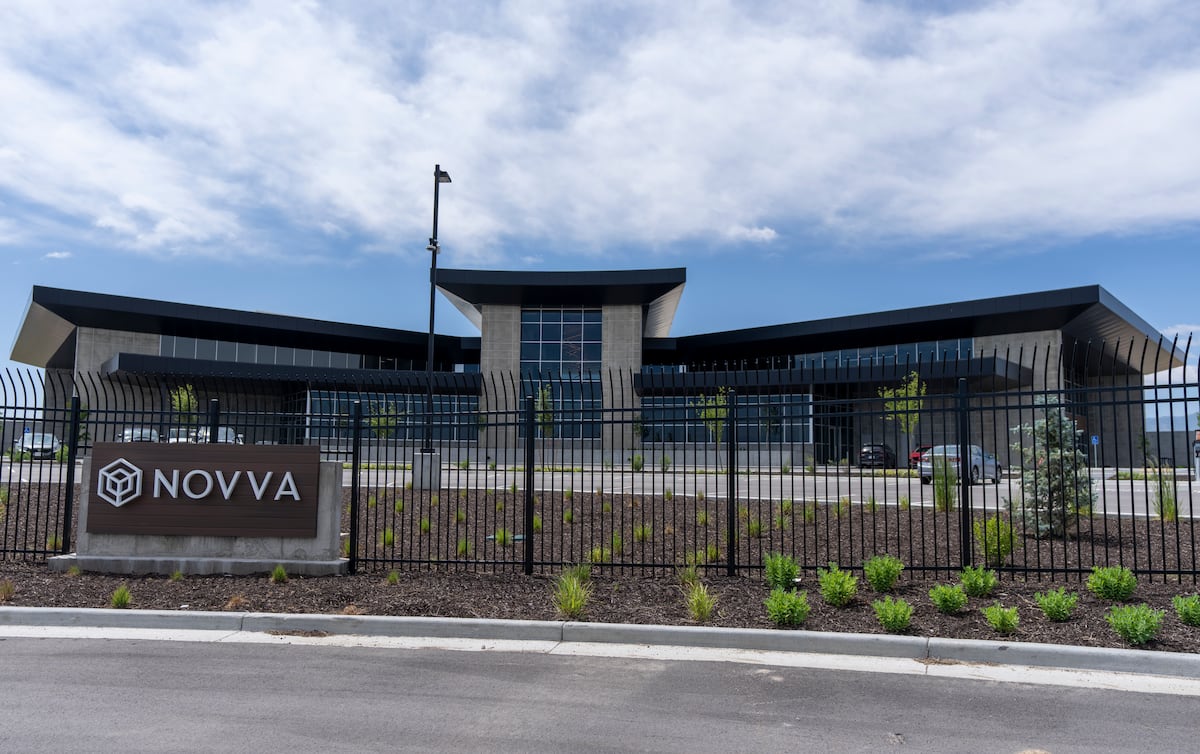
A West Jordan data center “supercluster” received a $2 billion investment to become one of the largest centers in the county.
A Utah data center has secured a $2 billion investment — the second largest of its kind — to build the remainder of its West Jordan campus.
When it’s done, Novva’s 100-acre campus will be “one of the largest superclusters” of servers in the United States, said CEO Wes Swenson, powering 175 megawatts to data servers around the world.
Novva built the first stage of its Utah campus in 2020 and the $2 billion investment from JPMorgan Chase and Starwood Property Group will help the company finish the two remaining buildings, Swensen said.
It also is the second $2 billion loan awarded to a data center this year, according to reporting from The Wall Street Journal. Most data construction loans before January were less than $1 billion. Swenson said he is glad this investment is happening in Utah.
“I have a super high conviction to the Utah market, our employees and community,” said Swenson, who lives in Utah County.
Utah is high …
Utah is well positioned to house massive data centers like Novva, the chief executive said. Up at altitude — Novva sits at roughly 4,000 feet above sea level — the air is cooler. Data centers need to keep servers cool. Most use evaporative cooling to keep temperatures low — Novva can literally pull from the air to cool its cooling liquid most of the year, Swenson said.
The Beehive State also doesn’t have to worry about intense natural disasters, Swenson said — though he does have a precise seismograph to monitor for any earthquake activity.
There are 39 data centers in Utah, according to the Data Center Map. Twenty-six of them are in the Salt Lake metro area.
Utah’s business-friendly ecosystem also helps incentivize data centers in the state, said Jim Buie, CEO of ValorC3 Data Centers (formerly Tonaquint). Valor has been around since 2008 and has capitalized on Utah’s “good growth trajectory” — tax incentives, low-cost power and fiber optic connectivity.
“Those are all wonderful ingredients for not just tech, but certainly the data center business,” Buie said.
… and dry
The need for data centers has exploded in recent years as AI has become an everyday tool for internet users. The amount of new data center construction in the top eight markets more than doubled in 2024 compared to the year prior, The Wall Street Journal reported.
Buie said he and other industry analysts expect generation to quadruple over the next four years — “both the quantity [of centers] and the amount of power that data centers use.” If Utah can keep up with the electricity demand — a big focus in the legislative session and Gov. Spencer Cox’s budget this year — it’s poised to lead the nation in “driving the digital economy,” Buie said.
But one of Utah’s scarcest resources is also the most critical to many data centers: water.
Most centers cool their servers through evaporative cooling, which can use millions of gallons of water each month.
Novva uses coolant, not water, to cool its servers, Swenson said — meaning that roughly 100,000 gallons of the campus’s million-gallon annual water consumption are used in Novva’s closed-loop cooling system. The remaining 90%, he said, is for plumbing, like toilets, sinks, and drinking fountains.
“It’s equal to about three homes annually,” Swenson said. “We’re considered a zero-water footprint.”
Not all centers are so water-conscious, Buie said, although they will likely have to be in order to succeed. Valor also uses a closed-loop cooling system, Buie said, which saves water from evaporation.
Novva’s brand-new campus buildings should both be done by mid-2026, Swenson said. The servers that will fill them are already leased.
“They have to be built somewhere,” Swenson said of large data centers. “This is as good a place as any as long as we’re good stewards.”
Shannon Sollitt is aReport for America corps member covering business accountability and sustainabilityfor The Salt Lake Tribune. Your donation to match our RFA grant helps keep her writing stories like this one; please consider making a tax-deductible gift of any amount today by clicking here.
The individuals charged collected signatures in five of Utah’s 29 counties — Iron, Salt Lake, Tooele, Utah and Washington. Approximately five of the contractors worked with Gathering, Inc., also known …
Utah Attorney General Derek Brown announced this week that 11 contractors with signature gathering companies are facing “forgery and forgery-related charges.”
The allegedly forged signatures were largely captured during the signature verification process, charging documents said, and were not included in the counted signatures that allowed candidates to qualify for the ballot.
The individuals charged collected signatures in five of Utah’s 29 counties — Iron, Salt Lake, Tooele, Utah and Washington. Approximately five of the contractors worked with Gathering, Inc., also known as Gather, and the others’ employers were not listed on charging documents.
All 11, according to the charging documents, collected signatures during the 2024 primary election cycle.
Nearly 60 candidates in Utah contests — from the gubernatorial race, to congressional races, to state legislative races — submitted signature petitions for verification last election cycle. In Utah, candidates can either qualify for the ballot by gathering a certain number of signatures from members of their party, the volume varying by the office, or being chosen by party delegates.
Gather owner Tanner Leatham estimated five to six campaigns that used his company’s services were impacted.
Among Gather’s customers is Gov. Spencer Cox, whose campaign spent $147,000 on signature gathering, according to financial disclosures.
The newly elected Brown also used a signature petition to qualify for the primary ballot, although he worked with a company called In the Field.
According to charging documents, one contractor admitted to signing some voters’ signatures without their permission “so he could make more money.” Charged contractors frequently had spouses or other family members sign for an individual, something one contractor told an investigator he did to “kill two birds with one stone.”
Leatham said all of Gather’s contractors were trained on Utah’s laws around signature gathering, and the company will continue to provide that training for the hundreds of contractors it hires each election cycle. The short-term job can be difficult, Leatham noted, because it requires going door-to-door in the winter.
“When individuals choose to break the rules we do everything we can to help the state go after these people,” Leatham said in a statement, adding, “These individuals made poor and dishonest choices, completely ignoring the law and their training.”
A statement from the attorney general said the cases were referred to his office by the elections office under Lt. Gov. Deidre Henderson, the state auditor’s office and the Washington County clerk’s office.
Utah Auditor Tina Cannon said in a statement Tuesday her office has “been involved in a joint effort with the lieutenant governor’s office related to signature gathering during the 2024 election cycle.”
Last year, the attorney general’s office charged 13 men with falsifying signatures on petitions for Republican candidate Bruce Hough in the 2023 special election to replace retiring Rep. Chris Stewart. Nine of the defendants entered into pleas in abeyance and paid a fine. One plead guilty and was sentenced to three years probation. Two had the charges dismissed. One case remains pending.
Brown’s announcement came days after the end of Utah’s annual legislative session, during which lawmakers passed multiple bills meant to increase transparency around the verification of signatures on candidate petitions.
Sen. Wayne Harper’s SB164 allows poll watchers to observe the signature verification process, mandates an audit of signature comparisons and requires election officers to certify a certain percentage of signatures beyond the threshold. Another, SB53 from Sen. Calvin Musselman, R-West Haven, establishes a process for voters to remove their name from a candidate nomination petition.
From Leatham’s perspective, cases like these show why lawmakers should also reconsider the signature threshold set for candidates — lowering it would limit the reliance on contractors to qualify for the ballot.
In statewide races, candidates have to collect and have verified 28,000 signatures — over a thousand more than the entire population of Farmington.
“It is too difficult and too expensive as it is right now,” Leatham wrote in an email. “Lowering the threshold of signatures will make it easier for candidates to use friends, family and volunteers to collect signatures. We need more candidates on the ballot not less, too many races go uncontested year after year.”
Salt Lake Tribune reporter Robert Gehrke contributed to this report.
The Utah Valley Wolverines play in the WAC Tournament against the Utah Tech Trailblazers. Wednesday’s game will be the third meeting of the season between the two teams.
Utah Tech Trailblazers (7-25, 3-14 WAC) vs. Utah Valley Wolverines (23-7, 15-1 WAC)
BOTTOM LINE: Utah Valley plays in the WAC Tournament against Utah Tech.
The Wolverines have gone 15-1 against WAC teams, with an 8-6 record in non-conference play. Utah Valley averages 15.9 assists per game to lead the WAC, paced by Trevan Leonhardt with 5.2.
The Trailblazers’ record in WAC games is 3-14. Utah Tech has a 0-7 record in games decided by less than 4 points.
Utah Valley’s average of 6.1 made 3-pointers per game this season is the same per game average that Utah Tech allows. Utah Tech averages 70.2 points per game, 2.1 more than the 68.1 Utah Valley gives up to opponents.
The teams meet for the third time this season. Utah Valley won 79-77 in the last matchup on Feb. 21. Tanner Toolson led Utah Valley with 24 points, and Noa Gonsalves led Utah Tech with 18 points.
TOP PERFORMERS: Carter Welling is averaging 12.7 points, six rebounds and 1.9 blocks for the Wolverines. Toolson is averaging 2.1 made 3-pointers over the last 10 games.
Gonsalves is averaging 14 points for the Trailblazers. Beon Riley is averaging 12.1 points and 7.1 rebounds over the past 10 games.
LAST 10 GAMES: Wolverines: 9-1, averaging 75.6 points, 34.3 rebounds, 16.2 assists, 6.1 steals and 5.8 blocks per game while shooting 47.0% from the field. Their opponents have averaged 65.5 points per game.
Trailblazers: 1-9, averaging 71.4 points, 29.2 rebounds, 11.5 assists, 5.4 steals and 4.6 blocks per game while shooting 44.7% from the field. Their opponents have averaged 77.5 points.
___
The Associated Press created this story using technology provided by Data Skrive and data from Sportradar.
Barring a trip to a minor postseason tournament, Utah’s 2024-25 basketball season ended Tuesday night with a 15-point loss to UCF in the Big 12 tournament …
Utah Utes forward Keanu Dawes (8) celebrates and hangs from the basket after dunking the ball during a first round game of the Big 12 Championship between the Utah Utes and the UCF Knights at the T-Mobile Center in Kansas City, Missouri, on Tuesday, March 11, 2025. The Utah Utes were knocked out of the championship by the UCF Knights, with a final score of 87-72. | Brice Tucker, Deseret News
KANSAS CITY — Interim University of Utah basketball coach Josh Eilert will never forget his first impressions last summer of Rice transfer Keanu Dawes.
Suffice it to say, it wasn’t a great one.
But the 6-foot-9 sophomore forward from Houston, who had transferred in from Rice, slowly changed Eilert’s mind with his steady growth and dedication to improvement.
It reached a pinnacle — for Eilert, anyway — on Tuesday night at T-Mobile Center, as Dawes put together the best game of his two-year college career on an otherwise forgettable outing for the Utes in the first round of the Big 12 tournament.
Getting his first start in a Runnin’ Utes uniform, Dawes posted a double-double — 21 points and 15 rebounds — but it wasn’t enough as Utah fell 87-72 to Central Florida in its first-ever Big 12 tournament game.
“KD is a special player. I will never forget coming into the program and thinking — questioning KD’s value,” said Eilert, who will now give way to permanent coach Alex Jensen if the Utes choose not to participate in a postseason event.
“He has just continued to improve each and every day. He has got the right mindset. He’s got that growth mindset in so many ways. He doesn’t force the game, but he is playing with so much more force than he did when I first got here,” Eilert continued.
Utah Utes guard Mason Madsen (45) looks off into the distance while hugging his brother, guard Gabe Madsen (55), after the Utah Utes lose to the UCF Knights, ending what is likely their last season of college basketball together, in a first round game of the Big 12 Championship at the T-Mobile Center in Kansas City, Missouri, on Tuesday, March 11, 2025. The Utah Utes were knocked out of the championship by the UCF Knights, with a final score of 87-72. | Brice Tucker, Deseret News
Utah Utes guard Gabe Madsen (55) dribbles the ball down the court during a first round game of the Big 12 Championship between the Utah Utes and the UCF Knights at the T-Mobile Center in Kansas City, Missouri, on Tuesday, March 11, 2025. The Utah Utes were knocked out of the championship by the UCF Knights, with a final score of 87-72. | Brice Tucker, Deseret News
Utah Utes center Lawson Lovering (34) and UCF Knights guard Keyshawn Hall (4) both compete for a rebound during a first round game of the Big 12 Championship at the T-Mobile Center in Kansas City, Missouri, on Tuesday, March 11, 2025. The Utah Utes were knocked out of the championship by the UCF Knights, with a final score of 87-72. | Brice Tucker, Deseret News
Utah Utes forward Jake Wahlin (10) competes for a rebound with UCF Knights guards Nils Machowski (22) and Keyshawn Hall (4) during a first round game of the Big 12 Championship at the T-Mobile Center in Kansas City, Missouri, on Tuesday, March 11, 2025. The Utah Utes were knocked out of the championship by the UCF Knights, with a final score of 87-72. | Brice Tucker, Deseret News
Utah Utes forward Jake Wahlin (10) dunks the ball during a first round game of the Big 12 Championship between the Utah Utes and the UCF Knights at the T-Mobile Center in Kansas City, Missouri, on Tuesday, March 11, 2025. The Utah Utes were knocked out of the championship by the UCF Knights, with a final score of 87-72. | Brice Tucker, Deseret News
Utah Utes forward Keanu Dawes (8) drives the ball to the basket for a dunk during a first round game of the Big 12 Championship between the Utah Utes and the UCF Knights at the T-Mobile Center in Kansas City, Missouri, on Tuesday, March 11, 2025. The Utah Utes were knocked out of the championship by the UCF Knights, with a final score of 87-72. | Brice Tucker, Deseret News
Utah Utes guard Gabe Madsen (55) dribbles the ball down the court during a first round game of the Big 12 Championship between the Utah Utes and the UCF Knights at the T-Mobile Center in Kansas City, Missouri, on Tuesday, March 11, 2025. The Utah Utes were knocked out of the championship by the UCF Knights, with a final score of 87-72. | Brice Tucker, Deseret News
Utah Utes guard Mike Sharavjamts (25) puts up a shot while falling after tripping while driving toward the basket during a first round game of the Big 12 Championship between the Utah Utes and the UCF Knights at the T-Mobile Center in Kansas City, Missouri, on Tuesday, March 11, 2025. The Utah Utes were knocked out of the championship by the UCF Knights, with a final score of 87-72. | Brice Tucker, Deseret News
Utah Utes center Lawson Lovering (34) puts up a shot while driving to the basket during a first round game of the Big 12 Championship between the Utah Utes and the UCF Knights at the T-Mobile Center in Kansas City, Missouri, on Tuesday, March 11, 2025. The Utah Utes were knocked out of the championship by the UCF Knights, with a final score of 87-72. | Brice Tucker, Deseret News
Utah Utes forward Keanu Dawes (8) dunks the ball during a first round game of the Big 12 Championship between the Utah Utes and the UCF Knights at the T-Mobile Center in Kansas City, Missouri, on Tuesday, March 11, 2025. The Utah Utes were knocked out of the championship by the UCF Knights, with a final score of 87-72. | Brice Tucker, Deseret News
UCF Knights guard Keyshawn Hall (4) passes the ball while being guarded by Utah Utes guard Gabe Madsen (55) and forward Zach Keller (32) during a first round game of the Big 12 Championship at the T-Mobile Center in Kansas City, Missouri, on Tuesday, March 11, 2025. The Utah Utes were knocked out of the championship by the UCF Knights, with a final score of 87-72. | Brice Tucker, Deseret News
Utah Utes forward Zach Keller (32) attempts to block a shot by UCF Knights guard Keyshawn Hall (4) during a first round game of the Big 12 Championship at the T-Mobile Center in Kansas City, Missouri, on Tuesday, March 11, 2025. The Utah Utes were knocked out of the championship by the UCF Knights, with a final score of 87-72. | Brice Tucker, Deseret News
UCF Knights guard Darius Johnson (3) passes the ball after Utah Utes forward Zach Keller (32) blocks his shot during a first round game of the Big 12 Championship at the T-Mobile Center in Kansas City, Missouri, on Tuesday, March 11, 2025. The Utah Utes were knocked out of the championship by the UCF Knights, with a final score of 87-72. | Brice Tucker, Deseret News
Utah Utes center Lawson Lovering (34) guards UCF Knights guard Jordan Ivy-Curry (0) during a first round game of the Big 12 Championship at the T-Mobile Center in Kansas City, Missouri, on Tuesday, March 11, 2025. The Utah Utes were knocked out of the championship by the UCF Knights, with a final score of 87-72. | Brice Tucker, Deseret News
Utah Utes forward Jake Wahlin (10) attempts to block a pass by UCF Knights guard Mikey Williams (1) during a first round game of the Big 12 Championship at the T-Mobile Center in Kansas City, Missouri, on Tuesday, March 11, 2025. The Utah Utes were knocked out of the championship by the UCF Knights, with a final score of 87-72. | Brice Tucker, Deseret News
Utah Utes guard Mike Sharavjamts (25) dribbles the ball down the court during a first round game of the Big 12 Championship between the Utah Utes and the UCF Knights at the T-Mobile Center in Kansas City, Missouri, on Tuesday, March 11, 2025. The Utah Utes were knocked out of the championship by the UCF Knights, with a final score of 87-72. | Brice Tucker, Deseret News
UCF Knights guard Keyshawn Hall (4), Utah Utes guard Mike Sharavjamts (25) and guard Gabe Madsen (55) all struggle for possession of the ball during a first round game of the Big 12 Championship at the T-Mobile Center in Kansas City, Missouri, on Tuesday, March 11, 2025. The Utah Utes were knocked out of the championship by the UCF Knights, with a final score of 87-72. | Brice Tucker, Deseret News
Utah Utes forward Keanu Dawes (8) puts up a 3-pointer shot during a first round game of the Big 12 Championship between the Utah Utes and the UCF Knights at the T-Mobile Center in Kansas City, Missouri, on Tuesday, March 11, 2025. The Utah Utes were knocked out of the championship by the UCF Knights, with a final score of 87-72. | Brice Tucker, Deseret News
Utah Utes forward Keanu Dawes (8) puts up a shot while being guarded by UCF Knights center Moustapha Thiam (52) during a first round game of the Big 12 Championship at the T-Mobile Center in Kansas City, Missouri, on Tuesday, March 11, 2025. The Utah Utes were knocked out of the championship by the UCF Knights, with a final score of 87-72. | Brice Tucker, Deseret News
Utah Utes forward Jake Wahlin (10) puts up a shot during a first round game of the Big 12 Championship between the Utah Utes and the UCF Knights at the T-Mobile Center in Kansas City, Missouri, on Tuesday, March 11, 2025. The Utah Utes were knocked out of the championship by the UCF Knights, with a final score of 87-72. | Brice Tucker, Deseret News
Utah Utes guard Miro Little (1) and UCF Knights guards Nils Machowski (22) and Darius Johnson (3) all chase after a loose ball during a first round game of the Big 12 Championship between the Utah Utes and the UCF Knights at the T-Mobile Center in Kansas City, Missouri, on Tuesday, March 11, 2025. The Utah Utes were knocked out of the championship by the UCF Knights, with a final score of 87-72. | Brice Tucker, Deseret News
Utah Utes guard Hunter Erickson (0) puts up a shot during a first round game of the Big 12 Championship between the Utah Utes and the UCF Knights at the T-Mobile Center in Kansas City, Missouri, on Tuesday, March 11, 2025. The Utah Utes were knocked out of the championship by the UCF Knights, with a final score of 87-72. | Brice Tucker, Deseret News
Utah Utes forward Zach Keller (32) puts up a shot during a first round game of the Big 12 Championship between the Utah Utes and the UCF Knights at the T-Mobile Center in Kansas City, Missouri, on Tuesday, March 11, 2025. The Utah Utes were knocked out of the championship by the UCF Knights, with a final score of 87-72. | Brice Tucker, Deseret News
Utah Utes forward Keanu Dawes (8) puts up a shot during a first round game of the Big 12 Championship between the Utah Utes and the UCF Knights at the T-Mobile Center in Kansas City, Missouri, on Tuesday, March 11, 2025. The Utah Utes were knocked out of the championship by the UCF Knights, with a final score of 87-72. | Brice Tucker, Deseret News
Utah Utes center Lawson Lovering (34) puts up a shot during a first round game of the Big 12 Championship between the Utah Utes and the UCF Knights at the T-Mobile Center in Kansas City, Missouri, on Tuesday, March 11, 2025. The Utah Utes were knocked out of the championship by the UCF Knights, with a final score of 87-72. | Brice Tucker, Deseret News
Utah Utes fans cheer for the Utah spirit team during a timeout in a first round game of the Big 12 Championship between the Utah Utes and the UCF Knights at the T-Mobile Center in Kansas City, Missouri, on Tuesday, March 11, 2025. The Utah Utes were knocked out of the championship by the UCF Knights, with a final score of 87-72. | Brice Tucker, Deseret News
Utah Utes interim head coach Josh Eilert yells to his players from the sidelines during a first round game of the Big 12 Championship between the Utah Utes and the UCF Knights at the T-Mobile Center in Kansas City, Missouri, on Tuesday, March 11, 2025. The Utah Utes were knocked out of the championship by the UCF Knights, with a final score of 87-72. | Brice Tucker, Deseret News
Utah Utes forward Keanu Dawes (8) celebrates and hangs from the basket after dunking the ball during a first round game of the Big 12 Championship between the Utah Utes and the UCF Knights at the T-Mobile Center in Kansas City, Missouri, on Tuesday, March 11, 2025. The Utah Utes were knocked out of the championship by the UCF Knights, with a final score of 87-72. | Brice Tucker, Deseret News
Utah Utes center Joul Karram (5) opens his arms for a hug with guard Mike Sharavjamts (25), while guard Mason Madsen (45) and center Lawson Lovering (34) hug each other after the Utah Utes lose to the UCF Knights in a first round game of the Big 12 Championship at the T-Mobile Center in Kansas City, Missouri, on Tuesday, March 11, 2025. The Utah Utes were knocked out of the championship by the UCF Knights, with a final score of 87-72. | Brice Tucker, Deseret News
Utah Utes forward Zach Keller (32) puts up a shot during a first round game of the Big 12 Championship between the Utah Utes and the UCF Knights at the T-Mobile Center in Kansas City, Missouri, on Tuesday, March 11, 2025. | Brice Tucker, Deseret News
Utah Utes forward Keanu Dawes (8) reaches for a rebound during a first round game of the Big 12 Championship between the Utah Utes and the UCF Knights at the T-Mobile Center in Kansas City, Missouri, on Tuesday, March 11, 2025. | Brice Tucker, Deseret News
Utah Utes center Lawson Lovering (34) puts up a shot during a first round game of the Big 12 Championship between the Utah Utes and the UCF Knights at the T-Mobile Center in Kansas City, Missouri, on Tuesday, March 11, 2025. | Brice Tucker, Deseret News
Utah Utes forward Zach Keller (32) dunks the ball during a first round game of the Big 12 Championship between the Utah Utes and the UCF Knights at the T-Mobile Center in Kansas City, Missouri, on Tuesday, March 11, 2025. | Brice Tucker, Deseret News
Utah Utes guard Gabe Madsen (55) dribbles the ball down the court during a first round game of the Big 12 Championship between the Utah Utes and the UCF Knights at the T-Mobile Center in Kansas City, Missouri, on Tuesday, March 11, 2025. | Brice Tucker, Deseret News
Dawes started in the place of junior forward Ezra Ausar, who sustained a knee injury in the 85-74 loss at BYU on Saturday and was not able to go. Ausar had 20 points in Utah’s 76-72 loss at UCF on Feb. 23 and was clearly missed.
“We were monitoring the situation. (Ausar) kinda got his knee buckled up there in Provo, and so they did an MRI on him late that night,” Eilert said. “We were trying to work through that, night and day, 24-7, we were trying to get him ready, but he just wasn’t quite there yet. So we were hoping to get through this first game and have him for tomorrow.”
Utah started as if it planned to meet Kansas on Wednesday, instead of UCF, in a second-round game. Four of Utah’s first five field goals were dunks, and the Utes rolled out to a 21-9 lead.
But the Utes stopped attacking the rim late in the second half, and then didn’t put up much of a fight in the final 20 minutes as UCF pulled away, similar to the way BYU dominated the second half three nights ago in Provo.
Utah (16-16) finished with a whopping 12 dunks, but ultimately frostiness from beyond the arc doomed it to the loss.
Not having Ausar “certainly played an impact because he has played really good basketball for us. Probably our leading scorer, I would imagine, our last five games,” Eilert said. “So not having him have that force at the rim and put that pressure on the rim, that hurt us.”
Dawes was almost able to make up for the loss singlehandedly. The nephew of former BYU center Derek Dawes was 8 of 13 from the field and 5 of 6 from the free-throw line. The Utes won the rebounding battle 40-35.
Where does the performance rank in Dawes’ college career?
“I would say it is definitely up there but at the same time we didn’t really win, so in my opinion it doesn’t really mean anything,” he said. “There’s not really much to say. We didn’t win.”
UCF coach Johnny Dawkins acknowledged that Ausar not playing “hurt them” and was “a big miss for them,” but wasn’t surprised that Dawes filled in admirably.
“He’s been a really good player in college basketball for a number of years. He is very active. He rebounds the ball very well, especially offensive rebounding. He finishes well around the basket. He understands how to play,” Dawkins said.
Utah’s first taste of the Big 12 men’s basketball tournament ended up being sour. The No. 11 seed Runnin’ Utes couldn’t hold on to an early double-digit lead as hot-shooting No. 14 seed UCF beat Utah …
Utah Utes guard Gabe Madsen (55) dribbles the ball down the court during a first round game of the Big 12 Championship between the Utah Utes and the UCF Knights at the T-Mobile Center in Kansas City, Missouri, on Tuesday, March 11, 2025. | Brice Tucker, Deseret News
Utah’s first taste of the Big 12 men’s basketball tournament ended up being sour.
The No. 11 seed Runnin’ Utes couldn’t hold on to an early double-digit lead as hot-shooting No. 14 seed UCF beat Utah 87-72 in the nightcap of Tuesday’s first round action.
3 takeaways
3-point shooting flipped the game for the Knights. Neither team was able to get much going from 3-point range early in the contest, as Utah missed its first 10 from long range and UCF started 1 of 8.
The Utes built a 21-9 lead but the Knights started to cut into that deficit with some hot 3-point shooting, as UCF ended the first half making 6 of 10, including one just before the halftime buzzer to make it 40-39 going into the break.
The Knights ended up making 10 of 24 3-pointers, while the Utes were 4 of 26.
Keyshawn Hall scored a team-high 23 points for UCF, while Darius Johnson added 20 and Jordan Ivy-Curry had 15 while making three 3-pointers.
Utah Utes guard Mason Madsen (45) looks off into the distance while hugging his brother, guard Gabe Madsen (55), after the Utah Utes lose to the UCF Knights, ending what is likely their last season of college basketball together, in a first round game of the Big 12 Championship at the T-Mobile Center in Kansas City, Missouri, on Tuesday, March 11, 2025. The Utah Utes were knocked out of the championship by the UCF Knights, with a final score of 87-72. | Brice Tucker, Deseret News
Utah Utes guard Gabe Madsen (55) dribbles the ball down the court during a first round game of the Big 12 Championship between the Utah Utes and the UCF Knights at the T-Mobile Center in Kansas City, Missouri, on Tuesday, March 11, 2025. The Utah Utes were knocked out of the championship by the UCF Knights, with a final score of 87-72. | Brice Tucker, Deseret News
Utah Utes center Lawson Lovering (34) and UCF Knights guard Keyshawn Hall (4) both compete for a rebound during a first round game of the Big 12 Championship at the T-Mobile Center in Kansas City, Missouri, on Tuesday, March 11, 2025. The Utah Utes were knocked out of the championship by the UCF Knights, with a final score of 87-72. | Brice Tucker, Deseret News
Utah Utes forward Jake Wahlin (10) competes for a rebound with UCF Knights guards Nils Machowski (22) and Keyshawn Hall (4) during a first round game of the Big 12 Championship at the T-Mobile Center in Kansas City, Missouri, on Tuesday, March 11, 2025. The Utah Utes were knocked out of the championship by the UCF Knights, with a final score of 87-72. | Brice Tucker, Deseret News
Utah Utes forward Jake Wahlin (10) dunks the ball during a first round game of the Big 12 Championship between the Utah Utes and the UCF Knights at the T-Mobile Center in Kansas City, Missouri, on Tuesday, March 11, 2025. The Utah Utes were knocked out of the championship by the UCF Knights, with a final score of 87-72. | Brice Tucker, Deseret News
Utah Utes forward Keanu Dawes (8) drives the ball to the basket for a dunk during a first round game of the Big 12 Championship between the Utah Utes and the UCF Knights at the T-Mobile Center in Kansas City, Missouri, on Tuesday, March 11, 2025. The Utah Utes were knocked out of the championship by the UCF Knights, with a final score of 87-72. | Brice Tucker, Deseret News
Utah Utes guard Gabe Madsen (55) dribbles the ball down the court during a first round game of the Big 12 Championship between the Utah Utes and the UCF Knights at the T-Mobile Center in Kansas City, Missouri, on Tuesday, March 11, 2025. The Utah Utes were knocked out of the championship by the UCF Knights, with a final score of 87-72. | Brice Tucker, Deseret News
Utah Utes guard Mike Sharavjamts (25) puts up a shot while falling after tripping while driving toward the basket during a first round game of the Big 12 Championship between the Utah Utes and the UCF Knights at the T-Mobile Center in Kansas City, Missouri, on Tuesday, March 11, 2025. The Utah Utes were knocked out of the championship by the UCF Knights, with a final score of 87-72. | Brice Tucker, Deseret News
Utah Utes center Lawson Lovering (34) puts up a shot while driving to the basket during a first round game of the Big 12 Championship between the Utah Utes and the UCF Knights at the T-Mobile Center in Kansas City, Missouri, on Tuesday, March 11, 2025. The Utah Utes were knocked out of the championship by the UCF Knights, with a final score of 87-72. | Brice Tucker, Deseret News
Utah Utes forward Keanu Dawes (8) dunks the ball during a first round game of the Big 12 Championship between the Utah Utes and the UCF Knights at the T-Mobile Center in Kansas City, Missouri, on Tuesday, March 11, 2025. The Utah Utes were knocked out of the championship by the UCF Knights, with a final score of 87-72. | Brice Tucker, Deseret News
UCF Knights guard Keyshawn Hall (4) passes the ball while being guarded by Utah Utes guard Gabe Madsen (55) and forward Zach Keller (32) during a first round game of the Big 12 Championship at the T-Mobile Center in Kansas City, Missouri, on Tuesday, March 11, 2025. The Utah Utes were knocked out of the championship by the UCF Knights, with a final score of 87-72. | Brice Tucker, Deseret News
Utah Utes forward Zach Keller (32) attempts to block a shot by UCF Knights guard Keyshawn Hall (4) during a first round game of the Big 12 Championship at the T-Mobile Center in Kansas City, Missouri, on Tuesday, March 11, 2025. The Utah Utes were knocked out of the championship by the UCF Knights, with a final score of 87-72. | Brice Tucker, Deseret News
UCF Knights guard Darius Johnson (3) passes the ball after Utah Utes forward Zach Keller (32) blocks his shot during a first round game of the Big 12 Championship at the T-Mobile Center in Kansas City, Missouri, on Tuesday, March 11, 2025. The Utah Utes were knocked out of the championship by the UCF Knights, with a final score of 87-72. | Brice Tucker, Deseret News
Utah Utes center Lawson Lovering (34) guards UCF Knights guard Jordan Ivy-Curry (0) during a first round game of the Big 12 Championship at the T-Mobile Center in Kansas City, Missouri, on Tuesday, March 11, 2025. The Utah Utes were knocked out of the championship by the UCF Knights, with a final score of 87-72. | Brice Tucker, Deseret News
Utah Utes forward Jake Wahlin (10) attempts to block a pass by UCF Knights guard Mikey Williams (1) during a first round game of the Big 12 Championship at the T-Mobile Center in Kansas City, Missouri, on Tuesday, March 11, 2025. The Utah Utes were knocked out of the championship by the UCF Knights, with a final score of 87-72. | Brice Tucker, Deseret News
Utah Utes guard Mike Sharavjamts (25) dribbles the ball down the court during a first round game of the Big 12 Championship between the Utah Utes and the UCF Knights at the T-Mobile Center in Kansas City, Missouri, on Tuesday, March 11, 2025. The Utah Utes were knocked out of the championship by the UCF Knights, with a final score of 87-72. | Brice Tucker, Deseret News
UCF Knights guard Keyshawn Hall (4), Utah Utes guard Mike Sharavjamts (25) and guard Gabe Madsen (55) all struggle for possession of the ball during a first round game of the Big 12 Championship at the T-Mobile Center in Kansas City, Missouri, on Tuesday, March 11, 2025. The Utah Utes were knocked out of the championship by the UCF Knights, with a final score of 87-72. | Brice Tucker, Deseret News
Utah Utes forward Keanu Dawes (8) puts up a 3-pointer shot during a first round game of the Big 12 Championship between the Utah Utes and the UCF Knights at the T-Mobile Center in Kansas City, Missouri, on Tuesday, March 11, 2025. The Utah Utes were knocked out of the championship by the UCF Knights, with a final score of 87-72. | Brice Tucker, Deseret News
Utah Utes forward Keanu Dawes (8) puts up a shot while being guarded by UCF Knights center Moustapha Thiam (52) during a first round game of the Big 12 Championship at the T-Mobile Center in Kansas City, Missouri, on Tuesday, March 11, 2025. The Utah Utes were knocked out of the championship by the UCF Knights, with a final score of 87-72. | Brice Tucker, Deseret News
Utah Utes forward Jake Wahlin (10) puts up a shot during a first round game of the Big 12 Championship between the Utah Utes and the UCF Knights at the T-Mobile Center in Kansas City, Missouri, on Tuesday, March 11, 2025. The Utah Utes were knocked out of the championship by the UCF Knights, with a final score of 87-72. | Brice Tucker, Deseret News
Utah Utes guard Miro Little (1) and UCF Knights guards Nils Machowski (22) and Darius Johnson (3) all chase after a loose ball during a first round game of the Big 12 Championship between the Utah Utes and the UCF Knights at the T-Mobile Center in Kansas City, Missouri, on Tuesday, March 11, 2025. The Utah Utes were knocked out of the championship by the UCF Knights, with a final score of 87-72. | Brice Tucker, Deseret News
Utah Utes guard Hunter Erickson (0) puts up a shot during a first round game of the Big 12 Championship between the Utah Utes and the UCF Knights at the T-Mobile Center in Kansas City, Missouri, on Tuesday, March 11, 2025. The Utah Utes were knocked out of the championship by the UCF Knights, with a final score of 87-72. | Brice Tucker, Deseret News
Utah Utes forward Zach Keller (32) puts up a shot during a first round game of the Big 12 Championship between the Utah Utes and the UCF Knights at the T-Mobile Center in Kansas City, Missouri, on Tuesday, March 11, 2025. The Utah Utes were knocked out of the championship by the UCF Knights, with a final score of 87-72. | Brice Tucker, Deseret News
Utah Utes forward Keanu Dawes (8) puts up a shot during a first round game of the Big 12 Championship between the Utah Utes and the UCF Knights at the T-Mobile Center in Kansas City, Missouri, on Tuesday, March 11, 2025. The Utah Utes were knocked out of the championship by the UCF Knights, with a final score of 87-72. | Brice Tucker, Deseret News
Utah Utes center Lawson Lovering (34) puts up a shot during a first round game of the Big 12 Championship between the Utah Utes and the UCF Knights at the T-Mobile Center in Kansas City, Missouri, on Tuesday, March 11, 2025. The Utah Utes were knocked out of the championship by the UCF Knights, with a final score of 87-72. | Brice Tucker, Deseret News
Utah Utes fans cheer for the Utah spirit team during a timeout in a first round game of the Big 12 Championship between the Utah Utes and the UCF Knights at the T-Mobile Center in Kansas City, Missouri, on Tuesday, March 11, 2025. The Utah Utes were knocked out of the championship by the UCF Knights, with a final score of 87-72. | Brice Tucker, Deseret News
Utah Utes interim head coach Josh Eilert yells to his players from the sidelines during a first round game of the Big 12 Championship between the Utah Utes and the UCF Knights at the T-Mobile Center in Kansas City, Missouri, on Tuesday, March 11, 2025. The Utah Utes were knocked out of the championship by the UCF Knights, with a final score of 87-72. | Brice Tucker, Deseret News
Utah Utes forward Keanu Dawes (8) celebrates and hangs from the basket after dunking the ball during a first round game of the Big 12 Championship between the Utah Utes and the UCF Knights at the T-Mobile Center in Kansas City, Missouri, on Tuesday, March 11, 2025. The Utah Utes were knocked out of the championship by the UCF Knights, with a final score of 87-72. | Brice Tucker, Deseret News
Utah Utes center Joul Karram (5) opens his arms for a hug with guard Mike Sharavjamts (25), while guard Mason Madsen (45) and center Lawson Lovering (34) hug each other after the Utah Utes lose to the UCF Knights in a first round game of the Big 12 Championship at the T-Mobile Center in Kansas City, Missouri, on Tuesday, March 11, 2025. The Utah Utes were knocked out of the championship by the UCF Knights, with a final score of 87-72. | Brice Tucker, Deseret News
Utah Utes forward Zach Keller (32) puts up a shot during a first round game of the Big 12 Championship between the Utah Utes and the UCF Knights at the T-Mobile Center in Kansas City, Missouri, on Tuesday, March 11, 2025. | Brice Tucker, Deseret News
Utah Utes forward Keanu Dawes (8) reaches for a rebound during a first round game of the Big 12 Championship between the Utah Utes and the UCF Knights at the T-Mobile Center in Kansas City, Missouri, on Tuesday, March 11, 2025. | Brice Tucker, Deseret News
Utah Utes center Lawson Lovering (34) puts up a shot during a first round game of the Big 12 Championship between the Utah Utes and the UCF Knights at the T-Mobile Center in Kansas City, Missouri, on Tuesday, March 11, 2025. | Brice Tucker, Deseret News
Utah Utes forward Zach Keller (32) dunks the ball during a first round game of the Big 12 Championship between the Utah Utes and the UCF Knights at the T-Mobile Center in Kansas City, Missouri, on Tuesday, March 11, 2025. | Brice Tucker, Deseret News
Utah Utes guard Gabe Madsen (55) dribbles the ball down the court during a first round game of the Big 12 Championship between the Utah Utes and the UCF Knights at the T-Mobile Center in Kansas City, Missouri, on Tuesday, March 11, 2025. | Brice Tucker, Deseret News
The Knights put the game away early in the second half.
The second half couldn’t have started much worse for Utah. After both teams hit field goals in the first 1:10, the Knights went on a 24-3 run to build a 20-point lead.
UCF started the second half shooting 10 of 12 from the floor, while the Utes missed 10 straight field goals at one point.
By the time Keanu Dawes made 1 of 2 free throws, the Utes had gone more than four minutes without a score.
Scoring droughts have become a bane for Utah in the back half of conference play, including in its loss last Saturday at BYU when the Utes only trailed by four at halftime but trailed by as many as 19 in the second half.
This time, the Knights’ early second-half dominance built a big enough cushion for them to cruise to the win, even after a 15-4 run for the Utes briefly made it a single-digit deficit.
Keanu Dawes led Utah’s paint attack. Dawes was a bright spot on a difficult night for Utah, as he made his first start this season with Ezra Ausar missing the game due to injury.
Dawes had 10 first-half rebounds and ended the night with a career-high 21 boards while adding a career-high 15 points.
The taller Utes took advantage of their size inside in the first half, going into the break with a 28-6 edge in points in the paint. UCF ended up cutting that to a 42-26 advantage by game’s end.
Utah won the rebounding edge at 40-35, including 18-8 on the offensive glass.
Keyshawn Hall scored 23 points, including 17 in the second half, as UCF defeated Utah 87-72 in the first round of the 2025 Big 12 Men’s Basketball Championship Tuesday. UCF trailed by one point at …
Keyshawn Hall scored 23 points, including 17 in the second half, as UCF defeated Utah 87-72 in the first round of the 2025 Big 12 Men’s Basketball Championship Tuesday. UCF trailed by one point at …