
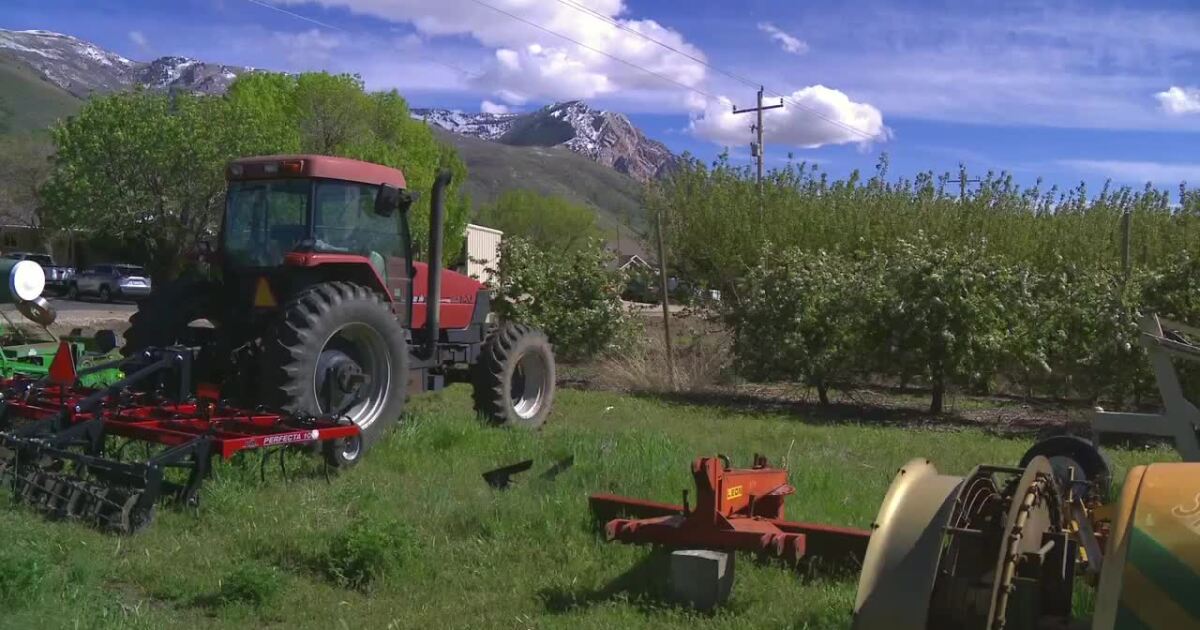
Fruit trees across northern Utah are blooming weeks ahead of schedule following an unusually warm winter and early spring, and farmers are now watching closely as freezing temperatures move in.

PERRY, Utah — Fruit trees across northern Utah are blooming weeks ahead of schedule following an unusually warm winter and early spring, and farmers are now watching closely as freezing temperatures move into the region.
In some areas, blossoms are appearing as much as five weeks early, leaving orchards at a more vulnerable stage than usual. Farmers in Perry say they’re concerned about what the cold could do to this year’s crop.
“There’s plenty of fruit there if we can make it through here for the next few weeks,” said Steve Pettingill of Pettingill Fruit Farm.
Pettingill says the timing this year is far from typical, with multiple crops developing well ahead of their normal schedule.
“Usually apricots are very first… right around the 1st of April… and here they are making fruit already. Apples… first week in May… but they’re in bloom now,” he said.
Experts say that once trees reach full bloom, they become especially sensitive to cold temperatures. Utah State University Extension orchard specialist Jimmy Larson says damage can begin when temperatures drop near 28 degrees.
Monday evening weather forecast:
“Once they’re in full bloom, it’s right around 28 degrees where you start to see some death,” Larson said.
He adds that even short exposures can cause losses.
“They’ve exposed flowers to 28 degrees for 30 minutes… that’s when you start to see 10% of buds die,” he said.
Some parts of Utah have already seen significant impacts from similar conditions about a week ago.
“Particularly southern end of Utah County… was pretty devastating,” Larson said. “In some areas, it was about 80 to 90% loss.”
Growers do have some tools to try to protect orchards, including large fans that circulate air and help reduce cold air settling near the ground.
“Cold air typically settles down low and you have warm air at the top. So if you can just mix it… then that can raise the temperature,” Larson said. “They’re just trying to do anything they can to raise the temperature around those buds.”
But even with those efforts, farmers say nature ultimately decides the outcome.
“I’d rather do it by hand [thinning trees]… Mother Nature can be really cruel… but I hope for the best,” Pettingill said.
If damage does occur, it can show up quickly in the trees.
“They’ll look a little glassy colored,” Pettingill said. “If it freezes, it’ll be really dark.”
That’s because the damage happens at the cellular level.
“Ice crystals form and then that ruptures cells,” Larson said.
Despite the risks, growers say they keep pushing forward year after year.
“It’d be really hard… Will we survive? Yes, we’ll survive,” Pettingill said.
Freezing temperatures could continue not just overnight, but for several nights this week, meaning growers may not fully understand the impact on this year’s crop for days.
Source: Utah News