TL;DR: Unblock Pornhub from Utah with a VPN. The best service for unblocking porn sites is ExpressVPN.
Pornhub has banned visitors from a number of U.S. states from accessing their website, but why? This move was in response to the introduction of laws that require visitors to upload ID before accessing porn sites. The stalemate is showing no signs of going anywhere, so potential users in these impacted states require a solution. Fortunately, a simple workaround exists.
If you want to unblock porn sites like Pornhub for free from Utah, we have all the information you need.
You May Also Like
How to unblock Pornhub for free in Utah
VPNs are useful tools that can hide your real IP address (digital location) and connect you to secure servers in other locations. This straightforward process bypasses geo-restrictions so you can access sites like Pornhub from anywhere in the world.
Unblock Pornhub by following these simple steps:
Mashable Trend Report: Coming Soon!
Decode what’s viral, what’s next, and what it all means.
Sign up for Mashable’s weekly Trend Report newsletter.
Download the app to your device of choice (the best VPNs have apps for Windows, Mac, iOS, Android, Linux, and more)
Open up the app and connect to a server in a location that supports access to Pornhub
Visit Pornhub
Credit: ExpressVPN
The best VPNs for unblocking porn sites are not free, but most do offer free-trial peiods or money-back guarantees. By leveraging these offers, you can unblock porn sites like Pornhub without actually spending anything. This is obviously not a long-term solution, but it does give you the opportunity to temporarily retain access to Pornhub before recovering your investment.
If you want to retain permanent access to sites like Pornhub, you’ll need a subscription. Fortunately, the best VPN for bypassing content restrictions is on sale for a limited time.
What is the best VPN for Pornhub?
ExpressVPN is the top choice for unblocking porn sites like Pornhub, for a number of reasons:
Servers in 105 countries
Easy-to-use app available on all major devices including iPhone, Android, Windows, Mac, and more
Strict no-logging policy so your data is always secure
Fast streaming speeds free from throttling
Up to eight simultaneous connections
30-day money-back guarantee
A two-year subscription to ExpressVPN is on sale for $139 and includes an extra four months for free — 61% off for a limited time. This plan also includes a year of free unlimited cloud backup and a generous 30-day money-back guarantee.
Natalie Quinn is striving to make it to the top of one of the world’s most demanding sports where women are fighting for equity every day.
Utah native Natalie Quinn is grinding her way to the top of one of the most demanding sports in the world.
Professional road cycling requires years of dedication, training and perseverance to become an elite rider competing at the highest level of the sport. Think Tour de France. Think Olympics. Quinn has her wheels turning toward both.
Advertisement
Advertisement
Advertisement
Since graduating from Weber High School in Pleasant View, the 23-year-old Quinn has dedicated her life to becoming the best bike rider she can be. That means eat, drink and sleep cycling, typically thousands of miles from home. Her coaches have described her as gutsy and relentless on the road, traits that will also serve her well off the bike as she navigates the twisty route to the top.
Quinn parlayed her victory in the under 23 or U23 category at the U.S. Pro Road National Championship in 2023 into a contract with one of the top American women’s cycling teams on the World Tour.
Kristen Faulkner, of the United States, celebrates winning the women’s road cycling event, at the 2024 Summer Olympics, Sunday, Aug. 4, 2024, in Paris, France. | Thibault Camus
But her first season with EF-Oatly-Cannondale — the same squad that features surprise 2024 Olympic road race gold medalist Kristen Faulkner — didn’t go as planned. A concussion after a crash early in the year sidelined Quinn for much of the 2024 season.
Advertisement
Advertisement
Advertisement
This year she signed on with Hess Cycling Team, a team established in 2023 with aspirations to become the first British women’s World Tour team, for 18,000 euros (just over $19,000) a year. But things didn’t go well there, either. Not on the road but everywhere else. Hess had issues with funding, didn’t hold a team camp, failed to pay riders, didn’t start the season on time and lacked registration with Union Cycliste Internationale (UCI), the sport’s governing body.
Quinn left the team, as did others. She landed with Cynisca Cycling, an American squad dedicated to development of female cyclists with invites to three World Tour races in Europe this year and goals to secure more in 2026, including the Tour de France Femmes.
Natalie Quinn, an American professional cyclist from Utah, is pictured at the Tour of Flanders in Flanders, Belgium on Sunday, April 6, 2025. | Andy Smith
Because she joined the team after the season started, it doesn’t have money in its budget to pay her. Fortunately, her parents continue to support her financially. Quinn spent the past few weeks living with a former teammate in Rhode Island to train — typically alone — for the upcoming 2025 USA Cycling National Championships this weekend in West Virginia.
Advertisement
Advertisement
Advertisement
There’s no easy road to becoming a professional cyclist on the world’s biggest stage. It’s even bumpier for women given the constant financial uncertainty, teams folding, races being canceled, minimal pay, pressure for results and long, sometimes lonely days in the saddle. Every ride seems like a job interview. “That’s definitely how it feels in the women’s field,” Quinn said.
So why does she stick with it?
“Sometimes I ask myself that same question. I really do just love it. It’s hard to even contemplate letting it go, especially when I feel like I’m just so close,” Quinn said. “This part of the process from what I understand and what I’m hoping is true, that this is the hardest part. And if I can just get over this last little bit, maybe it’ll get a little easier. It’s a hard sport not to love once you become a part of it.”
Fighting for equity
Americans, though, haven’t fallen in love with professional road cycling, women’s or men’s. Other than the Tour de France, road racing doesn’t get much run on U.S. television. Some major races, including the Tour of California and Tour of Utah, which staged men’s and women’s races, fell by the wayside.
Natalie Quinn, an American professional cyclist from Utah, races in the Tour of Flanders on Sunday, April 6, 2025 in Flanders, Belgium. | Eloise Mavian, Tornanti.cc
Women’s pro cycling, particularly, faces a number of challenges. There are fewer races for women compared to men and women’s events are traditionally shorter in distance. Salaries and prize money have been and continue to be lower for women.
Advertisement
Advertisement
Advertisement
Lauren LeClaire, team director for Massachusetts-based CCB p/b Levine Law Group Women’s Cycling, a U23 developmental program, recalls that when she competed a decade ago, “the guys were racing for $1,000 and the girls for a prize pack of socks.”
It’s not that disparate now, but the wage gap still exists. Robin Farina, a former pro cyclist, U.S. road race champion and 2012 Olympian, called salary equity the biggest challenge in women’s cycling. Farina is the general manager of Cynisca Cycling, the team Quinn now rides for.
In 2022, the National Cycling League launched with some big-name backing, including NBA stars Kevin Durant and Bradley Beal. Its unique approach put men and women on the same team. Notably, the league offered equal pay and exposure for both genders and a headline-grabbing $1 million prize purse.
But the NCL ceased operations in 2024 with no apparent plans for revival.
Advertisement
Advertisement
Advertisement
“People really try to do things in America to make cycling more appealing,” Quinn said. “Maybe people aren’t very good at it but I felt with NCL somebody was at least trying.”
Internationally, UCI has made some progress for World Tour riders, the top tier of professional road cycling.
In 2020, it introduced a minimum salary for women’s World Tour teams, which has gradually increased in the past five years. Standard contracts now allow maternity leave for up to three months at full salary. But those rules don’t apply to lower level pro teams.
Natalie Quinn, an American professional cyclist from Utah, waits at the start of the Tour of Flanders on Sunday, April 6, 2025 in Flanders, Belgium. | Eloise Mavian, Tornanti.cc
Making of a World Tour rider
Coming from an admittedly biased mom’s point of view, Julie Quinn says her daughter — the oldest of two girls in the family — was always protective and loyal. She described her as “super smart” with an “old spirit.” She got along with adults at a young age. Some of her best friends from elementary through high school were teachers.
Advertisement
Advertisement
Advertisement
Quinn grew up in Ogden Valley ski racing but decided to give it up when she got to high school because of the travel it would require as well as having to do online school. She and her dad noticed the high school mountain biking trailer in a grocery store parking lot one day. They waited until someone came back and asked how Quinn could join the team. She made the podium in her first race as a sophomore. She excelled throughout high school and moved to Boulder, Colorado, after graduation in 2020 to continue developing. She really didn’t start road racing until she got to Fort Lewis College, which has a varsity cycling program, a year later.
She has been on skinny tires ever since.
In 2023, Quinn joined CCB p/b Levine Law Group Women’s Cycling, a longstanding U.S. program dedicated to a women’s U23 development team. In addition to cycling, it requires every athlete to pursue or complete a post-secondary education. The team sends riders to dozens of competitions, including European UCI races and Belgian “kermesses,” 90km to 140km lap races in villages and narrow farm roads where young riders cut their teeth.
“It really teaches you how to bike race because you can’t just fix mistakes you make in the race by your athleticism,” Quinn said. “I can’t think of many top pros who didn’t spend at least a fair amount of time kermesse racing before they moved up to the World Tour races.”
Advertisement
Advertisement
Advertisement
It was while riding for CCB that Quinn won the U23 U.S. road championship, a victory that helped launch her pro career. She’s now training for the U.S. championships coming up this week in Charleston, West Virginia. She rides mostly on her own with prescribed workouts from her coach that put her on the bike around four hours a day.
“The honest part of it is it’s not for everybody. If you can’t handle long hours by yourself, then this isn’t the sport for you. I enjoy it for the most part. Most people that do it, the solitude of training is often actually a benefit less than a detriment,” Quinn said.
Only one person can win a bike race. But in road racing it takes a team to get that rider to the finish line. Typically, four to six teammates help the leader, including drafting, shielding from other riders, delivering water bottles and nutrition while sacrificing their own chance to win.
Quinn loves the team aspect of the sport. She enjoys having and executing a plan where everyone does their job. It’s those protective and loyal instincts that her mother described in action.
Advertisement
Advertisement
Advertisement
“It’s a really good feeling to work towards a goal. People have their individual roles in a race but all together it means that a result happens,” she said. “It’s a really beautiful part of the sport.”
Tapping the potential
Farina said she’d been scouting Quinn for a couple of years before she joined Cynsica — the only UCI development team left in the U.S. — this season.
“I think she’s a talent,” Farina said. Quinn, she said, is young and maturing in the sport but is smart and a rider who understands tactics and reads races well and has the potential to be a leader.
LeClaire, her team manager when Quinn rode for CCB, said she’s filled with grit and toughness, “absolute fearlessness” and is “unrelenting” in her efforts. There’s no doubt she’s going places, LeClaire said.
Advertisement
Advertisement
Advertisement
Quinn said it’s hard to not believe she can make it when others around her believe she can.
“I’m an athlete at heart. It would be a bit of a lie if I said I don’t enjoy being good at something,” Quinn said. “I enjoy the specific challenges of cycling, especially road racing. Road racing is so dynamic. There’s so many variables that can lead to somebody winning or losing that aren’t just related to how hard they can pedal.”
Looking for exposure
Named for a Spartan chariot racehorse trainer who became the first female Olympic champion in 396 B.C., Cynisca Cycling aims to help U.S. women compete not only in the U.S. but at the toughest races in Europe.
Advertisement
Advertisement
Advertisement
“Our goal is really to bring young Americans on, nurture them and give them support so they can flourish,” Farina said.
Farina and several other women riders were on the forefront of trying to bring equity to the sport when they created the Women’s Cycling Association in 2012. They urged race promoters to offer equal prize purses and pushed for more television time. While the organization no longer exists, she said it set the foundation for the changes happening today. It’s hard to put a percentage on it, she said, but the gap is closing.
“Are we where we should be? Maybe,” Farina said. “It’s a tough question because all it takes is a couple of sponsors to come in and we could be in the same place with men’s cycling.”
Perhaps the areas where the women’s peloton struggles the most is with sponsorship dollars and media coverage.
Advertisement
Advertisement
Advertisement
“We need more exposure. We need to tell the story a little more. We need our riders to be out in the media. So that people can go, ‘Wow, that’s a really cool story. I want to follow her and I want to be a fan,’” Farina said.
Olympic champion Kristen Faulkner of the U.S. arrives for the start of the second stage of the Tour de France Women cycling race with start in Dordrecht and finish in Rotterdam, Netherlands, Tuesday, Aug. 13, 2024. | Peter Dejong
Faulkner’s unexpected win in Paris last summer and then joining Chloe Dygert, Jennifer Valente and Lily Williams for the first-ever U.S. gold in women’s team pursuit a few days later momentarily created excitement around American cycling. But did it give the sport a major shot in the arm in the U.S.?
“I should hope so,” LeClaire said, before adding “maybe, maybe not.”
“Anything that gets strong female athletes into the spotlight is a positive thing for us. The more Americans that are in the spotlight in sport the better for us. That’s all upward momentum,” she said.
Advertisement
Advertisement
Advertisement
The gold medals, she said, were the product of hard work and USA Cycling’s strong support of top level riders. The next question, though, is how to get that momentum to trickle down to fuel the pipeline for the next generation of riders, LeClaire said.
Last November, the Hellman Foundation, a longtime contributor to American cycling, donated $2.5 million to the USA Cycling Foundation to boost resources and support for women. The grant includes a $1.5 million endowment to establish the Women’s Cycling Fund, aimed at sustaining women’s high-performance programs through 2043. That includes developing cyclists for the 2028 Olympics and Paralympics in Los Angeles and beyond.
LeClaire said women’s racing is at a difficult point in the U.S. While women’s races have had their biggest fields the past couple years, there are fewer events for them to compete in. “We’re short races,” she said.
Attracting sponsors
Also, LeClaire said the logistics of running an American team is more complicated and expensive than a European team based on geography. U.S. teams have to criss-cross the country, paying for everything from gas to hotels to entry fees. As a result, there are fewer and fewer larger, well-supported teams based in the U.S. It’s actually cheaper for teams to compete in Europe.
Advertisement
Advertisement
Advertisement
Funding is a constant challenge for U.S. cycling teams. LeClaire said it’s a 24/7 battle, causing sleepless nights and stressed out phone calls about retaining and recruiting sponsors. Nowadays, she said companies often back one or two riders instead of a team. “It’s a lighter lift,” LeClaire said.
Cynisca has attracted big-name cycling industry partners Specialized, Shimano and Pearl iZumi. And one of its selling points is its chateau in the south of France with a course for training and promoting cycling in the region. It also serves as a place for its sponsors to hold corporate getaways and team-building retreats.
Farina reasons that a business could pay a mint for a short TV ad during the Summer Games or back a team for the next three years, building brand awareness and integrity with “massive” exposure in Europe.
“Even a midsize company could come in and own women’s cycling for not a lot of money and then run it all the way through the L.A. Olympics and have the exposure through the Olympics,” she said.
Advertisement
Advertisement
Advertisement
The fight for equal media coverage, including live broadcasts of entire women’s races — not just the last few kilometers — is crucial to the sport.
“That’s the piece that teams can go back to our sponsors and go, ‘Look, here’s what we did, here’s the value we created,” LeClaire said.
Cynisca is a UCI continental team, meaning it’s a tier below a World Tour team that competes at the biggest races such as the Tour de France. Farina wants to make the leap to the top level next year. She has a simple formula to make it happen: “I’d like to find a $5 million sponsor. That’s really it.”
Of course, she said the team needs talent, too. And Quinn just might be one of those talented riders to help lift American cycling.
The Granary District’s historic Utah Pickle Company building was toppled this week, despite a deal between the developer and Salt Lake City officials to preserve it. “It was a last-resort decision …
A key link to the Granary District’s past is now just a pile of bricks.
The historic Utah Pickle Company building was toppled this week. Constructed in 1894, it sat about a block west from what is now Fisher Brewing and was supposed to be preserved, according to a March deal between developer Blaser Ventures and Salt Lake City’s Community Redevelopment Agency.
Through the deal, Blaser Ventures was to receive $6 million in tax reimbursements on its real estate development project, known as “Pickle & Hide,” planned for the site at 739 S. 400 West.
The project calls for a public plaza, some affordable housing and restaurant space — incorporating both the pickle building, which the deal required Blaser Ventures to preserve, and the neighboring Bissinger Company Hides edifice.
But crews were tearing down the dilapidated pickle building as early as Wednesday, as shown in photos shared by The Granary District Alliance, a nonprofit group of neighborhood business owners and residents who advocate for thoughtful growth.
(Francisco Kjolseth | The Salt Lake Tribune) A developer tears down the former Utah Pickle Company factory at 741 S 400 West on Thursday, May 22, 2025.
“We are deeply saddened to hear about the demolition of the beloved Utah Pickle Company building today,” the group wrote on Instagram. “… We are hopeful that the integrity of the Granary can be preserved for the future.”
On Thursday, Blaser Ventures’ president Brandon Blaser said the firm plans to rebuild the former pickle company warehouse on the same footprint “utilizing significant portions of the original material.”
The reconstruction will include 30% of the old facade’s bricks, 50% of the foundation, some wood beams and columns, and parts of its cornice moulding — all in a way that “closely replicates the original building’s scale, shape, and architectural character,” according to a company statement.
In an Instagram comment, Salt Lake City Council member Eva López Chávez explained why the building needed to be rebuilt.
“The analysis showed the sandstone foundation needed to be replaced,” López Chávez wrote in response to the Granary District Alliance’s post.
Blaser Ventures confirmed Thursday afternoon that the pickle building had been damaged in the 2020 earthquake that struck the Salt Lake Valley, structural analysis showed.
“It became clear that the pickle building could not stand on its own and did not meet safety requirements,” Gretchen Milliken, Blaser Ventures’ planning director, said in a statement. “It was a last-resort decision that we did not take lightly.”
(Francisco Kjolseth | The Salt Lake Tribune) A developer tears down the former Utah Pickle Company factory at 741 S 400 West on Thursday, May 22, 2025.
In another Instagram comment, López Chávez added that she fears otherremaining buildings “will also show similar seismic determinations,” so the city could see more demolitions. She added that Utah’s capital has “very few historic areas left that must be preserved without rebuild.”
Work has already begun on the Bissinger building next door, where an addition will hold the project’s planned apartment units. That property’s facade and other parts of its exterior will be preserved, according to the March agreement.
The simple two-story, red-brick Utah Pickle Company building was first managed by the Grant family, including Heber J. Grant, former president of The Church of Jesus Christ of Latter-day Saints. There, they operated a soap company.
By 1911, the Mount Pickle Company was running its operation inside instead. The building sported a large yellow Utah Pickle Company sign on its roof for decades.
In 2017, Salt Lake City won a $50,000 grant to help preserve both buildings. At the time, local creative agency Ori Media and photography studio Studio Elevn planned to turn the pickle building into a studio and event space for artists.
Whether the new project will still receive tax reimbursements is up in the air now that demolition is underway and the agreement has yet to be executed, according to redevelopment agency spokesperson Tauni Barker.
“That step could impact the CRA’s next actions, including a slowing of the contract process and, possibly, eligibility for funding,” she said. “At this time, the outcome is unclear, but we’ll continue evaluating the situation as more information becomes available.”
For her part, Milliken said the company believes the updated reconstruction plans for the pickle building uphold “the spirit of that commitment.” Blaser Ventures plans to complete construction on the development project by the end of 2026.
Blaser Ventures also acquired iconic concert venue Kilby Court — just east of this property — last year, where itplans to build a public walkway through to the venue in the future.
The good news for Orlando is that Utah is only scoring an average of 0.78 goals per match. The Royals have only scored seven times in nine matches, and no player has scored more than one goal this …
The Orlando Pride have looked shaky in recent weeks, losing to the Kansas City Current last weekend and dropping down the league standings. They have a chance to get right this weekend with a road trip against a languishing foe.
Third-place Orlando (5-3-1, 16 points) travels to take on the Utah Royals (1-6-2, 5 points) on Friday night in search of a much-needed win.
“At this point, after winning a championship last year, you’re going to get everyone’s best game,” Orlando defender Carson Pickett said. “We just have to continue to be us and play how we know how to play and break teams down.”
Orlando’s defense was its strength last season, but it has struggled in the previous five matches. The Pride have not kept a clean sheet since a 1-0 victory over Seattle Reign FC on April 12. Leaking goals at the back has hurt the Pride, and they have lost three of their past five matches.
The good news for Orlando is that Utah is only scoring an average of 0.78 goals per match. The Royals have only scored seven times in nine matches, and no player has scored more than one goal this season. It is the perfect opportunity for Orlando to earn a clean sheet and rebuild confidence.
However, Orlando has also been lacking in attack. The Pride have only scored four goals in their past five games, with three of them coming in the 3-2 victory over Angel City FC. Marta (3G, 1A) and Barbra Banda (4G, 1A) lead the team in scoring, and they will be looking to take advantage of a Utah defense that has allowed 16 goals this season.
“I think we can do better in the final third, finishing,” Pickett continued. “The momentum’s there, we haven’t been outplayed or anything, we’ve had most of the possession in every game. [We need to] just continue to do what we know best and get the result no matter where we’re at.”
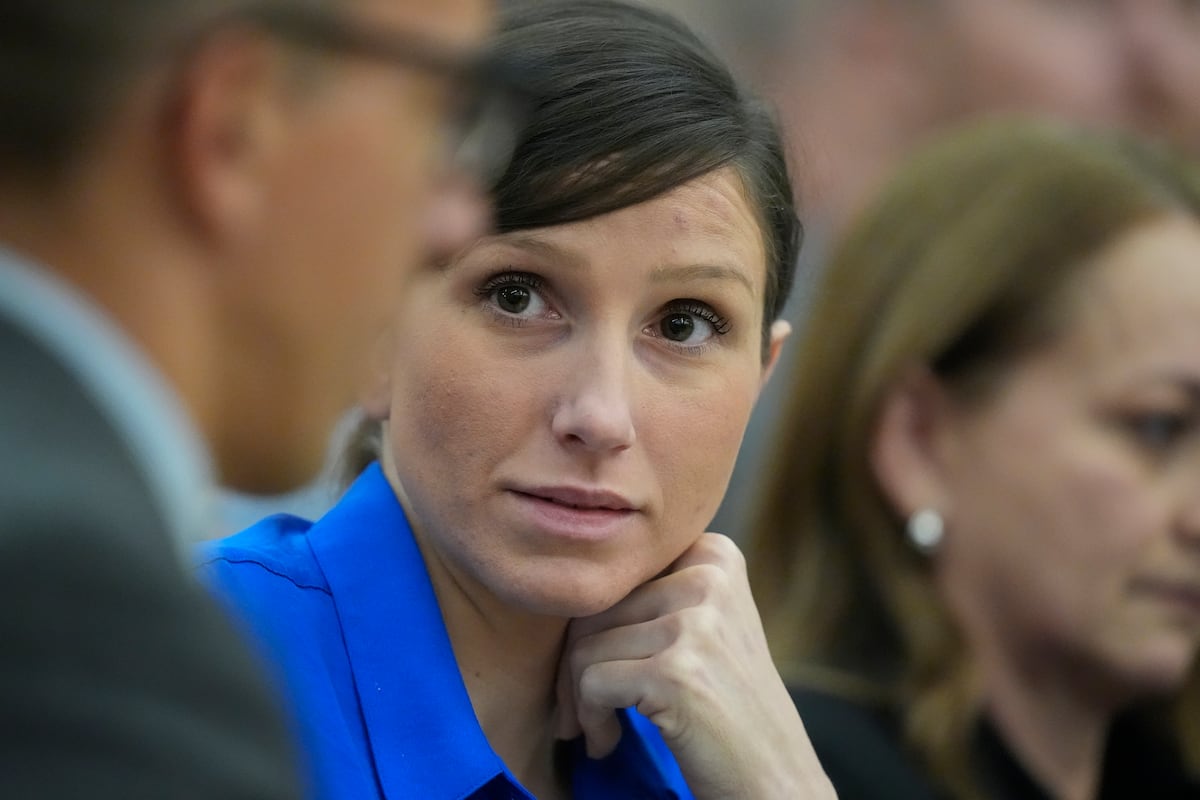
Molly Hart, who currently sits on the Utah State Board of Education, has been named Utah’s next state superintendent. Her appointment late Wednesday followed a three-hour public interview session.
Molly Hart has been named Utah’s next state superintendent.
Hart, from Sandy, currently sits on the Utah State Board of Education. Her appointment late Wednesday followed a three-hour public interview session, where the board pressed both her and another finalist on everything from how they would work to close student-achievement gaps to their thoughts on navigating the leadership role in a politically charged climate.
After, board members convened for another more than three hours in a closed session. When they emerged at about 9:45 p.m. Wednesday, they voted on a motion to appoint Hart.
The vote passed 12-2, with Emily Green and Christina Christina Boggess opposed. As a candidate for the position and the board’s 15th member, Hart did not participate.
“Education is the promise we make to the future,” Hart said in a statement late Wednesday. “As I step into this role, my mission is clear: to ensure every child in Utah, no matter their background or circumstance, has access to an excellent education. That work begins with listening — to students, to educators, to families — and building a system where every voice matters and every student can thrive.”
(Rick Egan | The Salt Lake Tribune) Molly Hart interviews with the Utah State Board of Education for the position of state superintendent on Wednesday, May 21, 2025.
Apart from her USBE role, Hart currently works as executive director of Summit Academy, a K-12 charter in Bluffdale. She has more than 20 years of education experience, ranging from teacher to principal, according to a news release. She earned a doctorate in educational leadership from Valdosta State University in Georgia and has received the Utah PTA Outstanding School Administrator Award.
Hart won her second bidfor the District 7 USBE seat — which covers the southeast portion of Salt Lake County — last November. She defeated Democratic challenger John Arthur with 52% of the vote.
She succeeds Sydnee Dickson, Utah’s current state superintendent, who announced in January that she plans to resign at the end of June. Dickson has been overseeing Utah’s public K-12 education system for the last nine years.
Hart will officially begin her duties June 2, allowing for a period of overlap with Dickson to ensure a smooth transition, USBE officials previously told The Salt Lake Tribune.
During the interview process Wednesday, Hart was asked about holding USBE employees accountable and managing the demands of the Legislature, among other questions.
Hart emphasized the importance of setting clear expectations, providing consistent feedback and maintaining high standards. She discussed the need for better compliance and accountability within USBE, particularly when it comes to school construction after a legislative audit released Tuesday found the board has failed to fulfill its oversight responsibilities.
She also argued that improving student achievement should focus on individual student needs.
“[It’s] important that every student in Utah gets an opportunity for a high, high quality education,” Hart told the board Wednesday afternoon. “I want an education system that is excellent.”
Hart was in the running for the position Wednesday alongside L. Ben Dalton, who has served as the superintendent of Kane County School District since 2016. The two were selected as finalists last week among 22 applicants for the position.
To fill Hart’s soon-to-be vacant seat, Gov. Spencer Cox will need to appoint a successor from the same political party as Hart, according to Utah code.
Because Hart is a Republican, the Republican Party’s state central committee will submit three names for the governor to choose from to fill the vacancy, USBE officials said. The appointed person will then serve the remainder of Hart’s term, which runs through 2028.
But in the eyes of ESPN analyst Zach Kram, there’s one factor those teams have shown that the Jazz and their young talent could take some valuable notes from: How high-octane guards can avoid …
To nobody’s surprise, the Utah Jazz are nowhere near this year’s playoff action following their league-worst finish and 17-win campaign stamped in the books this past regular season.
However, even without being in the playoff mix, the Jazz can still take some value out of this year’s batch of postseason contests, and especially so when looking at this year’s conference finals matchups on both sides of the bracket.
In this year’s pool lies four standout squads, all of which have shown some significant upside throughout their respective two series wins, with each having a decent shot of hoisting the Larry O’Brien trophy at season’s end.
But in the eyes of ESPN analyst Zach Kram, there’s one factor those teams have shown that the Jazz and their young talent could take some valuable notes from: How high-octane guards can avoid turnovers.
“Among the top 30 qualified players in assist rate this season, the Thunder’s Shai Gilgeous-Alexander boasted the lowest turnover rate, the Pacers’ Tyrese Haliburton ranked second and the Knicks’ Jalen Brunson ranked third. It’s no coincidence that all three point guards led their teams to the conference finals,” Kram wrote. “[Cade] Cunningham and the Hawks’ Trae Young, the top two players in turnovers per game this season, would benefit from watching Gilgeous-Alexander, Haliburton and Brunson in the conference finals to see how they probe defenses and make plays while avoiding costly giveaways. That film would also be useful for younger promising point guards like Chicago’s Josh Giddey, Portland’s Scoot Henderson and Utah’s Isaiah Collier, all of whom posted turnover rates more than twice as high as SGA’s this season.”
For the Jazz, turnover problems have certainly been plentiful across the past two seasons of their rebuild process. This past year, Utah ranked dead last in the NBA with turnovers allowed, and led the league with the highest turnover ratio of 17.0%.
On one hand, those are the growing pains that come with any young team. Especially as budding guards continue to get increasingly comfortable in their situations at the next level, like Isaiah Collier and Keyonte George, turnovers are to be expected.
On another, the lack of ball security and league-leading turnover numbers don’t equate to many wins on the board, and for the Jazz to keep that arrow trending up for their progression, limiting mistakes and protecting the basketball will have to be a central focus to find that offensive improvement.
Oftentimes, it’s the turnover battle that dictates many wins in the NBA. The Jazz this past season didn’t come out on top in many of those battles, but with the lessons shown from the likes of Shai-Gilgeous Alexander, Jalen Brunson, and Tyrese Haliburton, perhaps this developing Utah core can find some steps forward for the road ahead, and in due time, reach the same lofty heights those talents have achieved this postseason.
Experts say all of Utah could be in for an active fire season this summer despite different weather trends this winter, which is why Utahns should be vigilant over the next few months.
SALT LAKE CITY — Utah’s northern half landed an average snowpack this winter, which helped ease some parts of the region out of a drought that had formed the summer before.
That wasn’t the case in central and southern Utah, which account for more than 40% of the state that is either in severe or extreme drought. However, the near-record-low snowpack in some parts of the state could help draw in monsoonal moisture this summer, potentially easing the drought and some associated impacts, such as wildfire risk.
Despite these differing trends, both northern and southern Utah could be in for an active fire season this summer, said Basil Newmerzhycky, a meteorologist for Great Basin Predictive Services, which helps forecast risk in the state.
“(We’re) definitely looking at a really good potential for a much busier fire season than we’ve had the last two or three years,” he said, standing in front of maps projecting Utah’s expected fire danger over the next three months taped to the side of a firetruck.
This possibility is why state leaders gathered alongside local, state and federal firefighters Tuesday to address the upcoming fire season ahead of the unofficial start of summer.
“I worry that we’ve gotten a little complacent when it comes to — as a public — when it comes to fire danger,” said Gov. Spencer Cox. “We’ve been pretty fortunate the past five years. … That being said, I’m not convinced that’s going to continue — at least the piece of us getting lucky with Mother Nature.”
Utah’s fire outlook
Utah’s fire outlook hasn’t changed much in recent weeks. Fire potential is normal statewide, but southern Utah risks are expected to increase to above-normal by June, as mid- and high-elevation areas that received some precipitation this winter dry out. Newmerzhycky estimates many of those areas could dry out by the first week of June, depending on how many late-season storms form.
Those conditions could last through July across south-central Utah before potentially dropping back to normal statewide by August, according to Great Basin Predictive Services.
These maps show projected wildland fire potential over the next four months, updated last week. Fire potential could increase to above-normal in parts of southern Utah in June and July before returning to normal in August. | National Interagency Fire Center Predictive Services
Fire risk could drop back to normal because long-range outlooks favor summer monsoon returning to the region by the second half of meteorological summer.
“It’s actually a mixed blessing. It’s good in the short term, but that kind of weather pattern eventually leads to a potential delay of the monsoonal formation,” he said of the recent storm activity. “If we get one or two more cold fronts, some showers and cool temperatures … through the end of May and early June, that could delay the onset of the monsoon.”
It’s even possible that the state could lose out on monsoon moisture, as it did in 2020, something that he calls the “nonsoon.”
Conditions aren’t as dire in northern Utah because of the snowpack, but long-range outlooks suggest parts of the region could miss out on the monsoonal moisture. While it’s not enough for above-normal conditions to emerge, Newmerzhycky added that fires can still consume “tens of thousands of acres” even when conditions are normal in July and August.
“It looks like the way things are staged, everybody gets a little bit — starting with the south and progressively going to the north,” he said, summing up the outlook.
Preparing for a potentially ‘busier’ season
Utah’s wildfire season is off to a slow start. There have been 157 wildfires that scorched 1,086 acres of land since the year began, according to data collected by state and federal firefighting agencies. It follows a few consecutive seasons of less-active fire seasons, largely because firefighters have been able to extinguish most fires before they reached 10 acres.
That’s the good news. The bad news? State and federal land managers say there are plenty of “carryover fuels” from the past two years of productive winters, before this winter’s mixed bag, that they are concerned about.
Joel Ferry, director of the Utah Department of Natural Resources, left, and Chris Delaney, state fire management officer for the Bureau of Land Management, right, speak before a Utah Fire Sense press conference at This is the Place State Park in Salt Lake City on Tuesday. | Carter Williams, KSL.com
Most of this year’s largest fires to date are prescribed burns, which were conducted on top of other offseason projects seeking to reduce the state’s fire risks.
“Our crews are still fighting fires, just not the ones that have not started yet,” said Chris Delaney, state fire management officer for the Bureau of Land Management.
However, firefighting agencies are concerned that 86% of this year’s fires to date were determined to be human-caused. They’re calling on people to take steps to reduce human-caused fires as outdoor recreation picks up beginning Memorial Day weekend.
Utah Fire Sense tips
Check fire restrictions ahead of starting a campfire or doing any other activity that could spark a fire. It’s also important to check for red flag warnings.
Keep all fires to a manageable size. Never leave a fire unattended, and always have enough water available when extinguishing a campfire. Do not burn on windy days, and make sure you have tools to suppress a fire or communication ready before burning something.
Use the “drown, stir and feel” method when putting out a campfire.
Make sure there aren’t any chains dragging on your vehicle and that your brakes and other vehicle parts are properly maintained.
Never park on or drive over dry vegetation.
Only target shoot in areas where it is allowed. Use an appropriate backdrop away from rocks or vegetation. Bring a shovel and water or a fire extinguisher with you when shooting outdoors.
Exploding targets are not allowed on any public lands. Fireworks are also prohibited on all public lands, and are only permitted in some areas at times in July to celebrate July Fourth and Pioneer Day.
State and fire officials also urge Utahns to take steps to protect their homes from future wildfires by creating a “defensible space.”
Tips for that include:
Keep trees, bushes and other plants at least 5 feet away from your home. Use gravel, pavers or concrete instead of combustible mulch, and minimize furniture or planters on decks.
Clear all dead plants, grass and weeds within 30 feet of the home.
Remove all dead or dry plants, grass, leaves, pine needles and weeds from lawns, roofs and gutters.
Store wood in a vegetation-free area like a gravel spot.
The governor also issued an executive order to prepare for the potentially active season before it starts. Despite federal cuts, he said he expects the state to be “fully staffed” when it comes to fighting fires, while a report that his order calls for will help outline ways to prevent the same types of catastrophic fires that ravaged California in January.
“It really is, ‘Hey, let’s look at everything. Let’s imagine the worst-case scenario and prepare for that,’” Cox said.
Utah saw above-average snowpack and precipitation in recent years, which helped assuage severe wildfire concerns. But after a dry winter, the state’s leaders are preparing for the worst this summer.
Earlier this year, wildfires raged across Southern California, spurred by winds and drought conditions. Dozens died and thousands lost their homes as the fires burned.
“We want to make sure that doesn’t happen here,” said Utah Gov. Spencer Cox on Tuesday, “but let me assure you that it could happen here if we aren’t careful.”
The governor, alongside other state and federal officials, on Tuesdayasked Utahns to prepare for what is likely to be an active wildfire season throughout the state.
Utah, and much of the West, saw above-average snowpack and precipitation in recent years, which helped assuage severe wildfire concerns. But after a dry winter, the state’s leaders are preparing for the worst this summer.
“I worry we’ve gotten a little complacent, not in firefighting, but as the public, when it comes to fire danger,” Cox said.
“The piece of us getting lucky with Mother Nature isn’t going to continue,” he added, “and we need people to really be careful this year.”
Southern Utah is predicted to see above-average fire potential in early June, said Basil Newmerzhycky, a fire weather program manager for the BLM. In July, fire potential will increase for across central Utah, including parts of the Fish Lake, Dixie and Manti-La Sal national forests. He reported that August is likely to be “busy” for the northern half of the state.
While much of the state is predicted to experience “normal” fire potential this summer, Newmerzhycky said, “normal … is tens of thousands of acres burning.”
(Rick Egan | The Salt Lake Tribune) Basil Newmerzhycky, a fire weather program manager for the Bureau of Land Management, talks about the outlook for Utah’s wildfire season during a news conference at This is the Place Heritage State Park on Tuesday, May 20, 2025.
Over half of Utah’s wildfires are caused by humans, said Utah Division of Forestry, Fire and State Lands Director Jamie Barnes. Common causes include unattended campfires, dragging chains and target shooting.
Barnes reported that last year’s wildfire season was more active than 2023 and 2022, and that four out of the five largest wildfires in the state last year were “preventable.”
The Bureau of Land Management, Forest Service and National Park Service will work with state and local entities to put out wildfires, said Chris Delaney, the state fire management officer for the BLM.
“We may wear different shirts, we may drive around in different trucks, but we represent this unified force that is committed to protecting lives and property and landscapes that bind us together,” he said Tuesday.
“The response isn’t about who wears the patch,” Delaney continued, “it’s about who’s the closest and who can get there the fastest.”
State and federal firefighters have worked together in the off-season to make Utah’s land less susceptible to wildfires through prescribed burns, thinning and other types of hazardous fuel treatment, Delaney said.
Cox said that though hiring at the federal level has been “bumpy,” “it looks like we’re going to be staffed up.”
Officials urged Utahns to check restrictions before starting campfires, secure chains on trailers and pick a safe backdrop without rocks or dry vegetation before target shooting. To report a wildfire, call 911.
Nearly five months after the deadly Eaton fire swept through Altadena, officials have yet to explain the reasons for significant delays in evacuation alerts.
It is perhaps the most pressing unanswered question from Los Angeles’ January firestorm: How did officials fail to issue timely evacuation alerts for residents in west Altadena, where all but one of 18 Eaton fire deaths occurred?
Nearly five months after the deadly fire decimated Altadena, two possible scenarios have emerged as to what went wrong that chaotic night. Either there was some human error along the chain of command issuing evacuations or there was some type of technical error in sending the alerts.
An independent investigation was launched after The Times revealed the lapse in mid-January. But it’s unclear what investigators have since discovered, and county officials have repeatedly declined to answer questions and have delayed responses to public records requests, often citing the ongoing inquiry.
But there is growing evidence that the critical shortfall — in which flames moved into west Altadena hours before residents received any evacuation alerts — stemmed from human error, likely during the decision-making process, inter-agency communications, or both.
Last week, U.S. Rep. Robert Garcia (D-Long Beach) told The Times that human error appeared to be the cause of the delayed alerts in west Altadena. He spoke after releasing a report on evacuation alert issues during the firestorm, but noted his federal investigation did not look at the issues in Altadena. The probe initiated by L.A.’s congressional delegation focused primarily on a series of faulty evacuation alerts during the firestorm that erroneously urged millions of people across L.A. County — instead of a small group of residents near Calabasas — to prepare to evacuate.
Supervisor Kathryn Barger, who represents Altadena and has strongly criticized the delays, told The Times that she still doesn’t know exactly went wrong that night, but said she believes there was likely a “breakdown in the communication” among county fire, sheriff and emergency management officials — the agencies that jointly issue evacuation alerts.
Further pointing to a likely human failure, the chief executive of Genasys, the company that provides emergency alert software to the L.A. County’s Office of Emergency Management, told stockholders in March that the delayed alerts in west Altadena were not the result of a technological error.
County officials have not commented on that assertion — or others — citing the ongoing investigation being conducted by the McChrystal Group, an independent contractor that specializes in disaster management.
But as the probe has continued, there has been some quiet finger-pointing about what agency or issue may have been responsible for the delayed alerts.
An electronic evacuation order was not issued for west Altadena until around 3:30 a.m. Jan. 8, nearly nine hours after the fire broke out and several hours after smoke and flames threatened the area. Some neighborhoods in southwest Altadena weren’t ordered to evacuate until almost 6 a.m. Neighbors east of North Lake Avenue, located closer to the fire’s origin, received their first evacuation alert around 6:40 p.m. Jan. 7, according to a review by The Times.
Initially, officials mostly avoided speaking directly about what might have gone wrong with west Altadena. Instead, they described the night as pure chaos, struggling to keep ahead of a fire that quickly turned into a major urban conflagration, driven by erratic, hurricane-force winds that grounded aircraft early in the firefight. In the first few hours, the fire departments from Pasadena, L.A. County and the Angeles National Forest responded together to the brush fire that broke out in Eaton Canyon, not far from homes.
Within a few hours, officials entered into a larger unified command structure operating from the Rose Bowl as federal and state teams joined the response, as well as other local fire departments, the L.A. County Sheriff’s Department and the county Office of Emergency Management. Officials described a joint process among county fire, sheriff and OEM officials to determine necessary evacuations and ensure they were implemented, through both wireless alerts that ping cellphones within a certain geographic area and on-the-ground patrols.
But from about midnight to 3 a.m. — as the Eaton fire starting making a frightening run west — no electronic evacuation alerts went out.
No one has yet to explain what went wrong.
While Sheriff Robert Luna called the evacuation process a collaborative effort, in February he downplayed his agency’s role in the decision-making part, explaining that firefighters typically take the lead because they are closely tracking fire behavior, the blaze’s movement and associated weather.
“We are included in the decision-making, but they’re the lead,” Luna said in a prior interview. “Even though it’s unified command, I depend on the experts.”
But there’s also some concern about a gap between the efforts of some deputies on the group and central commanders. Several west Altadena residents told The Times that there were some deputies in their neighborhoods assisting with evacuations amid fiery conditions around 2 a.m., before the 3:30 a.m. alert went out. It not clear if those deputies failed to relay their surrounding conditions and the need for increased evacuations, or if that update was ignored.
Later, reporting from The Times revealed that the county’s Office of Emergency Management had only recently started using the Genasys system to issue wireless emergency alerts, going through less training and testing than other counties that implemented the system. Public records also showed that during the night of Jan. 7, there was only one person sending out alerts for the three fires that raged across the county: Eaton, Palisades and Hurst.
However, anonymous sources within county government told The Times that the west Altadena error wasn’t the fault of OEM officials. The sources said the OEM team sent out the evacuation order to west Altadena soon after it was ordered to do so — a revelation that appears to rest the blame on county fire or sheriff officials.
Luna declined to comment further on the situation, citing the ongoing probe.
County Fire Chief Anthony Marrone confirmed this week that he has been interviewed by the McChrystal Group, as have many of his command staff. But he said he hasn’t yet been told what went wrong.
“I’m waiting to see what they find,” Marrone said. “This is such a complex issue that I think, collectively, we all have to do better.”
In a recent interview, Pasadena Fire Chief Chad Augustin echoed what other command center officials have told The Times: that he didn’t remember a moment or point in the night when they realized they had made a mistake or messed up evacuation alerts for west Altadena.
Augustin said he did remember a major shift in winds that required the fire commanders to adjust as quickly as possible. He estimated that around 2 or 3 a.m. command staff at the Rose Bowl started receiving “good intel” from teams on the ground that the winds were shifting and pushing the fire west, requiring more evacuations, but he didn’t recall exact timing.
“You’re trying to do your best with taking in the fire, the direction of travel, the wind conditions,” Augustin said, noting that the winds remained extremely erratic the first 24 hours of the fire. “You had a bunch of leadership who are trying to make real-time decisions based on the intel that they’re receiving.”
Augustin said he expects the after-action report will find that any shortcoming from that night were from a combination of the fire shifting so rapidly and some delay in how the evacuation alert went out on the county’s electronic alert system.
“In a large-scale disaster like that, when you have a wind shift, you’re receiving the information and trying your best to make the best decisions possible,” Augustin said. You’re “making as many notifications based on the resources you have.”
Whatever new information comes out of the investigation, some residents say it won’t make a difference: No matter the probe’s outcome, they say, the damage has already been done.
“I don’t trust that anything really will come from it,” said Marisol Espino, a lifelong west Altadena resident who lost her family’s home in the January firestorm.
Some experts worry that public officials risk alienating more residents across Altadena by not providing answers. They worry that could jeopardize future evacuation efforts.
“If we’re now four months out and we don’t know what the heck went on in Altadena, then that is a significant problem,” said June Isaacson Kailes, a disability policy consultant familiar with Los Angeles emergency planning. “It significantly degrades trust … and people will also be hurt because they won’t trust the messaging.”
Barger, the L.A. County supervisor who represents Altadena, said she understands there’s frustration over the lack of answers, but said it’s critical that investigators are thorough.
“While I wanted this to be real quick, it’s not as simple as that,” Barger said. “In order for us to get this right, I want to make sure that we leave no stone unturned…. I’m going to give them grace until I get the report.”
The L.A. County Board of Supervisors initiated the independent investigation in early February, and called for the report to be made public within 90 days. At the end of April, the McChrystal Group presented an update on its investigation, detailing completed community listening sessions and a count of 33 interviews done and 18 to go. It provided no substantive information on what happened that night.
“I think the fact it’s been four months and they haven’t just come out and said it means there’s something behind the surface — sensitive information associated with liability,” said Thomas Cova, a professor of geography at the University of Utah who specializes in emergency alerts during wildfires. “It’s strange, I guess, that it’s taking this long. … But it’s probably a report that needs to be reviewed by everybody. And it is California — a pretty litigious culture.”
The night of the fire, Espino’s multi-generational family ended up evacuating around 9 p.m. — well before any official evacuation order — which at the time she attributed to being overly cautious.
Now, she’s thankful they got out when they did. It’s since been devastating to learn about neighbors who waited for an order to leave, she said, and barely got out — or didn’t.
“There was nothing telling us that we were in danger,“ said Espino.
But she said it also came as no surprise that the evacuation failure affected this section of Altadena, where a higher concentration of Black and brown families live, compared to the eastside. West Altadena had become an enclave for Black homeownership, partially an outcome of redlining and discrimination in surrounding areas, including eastern Altadena. It had also became home to a growing share of Latinos, like Espino and her family.
A resident of a senior center is evacuated as the Eaton fire approaches Tuesday, Jan. 7, 2025 in Altadena.
(Ethan Swope / Associated Press)
She said she grew up feeling like west Altadena and its residents were often overlooked or forgotten; this failure to issue timely evacuation alerts has only intensified that mistrust. Espino is now working with her displaced neighbors to recover, rebuild and prepare for future emergencies.
“I learned that we need to take care of our elder population — the community,” said Espino, now a neighborhood captain for the grassroots organization Altagether. “We’re going to put into place safety measures for ourselves.”
But for those who are seeking official answers, the next update on the investigation from the McChrystal Group isn’t due until late July. It’s not clear if the full after-action report will be complete then.
In a statement this week, the county’s Coordinated Joint Information Center, set up to respond to the fires, said that it has “answered numerous questions regarding our collective response” to the fires, but that it won’t speculate on the cause of the evacuation delays with incomplete information.
“McChrystal Group’s process is not only reviewing relevant information from first responders and emergency management professionals, but from members of the public who experienced the fires and the response first-hand,” the statement said.
Staff writers Terry Castleman and Rebecca Ellis contributed to this report.